
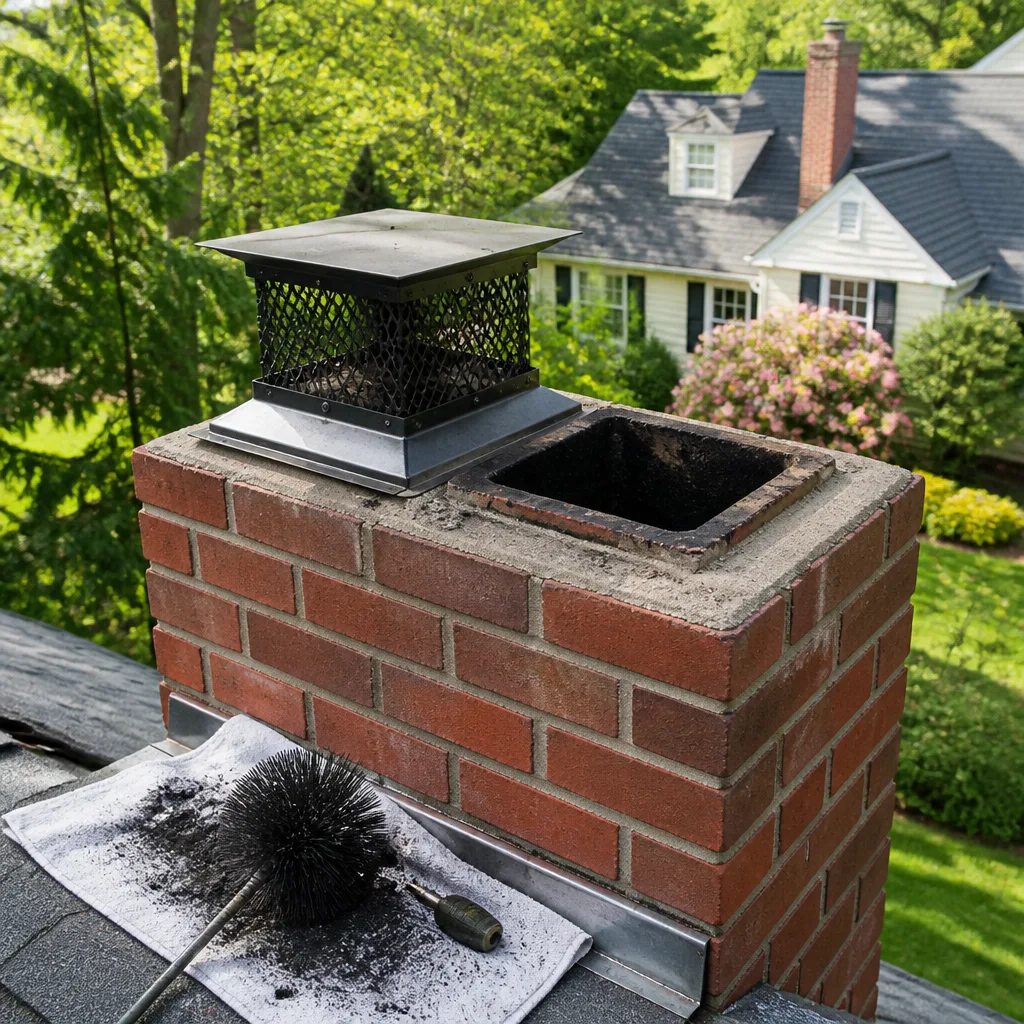
 Sweep & inspection
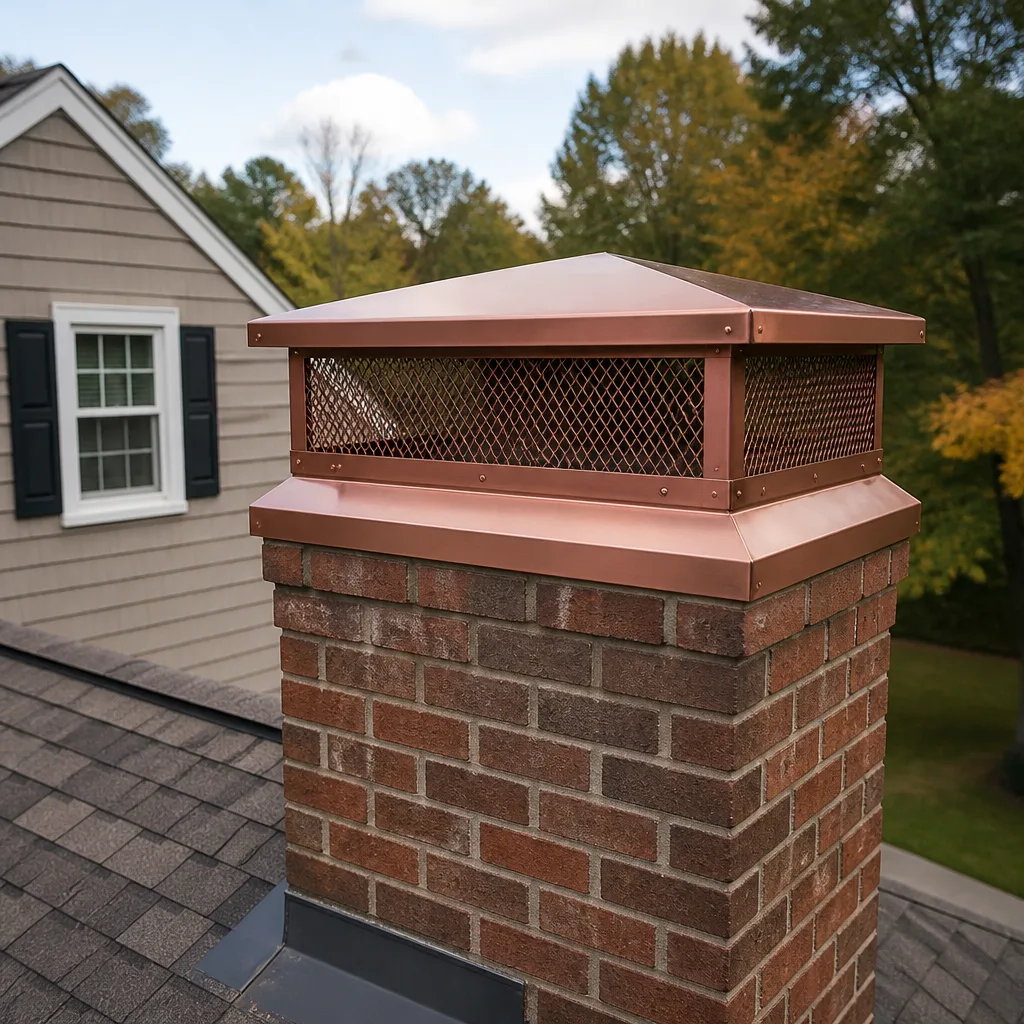 Caps & crowns
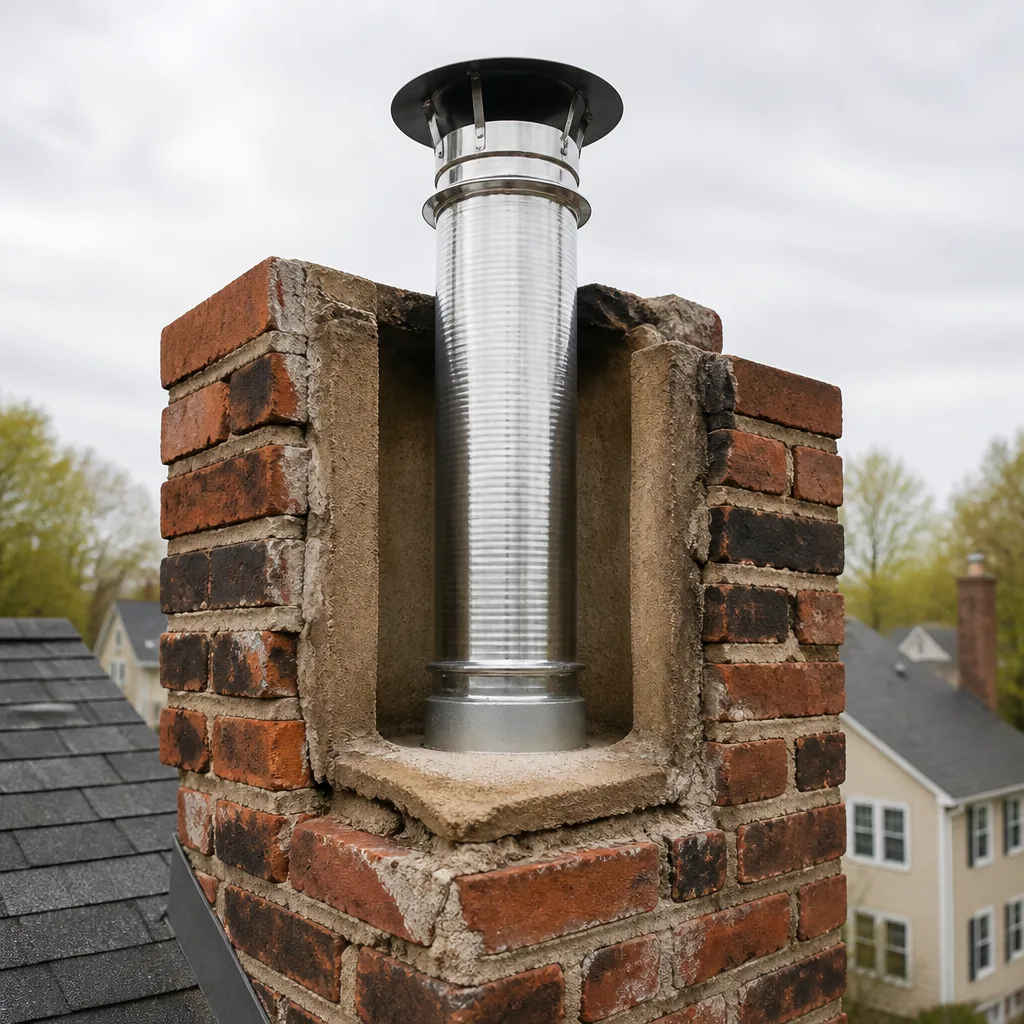 Flue relining
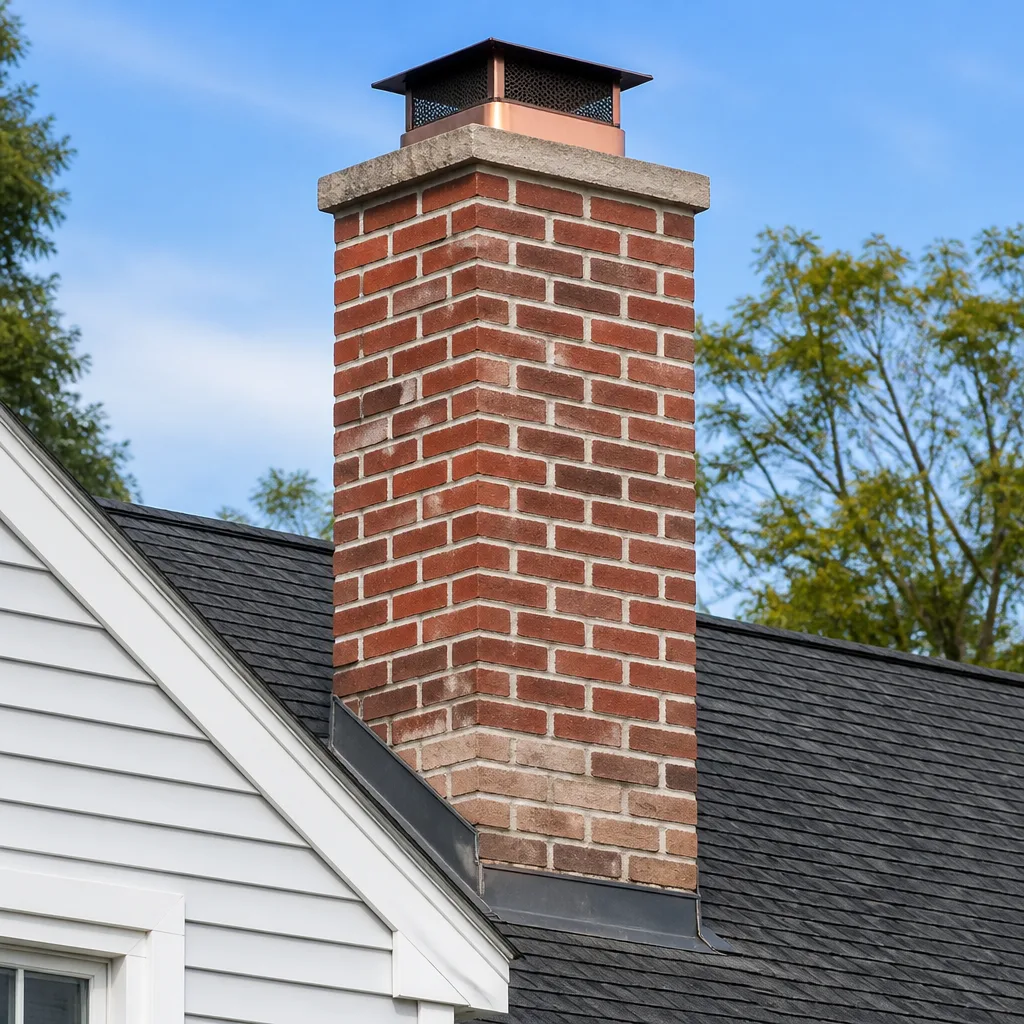 Masonry repair
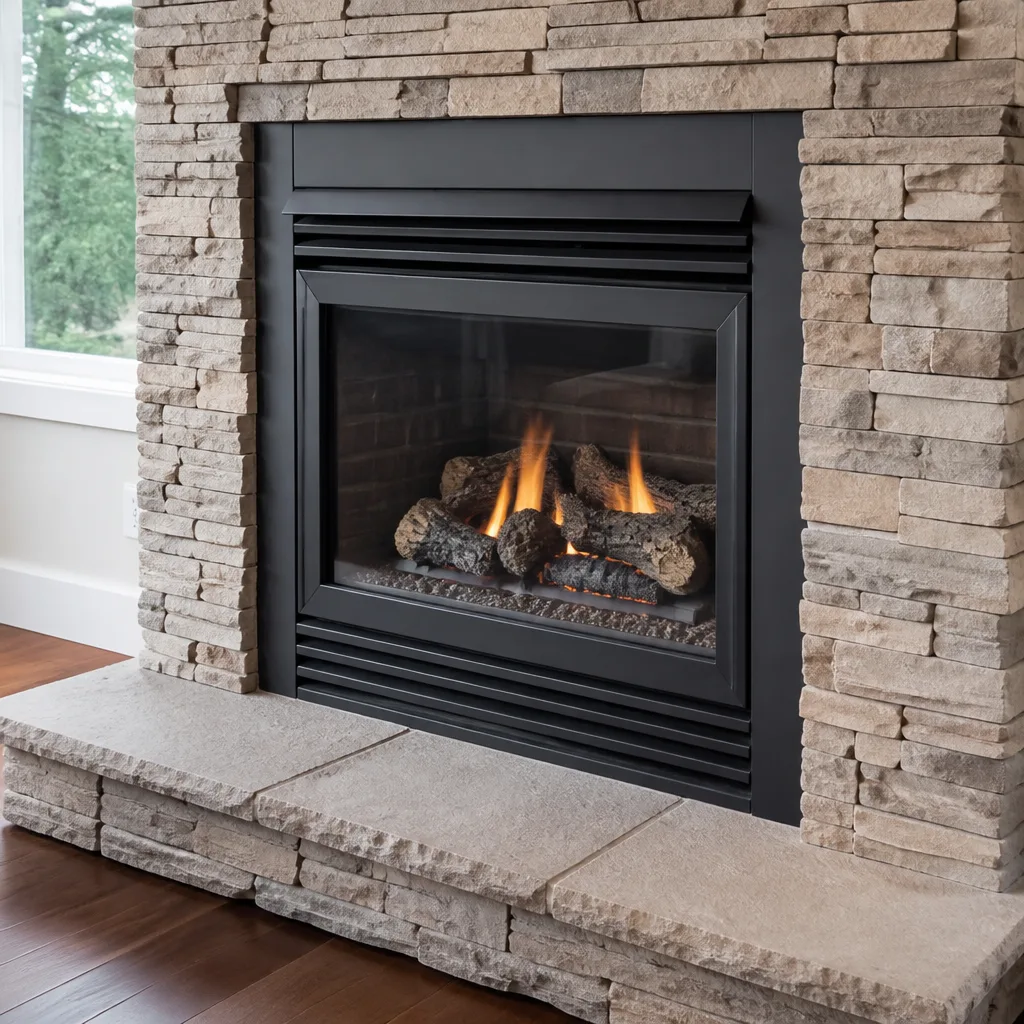 Gas fireplace service
Level 1 sweep and inspection to the NFPA 211 annual standard - flue, crown, cap, and flashing checked and photographed
Chimney sweep logs do not sweep chimneys. They loosen some creosote - which then falls where a brush and vacuum still have to collect it.
Styles & brands we work with
See the difference
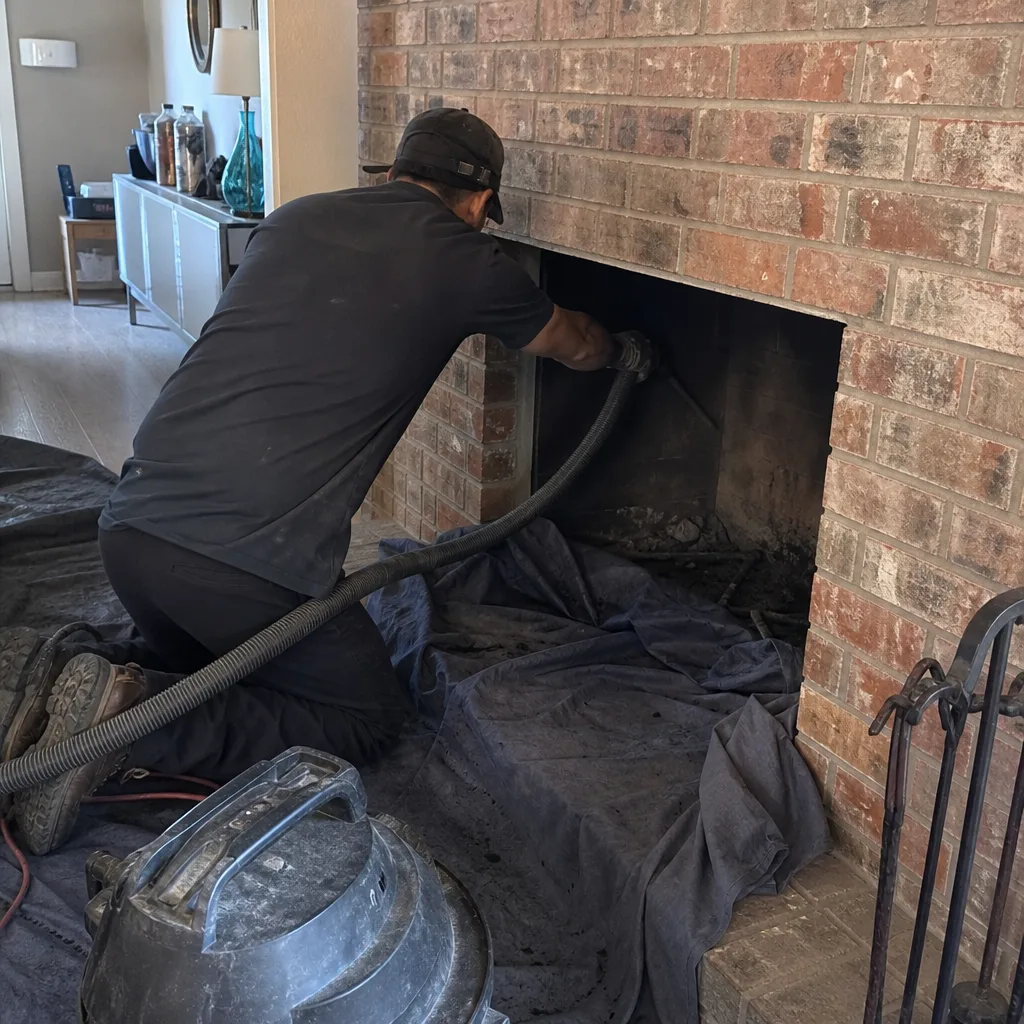 Before
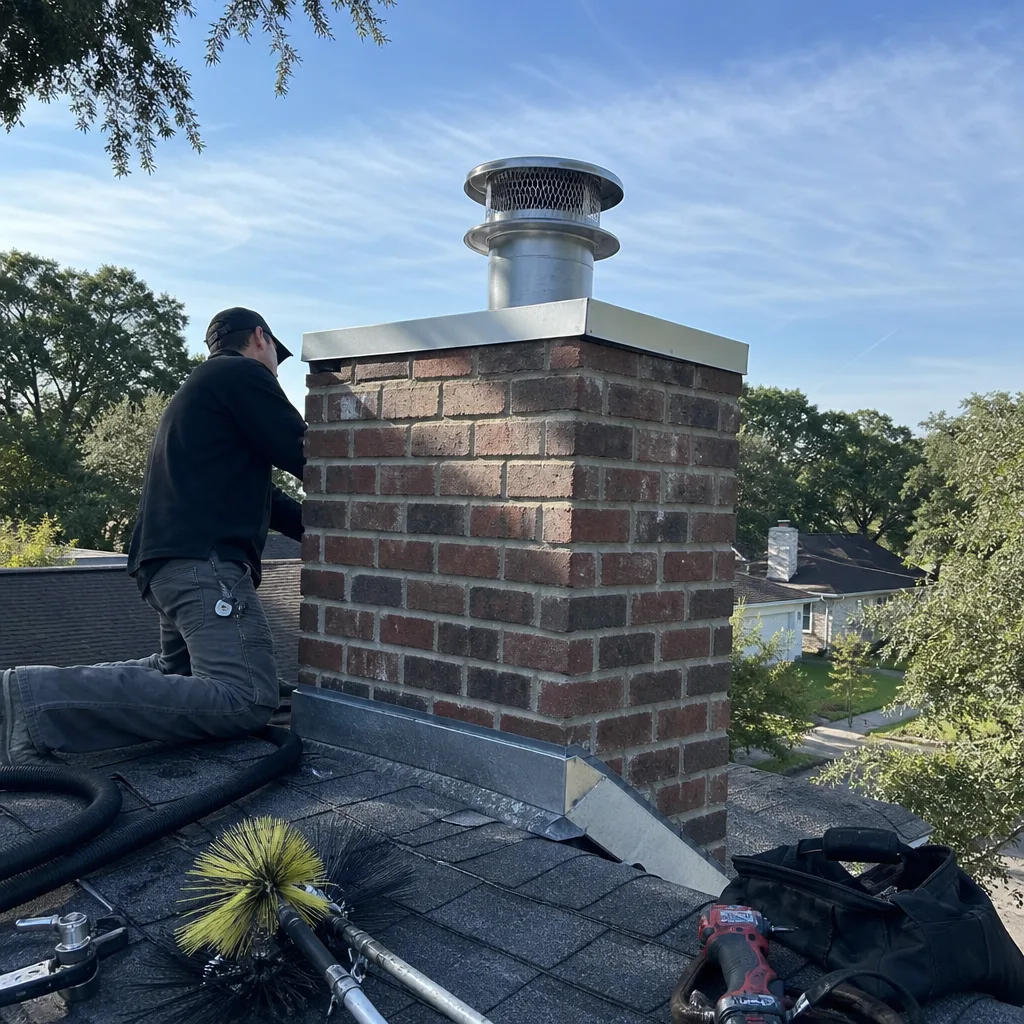 After
After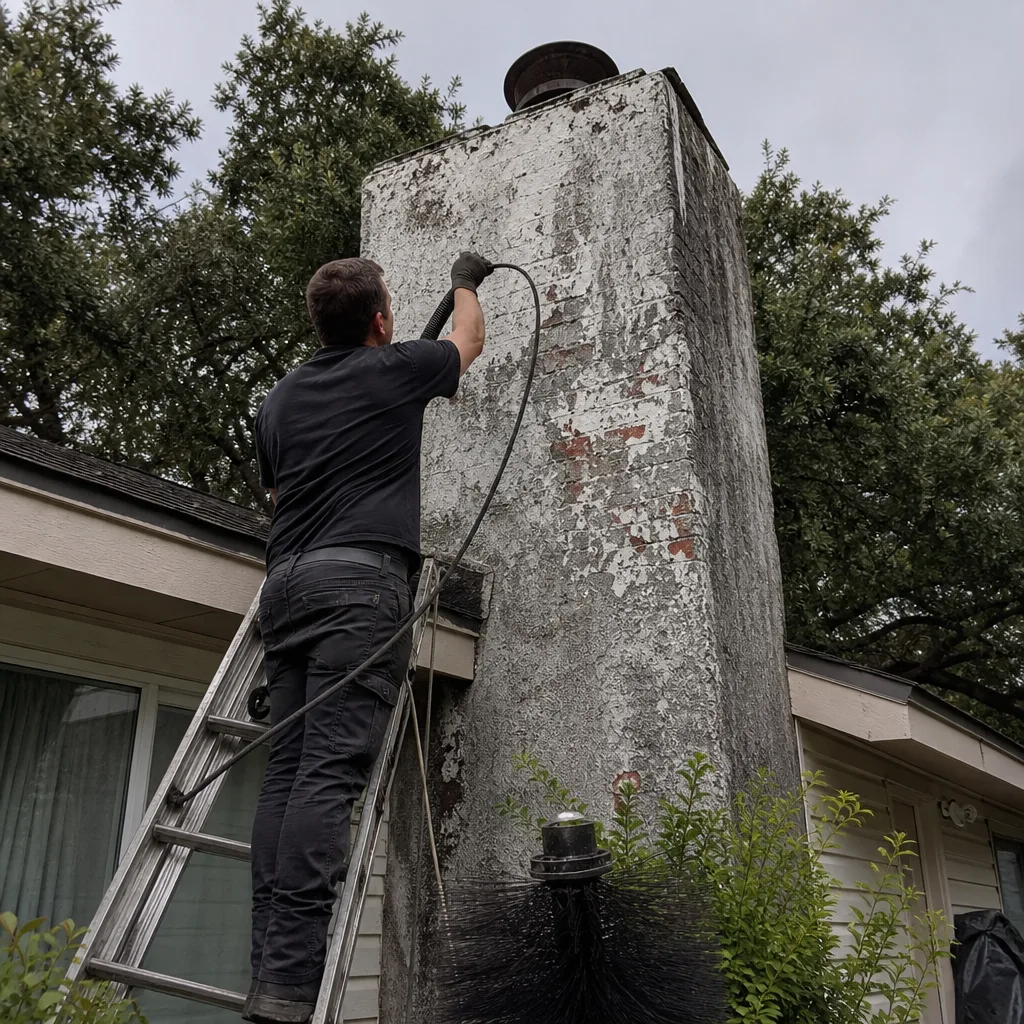 Before
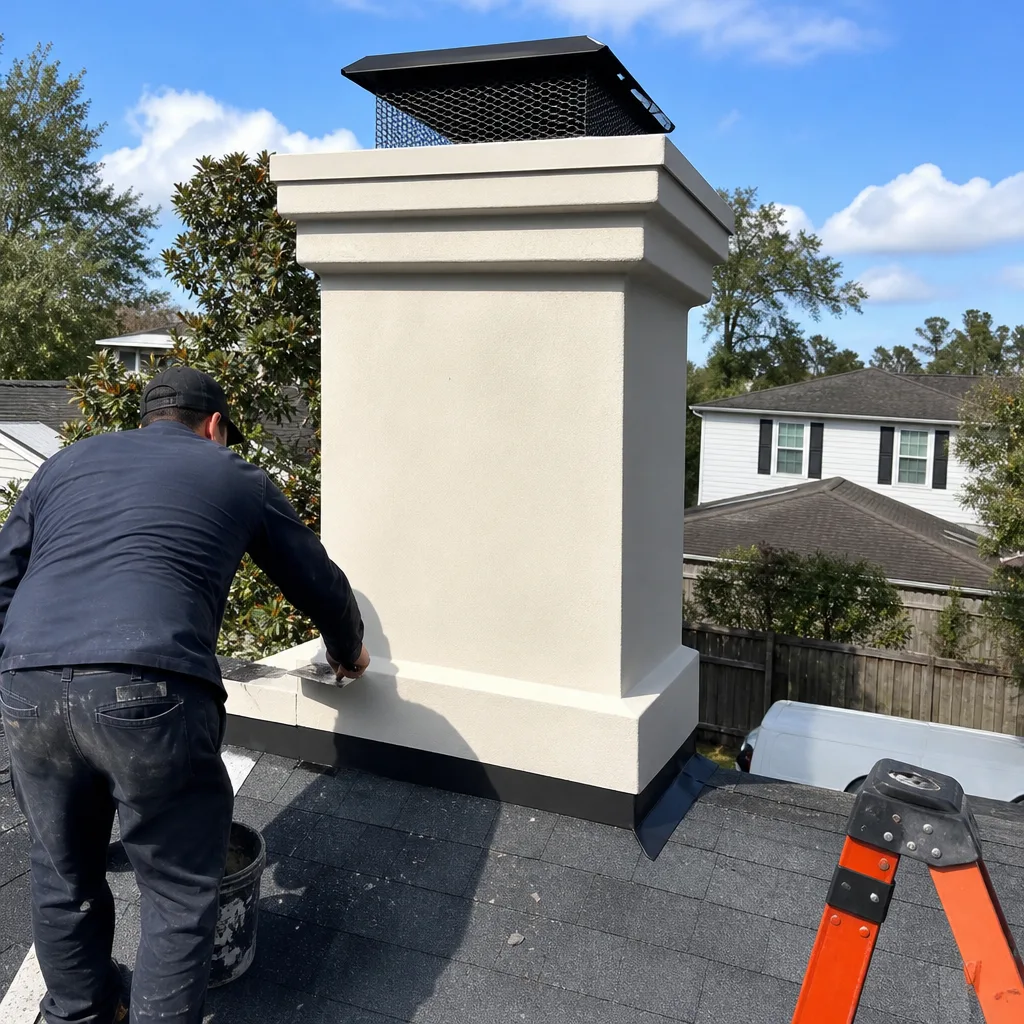 After
After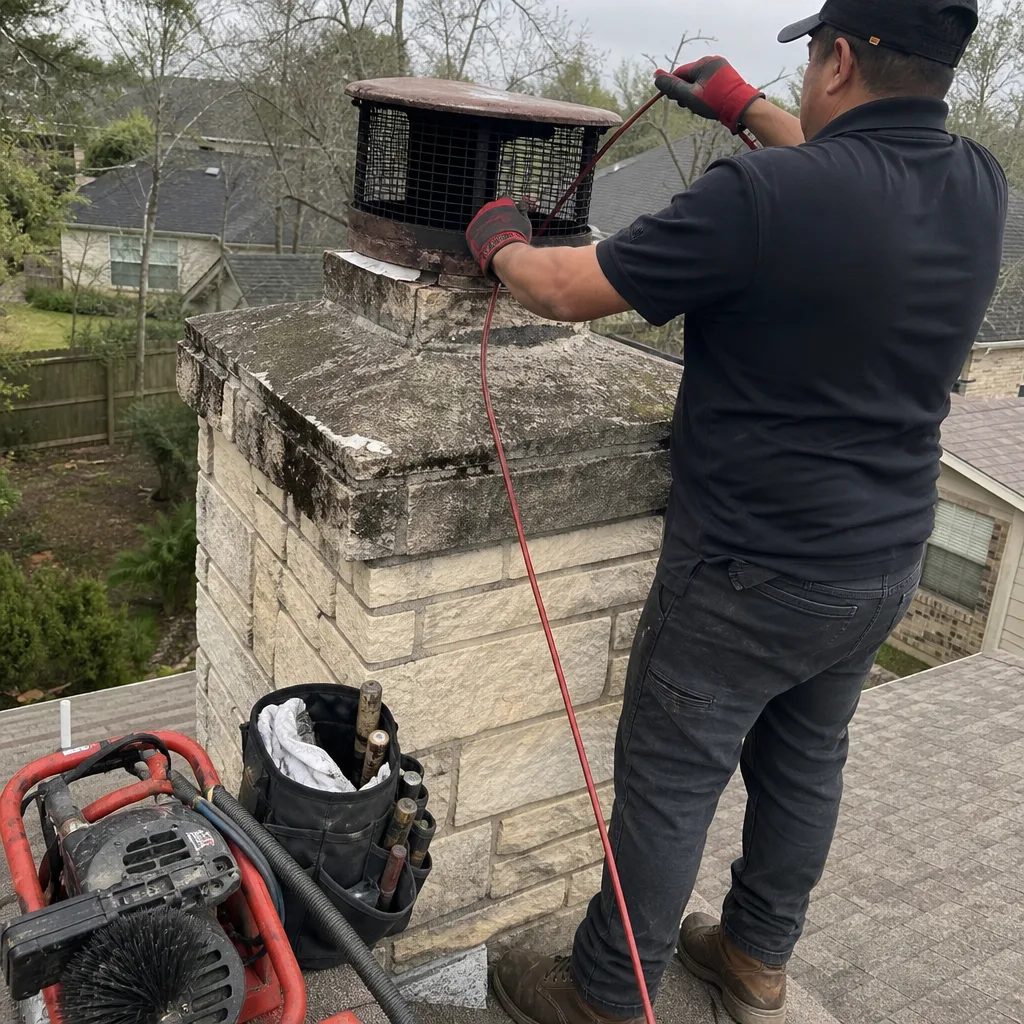 Before
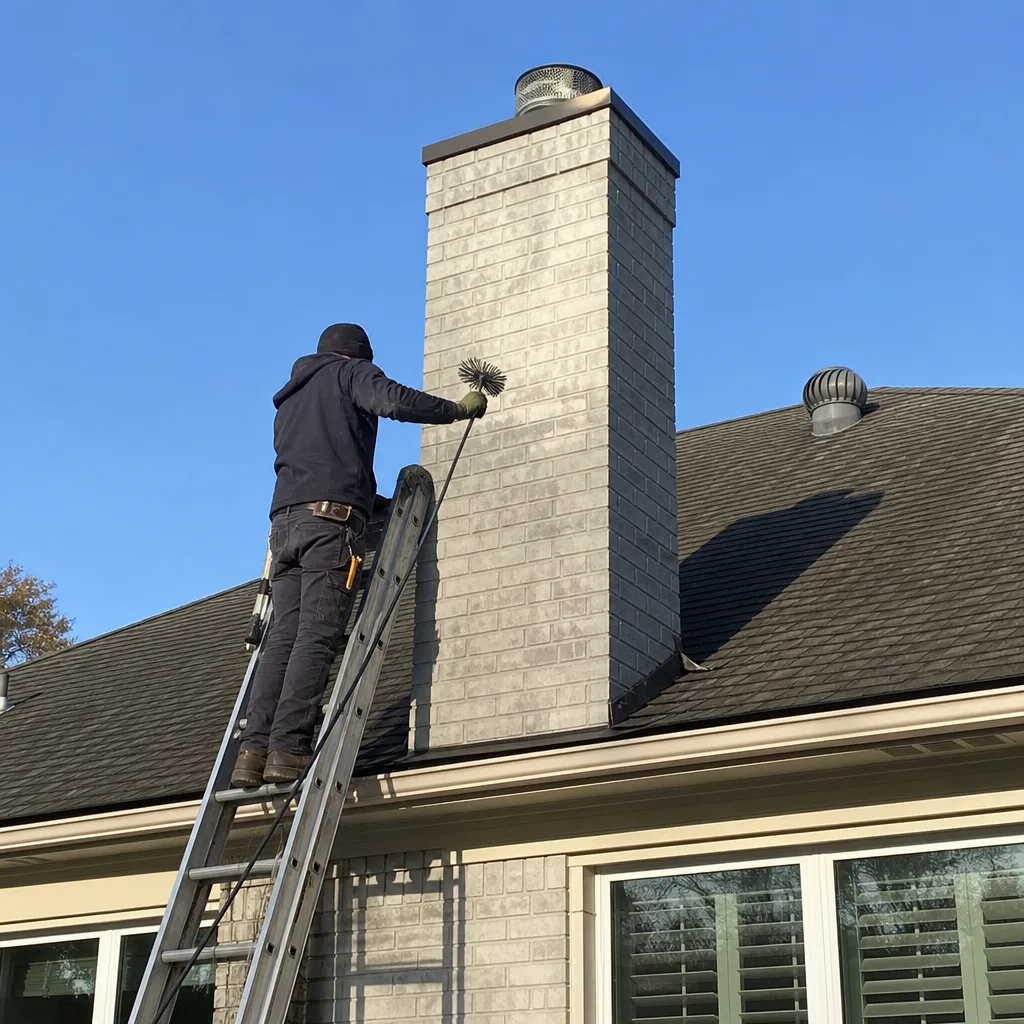 After
AfterSoot Removal in Houston, TX
Soot removal in Houston typically costs between $150 and $400 when bundled with a standard chimney sweep, and takes about an hour for a single fireplace. The price depends on how thick the buildup is, how tall the flue runs, and whether the soot has hardened into glaze. If you’ve noticed black dust settling on your mantel or a campfire smell that lingers even when the fireplace is cold, call Kindling Chimney Houston at (254) 978-7413 and we’ll give you a written price before any work begins.
Soot is the fine black powder that coats the inside of your flue every time wood burns. Left alone, it builds into layers that narrow the passage, stain your firebox, and eventually drift into the living room. Our Chimney Cleaning & Sweep in Houston service handles the full system, but soot removal specifically targets the residue that most families see and smell first. We’ve worked in fireplaces across Meyerland, West University, the Heights, and Clear Lake, and the soot profile changes from house to house: oak burns different from pine, and a fireplace used three nights a week in December builds up far faster than one lit only on holidays.
Danny Cortes and the Kindling team approach soot removal the way we approach everything: name what we’ll protect, do the work carefully, leave the house cleaner than we found it. Floors get covered before the vacuum comes out. Furniture stays where it is unless you ask us to move it. And the products we use are chosen with kids and pets in mind, because the last thing a family in Houston needs is a chemical smell lingering for days after the chimney crew leaves.
When You Need Soot Removal
Some signs are obvious. Others hide until the problem is already well along. Here’s what to look for in a Houston home:
- Black dust on the mantel or hearth. Fine soot particles escape when the flue gets coated and the draft weakens. If you wipe the mantel on Monday and it’s dusty again by Friday, the soot layer inside is likely the culprit.
- A persistent campfire smell, even cold. Soot absorbs moisture from Houston’s humid air, and that damp soot holds odor. On humid summer days, a dirty flue can make the whole room smell like last winter’s fires.
- Visible black buildup you can see from below. Shine a flashlight up the flue. If the walls look fuzzy with black residue rather than smooth masonry, soot removal is due.
- Smoke drifting back into the room. When soot narrows the flue, the draft can’t pull smoke up fast enough. This gets worse during Houston’s warm, still evenings when there’s little temperature difference to drive airflow.
- You use the fireplace regularly during fall and winter. For a family that burns fires two or three nights a week from November through February, an annual sweep with soot removal is the practical baseline. Even clean-burning hardwoods leave residue.
- You just moved in and don’t know the chimney’s history. Previous owners leave behind whatever they left. Before the first fire of the season, get the soot assessed. It’s cheaper than discovering a problem mid-winter.
Our Soot Removal Process
Every Kindling Chimney Houston visit follows the same written care promise. Here’s the order of work for a soot removal call:
- Floor and furniture protection first. Shoe covers go on at the door. Drop cloths cover the hearth, the floor in front of the fireplace, and any nearby furniture. Our technicians follow the C.A.R.E. values on every job: nothing moves without a conversation, nothing gets dusty without a plan to clean it.
- Written price before any work starts. We inspect the firebox and flue, show you what we see, and put the number in writing. No pressure, no surprise line items. The price you see is the price you approve.
- Soot removal with rotary or brush tools, matched to the flue. For standard masonry flues, we run professional-grade brushes sized to your chimney. For heavier buildup or older liners, we use a gentler approach so the liner isn’t damaged. Our crews carry materials from brands like DuraFlex and Olympia Chimney when liner work becomes part of the job, and those decisions get explained before they happen.
- Firebox and damper cleaning. The soot doesn’t just live in the flue. We clear the smoke shelf, wipe down the damper assembly, and clean the firebox floor so the whole system breathes correctly.
- HEPA-filtered vacuum throughout. Soot is fine enough to float. Our vacuums are sealed and HEPA-filtered, so what we collect stays collected instead of drifting back into the air your family breathes.
- Photo of the clean-up before we leave. Part of the Cedarwell Care Promise: you get a photo showing the cleaned area, the covered floors, and the finished workspace. You’ll know exactly what the room looked like when we walked out.
Soot Removal Pricing in Houston
Here’s what families across Houston can expect to pay for soot removal, based on the typical jobs we see in the area:
- Standard soot removal with sweep (single fireplace): $150 to $250. This covers a typical masonry fireplace in a single-story home with moderate seasonal buildup.
- Heavy buildup or glazed soot: $250 to $400. When soot has hardened into a tar-like glaze, removal takes longer and needs more aggressive tooling. This is common in fireplaces that burn unseasoned wood or haven’t been cleaned in several years.
- Two-story homes or extended flue runs: Add $50 to $100. Longer flues take more time and more equipment, and the pricing reflects that, never a surprise add-on at the end.
- Prefab or factory-built fireplaces: $150 to $300. These systems need specific tools and a gentler hand, especially around the damper assembly and metal flue walls.
What affects the final number? Thickness of the soot layer, flue height, whether the soot has converted to glaze, and whether any liner assessment is needed as part of the work. None of this is discovered after the fact. We give you the written price before we start, and that number doesn’t change unless you approve something additional. Call (254) 978-7413 for a free estimate, and a live person will answer. That’s 24 hours a day, 7 days a week, no voicemail tree.
Why Houston Homes Need Soot Removal More Often Than You’d Think
Houston’s climate works against chimneys in ways that surprise a lot of homeowners. High humidity means soot absorbs moisture from the air even when the fireplace isn’t in use. That damp soot sticks harder to the flue walls, attracts more buildup on the next fire, and produces a stronger odor. In drier climates, soot stays dry and powdery and falls away more easily. Here, it cakes.
The other factor is how Houston burns. Mild winters mean shorter, more frequent fires rather than long sustained burns. That stop-start cycle produces more incomplete combustion and more soot per hour of fire time. We see it across the service area: a fireplace in Katy that burns oak every weekend will look different after a season than one in Spring Branch that fires up once a month. The soot tells the story of how the family uses the fireplace, and the removal plan should match that story, not a one-size-fits-all schedule.
For families with young kids and pets, soot isn’t just a fireplace issue. Fine black dust settles on toys, in carpet fibers, and on window sills near the fireplace. Pet paws track it through the house. We use pet-safe products where there’s a choice, and our cleaning protocol is built around the idea that the house is still lived in, not shut down for a construction project. The crew works quietly, covers everything, and leaves with the room ready for normal life again.
Can You Remove Soot Yourself? What Houston Homeowners Should Know
The short answer: light dusting is one thing, flue cleaning is another. You can wipe down the firebox walls and the hearth with a damp cloth to manage surface dust. That’s safe and sensible between professional cleanings. But the soot inside the flue is a different matter. It requires tools, height access, and a way to contain the dust. A standard shop vacuum isn’t sealed well enough for fine soot. Without proper containment, you’ll send black powder into the air and then find it on every surface in the room for weeks.
Climbing onto a Houston roof in summer heat to work a chimney brush is genuinely dangerous work. Steep pitches, damp shingles, and hot surfaces combine badly. If the flue is tall, the risk compounds. This is a job for a trained professional with proper roof safety equipment and the right fall protection. Our technicians do this every day, and we still treat every rooftop with respect.
The other reason to bring in a pro: soot covers what you can’t see. Hairline cracks in the flue tiles, a warped damper, a liner that’s starting to separate. Danny Cortes trains the Kindling team to spot these things during a soot removal visit and to tell you honestly what matters now versus what can wait. That’s the difference between cleaning a chimney and actually knowing the chimney is sound.
What Soot Removal Doesn’t Fix (And What We’ll Tell You If We See It)
Soot removal is a cleaning service. It clears the residue, but it doesn’t repair structural problems. During a soot removal visit, we sometimes find issues that need discussion:
- Creosote glaze that won’t come off with standard brushing. Glazed creosote is flammable and stubborn. Sometimes removal requires a chemical treatment or more aggressive mechanical work. We’ll show you what we found and quote the additional work separately before touching it.
- Cracked flue tiles or gaps in the masonry. Cleaning around damage doesn’t fix the damage. If we see cracks, we’ll photograph them, explain what they mean for safe fireplace use, and talk through repair options. Materials from brands like HeatShield or Gelco may apply depending on the condition of the flue.
- A liner that’s failed or missing. Some older Houston homes have chimneys without liners or with liners that have deteriorated badly. A DuraFlex liner replacement is sometimes the answer. We’ll give you a written price for that work separately, with no obligation to move forward the same day.
- Water entry at the crown or flashing. Houston’s rain finds every weak point. Soot removal doesn’t stop water, but we’ll flag what we see so you can plan the next step.
This honest reporting is the whole point of the 365-Day Done Right Promise. If it’s not done right, we make it right. But we’d rather tell you what we found before you discover it the hard way.
Soot Removal vs. Creosote Removal: The Difference Matters
Houston homeowners sometimes hear both terms and assume they’re the same. They’re not. Soot is the black powder left by incomplete combustion. It’s mostly carbon and it’s relatively easy to remove. Creosote is a byproduct that forms when smoke cools and condenses on the flue walls. It ranges from flaky to sticky to hard glaze, and it’s far more dangerous because it’s combustible.
Most chimneys have some of both. A standard cleaning handles both to a degree, but heavy creosote glaze often needs its own treatment process. The good news: when we come out for soot removal, we’re looking at the whole flue. If creosote has built up beyond what a routine sweep handles, we’ll tell you clearly what we’re seeing and what the next step costs. No vague warnings, no pressure. Just the facts.
For a family with a fireplace used regularly, knowing the difference means knowing what to ask for. “Soot removal” and “creosote management” are both part of a complete chimney cleaning in Houston, and a good technician will explain which one your flue actually needs.
How Often Should Houston Homeowners Schedule Soot Removal?
The straightforward answer for most Houston families: once a year, timed before the burning season starts in November. That single visit handles the soot from last winter, catches any issues that developed over the hot humid summer, and gets the fireplace ready for the first cold front in the fall.
Some households need more frequent attention. If you burn more than two cords of wood per year, or if you burn unseasoned wood, or if your fireplace runs every night from Thanksgiving through New Year’s, soot builds faster. The National Fire Protection Association recommends an annual inspection and cleaning as the baseline, and that aligns with what we see locally.
We keep records of what we find on each visit, so if your soot levels were light last year and heavier this year, we can tell you. That’s how a fireplace gets managed properly over time instead of being treated as a once-a-decade afterthought.
Why Kindling Chimney Houston for Soot Removal
Plenty of companies can run a brush through a flue. What families in Houston tell us they value more is knowing what will happen before it happens. That’s what we build around.
Here’s what you get on every soot removal call:
- A written price before work begins. Always. Not an estimate range, not a ballpark. A written number you approve first.
- The Cedarwell Care Promise. Shoe covers and drop cloths on every visit. Nothing moved without asking. A photo of the clean-up before the crew leaves. Kids and pets are never an afterthought: pet-safe products where there’s a choice, and quiet tools when a toddler is napping upstairs.
- Background-checked, uniformed technicians. You know who’s coming, and they follow the C.A.R.E. values on every job.
- The 365-Day Done Right Promise. If it’s not right, Kindling makes it right. No fine print and no runaround.
- A live person answers the phone. 24 hours a day, 7 days a week. Call (254) 978-7413 at 2 PM or 2 AM and you’ll talk to a person, not a voicemail.
Part of the Cedarwell family of companies, established in 2003, Kindling Chimney Houston is independently owned and operated. That means the standards are company-wide, but the people who show up at your door are your neighbors, not a dispatch from a distant corporate office.
FAQs – Soot Removal
How much does soot removal cost in Houston?
Soot removal in Houston typically runs between $150 and $400 depending on buildup thickness, flue height, and whether the soot has turned to glaze. A standard single fireplace with moderate seasonal soot usually lands between $150 and $250. The written price comes before any work starts, so you’ll never be surprised at the door. Call (254) 978-7413 for an exact quote on your fireplace.
Can soot removal be done the same day?
Yes, in most cases soot removal is completed the same day we arrive, usually within an hour for a single fireplace. A live person answers the phone 24/7, so if your fireplace is due and you’re ready to schedule, call (254) 978-7413 and we’ll find a time that works, often within the same week.
Is soot removal safe for kids and pets?
Yes. We use HEPA-filtered vacuums so fine soot doesn’t drift into the air, drop cloths keep floors clean, and pet-safe products are used wherever there’s a choice. The crew works quietly and carefully, and we take a photo of the clean-up before we leave so you can see the room is ready for normal family life.
What’s the difference between soot and creosote?
Soot is fine black powder from incomplete combustion and is relatively easy to remove. Creosote is a sticky or glazed byproduct that forms when smoke cools in the flue, and it’s combustible and harder to clean. During a soot removal visit, we check for both and tell you exactly what your chimney has, with a written price for any additional work if it’s needed. Call (254) 978-7413 to schedule a look.
Do I need soot removal if I only use the fireplace a few times a year?
Even occasional fires produce soot, especially with the stop-start burning pattern common in Houston’s mild winters. A once-a-year cleaning is the sensible baseline for any fireplace that gets used at all. It’s cheaper than dealing with a buildup problem later, and it gives you a professional set of eyes on the flue once a year. Call (254) 978-7413 for a free estimate.
Written by Danny Cortes, Owner at Kindling Chimney Houston, serving Houston.