
Last updated October 15, 2026
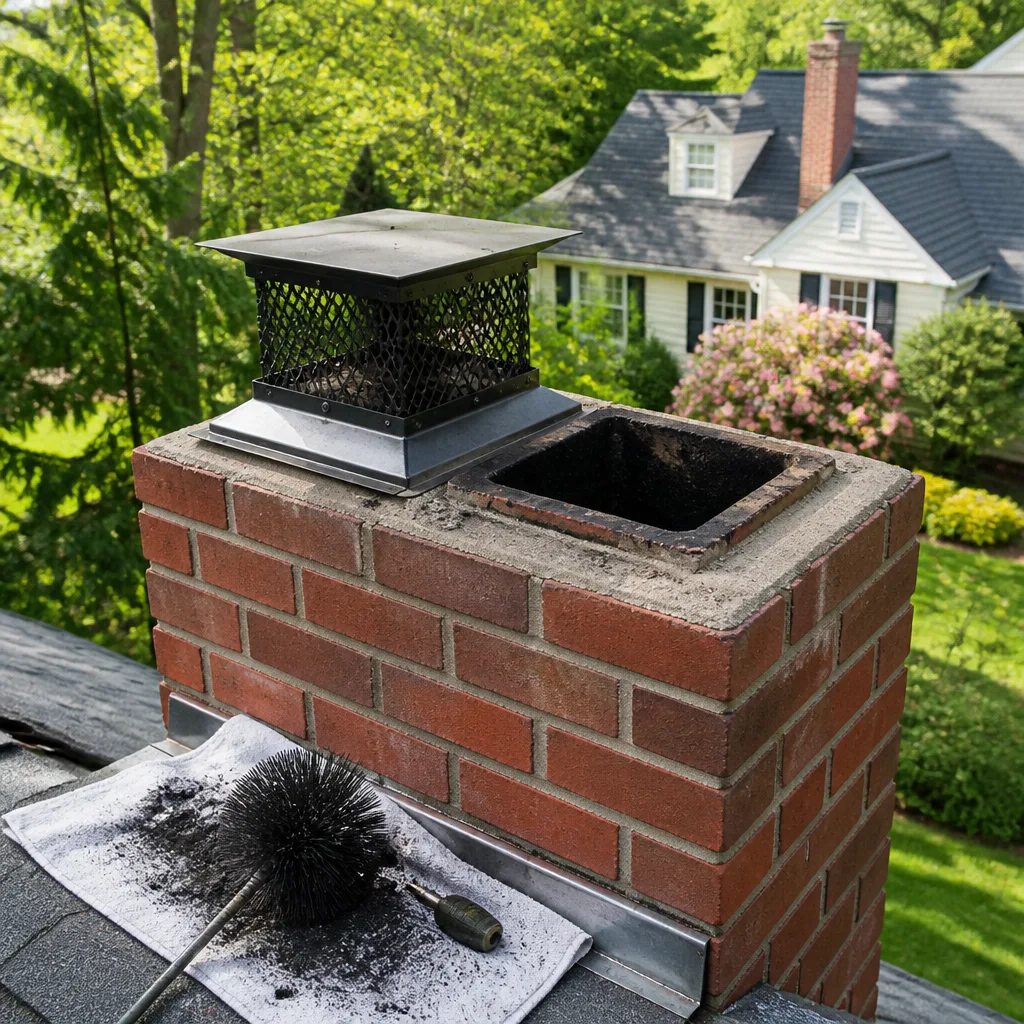 Sweep & inspection
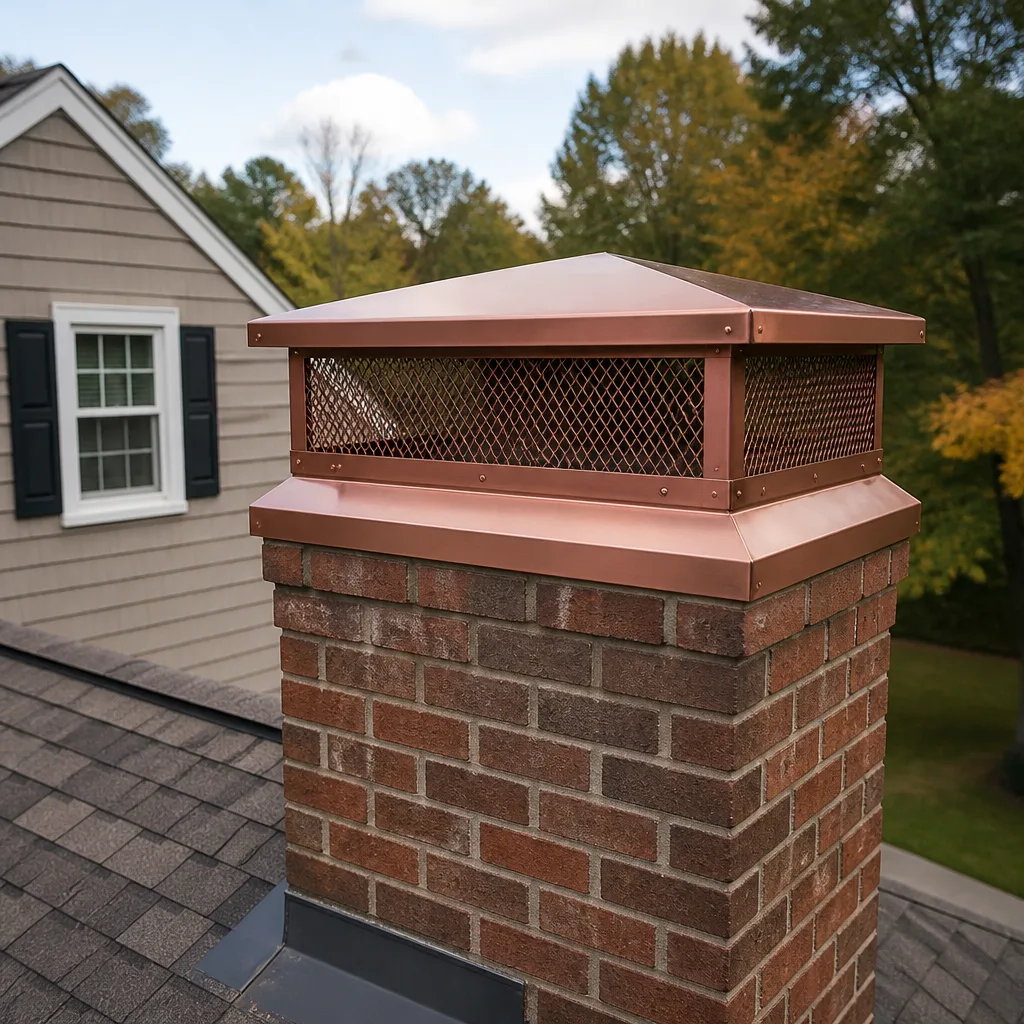 Caps & crowns
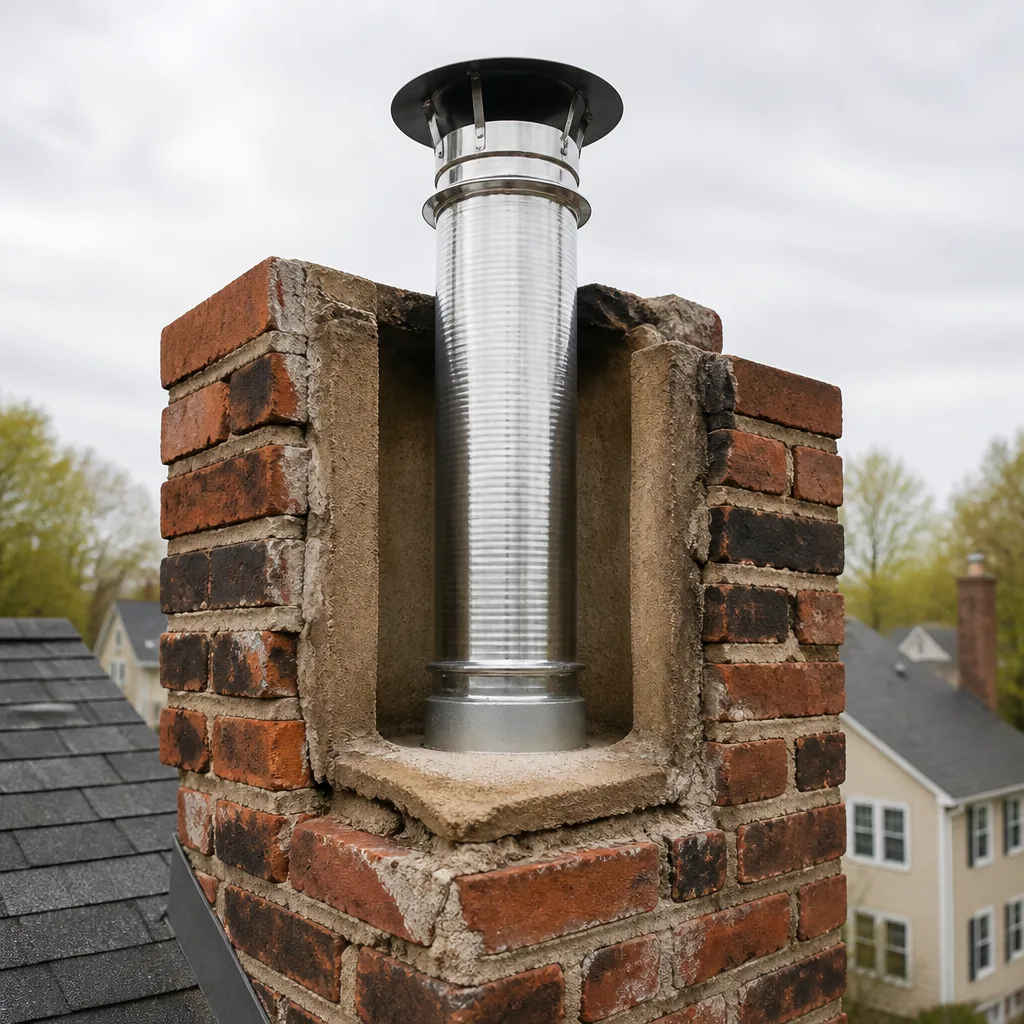 Flue relining
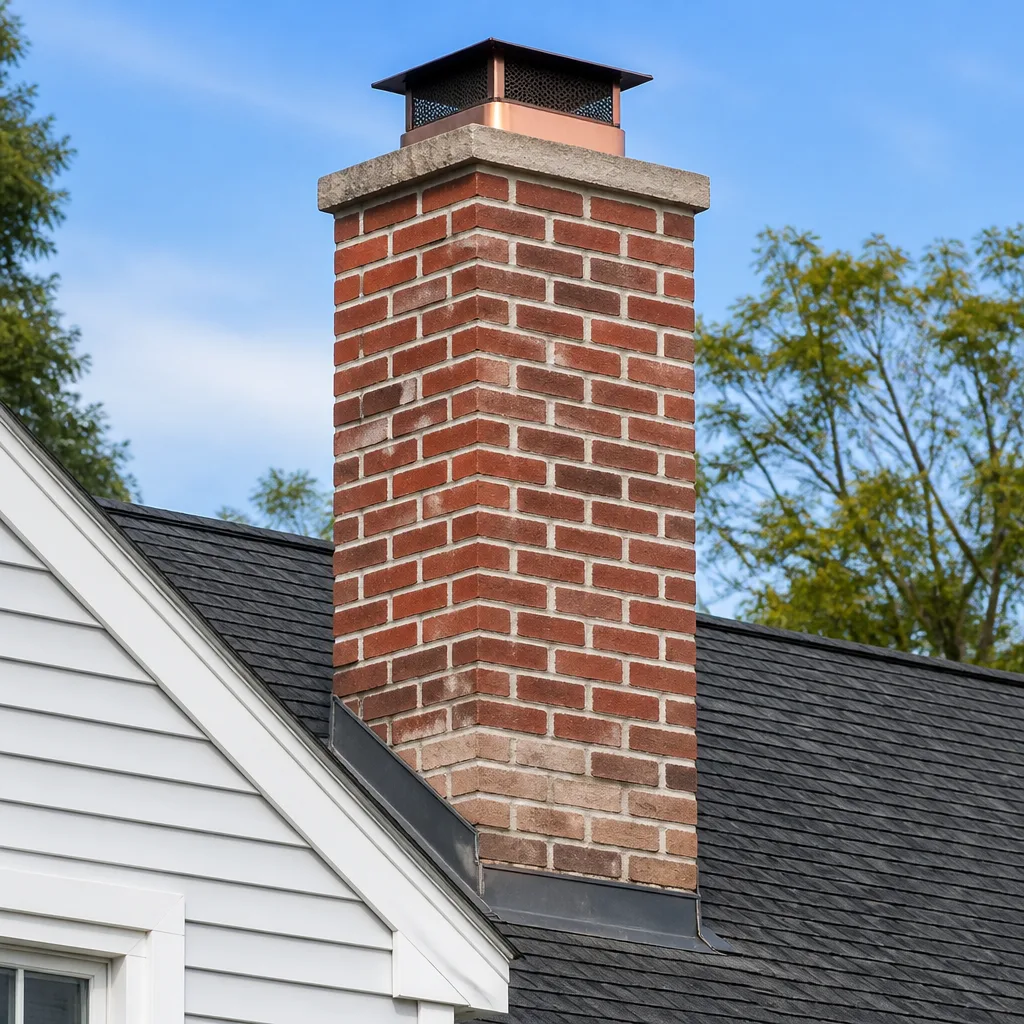 Masonry repair
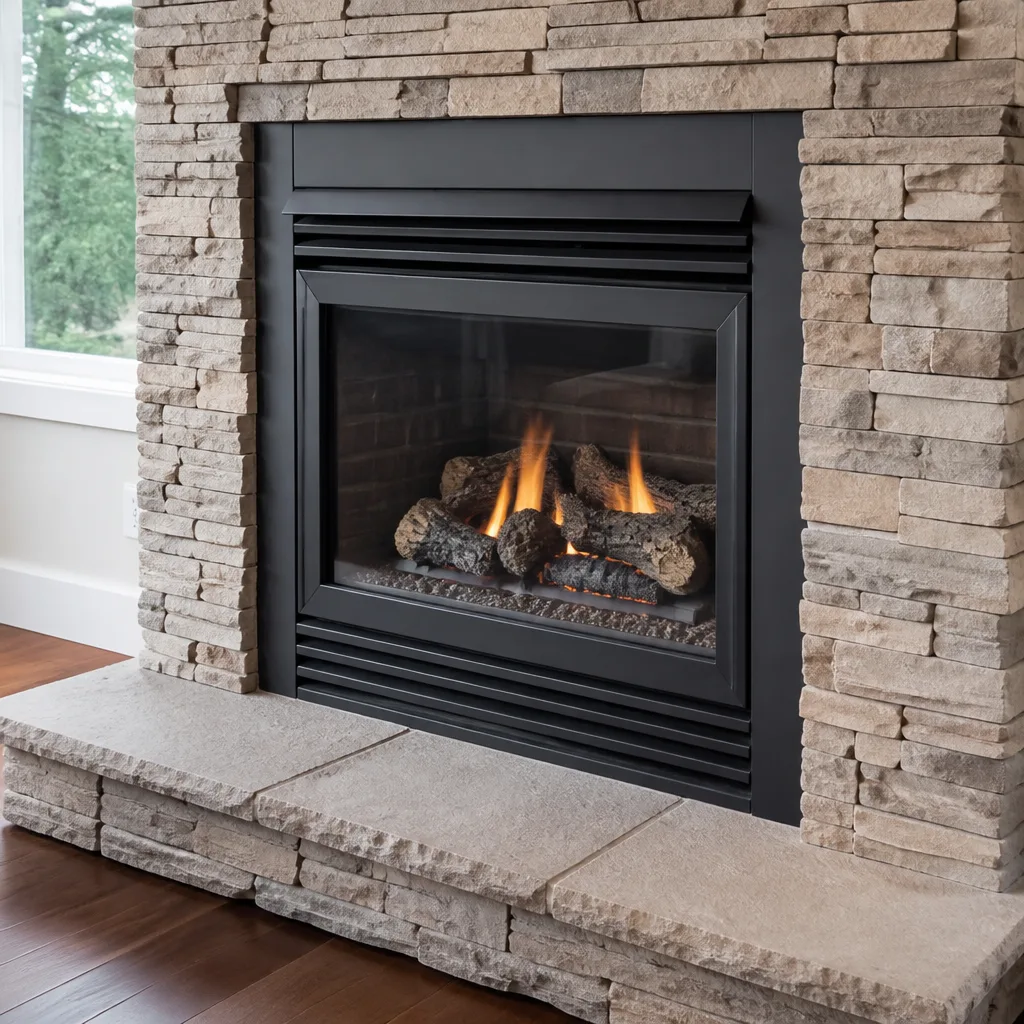 Gas fireplace service
Level 1 sweep and inspection to the NFPA 211 annual standard - flue, crown, cap, and flashing checked and photographed
Chimney sweep logs do not sweep chimneys. They loosen some creosote - which then falls where a brush and vacuum still have to collect it.
DIY vs Professional Chimney Cleaning: The Houston Homeowner’s Decision Guide
A homeowner with a $40 brush kit and a shop vac can remove visible soot from a Houston fireplace in about two hours. What that same homeowner cannot do is see the hairline crack in the flue tile three feet above the firebox that turns a contained fire into a house fire. This guide defines exactly what DIY chimney cleaning can and cannot accomplish in Houston, so you make the decision based on facts rather than YouTube confidence. For more guides & resources, see our blog. We’ll walk through the real scope of each approach, what Houston’s climate does to chimneys, what insurance actually requires, and the honest math between a brush kit and a professional sweep.
Styles & brands we work with
Quick Answer
For most Houston homeowners, the right answer is a hybrid: a DIY surface cleaning is fine between professional visits if you have a recent professional baseline and a gas fireplace used rarely, but an annual professional clean-and-inspect ($175 to $250 in Houston) is the only way to catch the liner cracks, moisture damage, and animal intrusion that DIY tools cannot see. If you’re unsure how to choose, read our How to Hire a Chimney Cleaning Contractor in Houston: A Step-by-Step Guide. The decision hinges on what you’re willing not to know about the space between your smoke shelf and your chimney crown. If it has been more than 12 months since a certified sweep looked inside the flue with a camera, book the professional visit first, then decide whether DIY maintenance between visits is sensible.
Table of Contents
- What DIY Chimney Cleaning Actually Covers
- What DIY Cannot Reach or Assess Without a Camera
- Why Houston’s Climate and Wildlife Change the DIY Equation
- The Honest Cost Comparison: DIY Kit vs Professional Sweep
- The Insurance Angle: Why a DIY Receipt May Not Be Enough
- The One Scenario Where DIY Is Genuinely Reasonable
- What “Professional” Should Mean in Writing Before You Book
- Common Mistakes to Avoid
- When to Call a Professional
- Frequently Asked Questions
- The Bottom Line
What DIY Chimney Cleaning Actually Covers
A DIY chimney cleaning kit, the kind you’ll find at any Houston hardware store for $40 to $120, is designed to do one thing: remove loose soot from flat, reachable surfaces. When you work the brush up and down from the firebox, you’re scrubbing the firebox walls, the smoke shelf just above the damper, and the visible portion of the damper plate. You will knock creosote and soot off those surfaces, and a shop vac can collect much of what falls. If your goal is a cleaner-looking firebox before the next burn, a DIY kit accomplishes that.
Here is the precise scope of what a brush-and-vacuum approach can reasonably handle:
- Firebox walls: The brick or refractory panel surfaces you can see and reach from the hearth. A stiff brush removes surface soot and light creosote film.
- Smoke shelf: The flat ledge directly above the damper opening. A flexible brush can reach this from below, though visibility is poor and you’re working by feel.
- Visible damper plate: The metal plate that opens and closes the flue. Surface rust and soot can be brushed off if you can reach it safely.
- Hearth area: Loose ash, small debris, and soot dust that settles around the firebox opening.
That is the complete list. Every other component of a Houston chimney, which is to say the components that actually determine whether the system is safe, sits beyond the reach of a $40 brush kit.
We want to be plain about this, because the DIY conversation gets clouded by confident online tutorials. A brush kit is not an inspection. It is a surface cleaning tool. It cannot tell you whether the chimney is safe to use, only whether the firebox looks cleaner when you’re done. For Houston homeowners deciding between a Saturday with a brush kit and a call to a chimney sweep in Houston, that distinction matters more than the price difference.
What DIY Cannot Reach or Assess Without a Camera
The parts of a chimney that fail are almost never the parts you can see from the hearth. Flue tiles crack from the inside. Mortar joints erode in the smoke chamber where no brush reaches. The crown develops hairline fractures that let Gulf moisture into the chimney chase. A homeowner standing in the living room with a shop vac has zero visibility into any of it.
Here is the precise list of what DIY cleaning cannot reach or assess:
- Flue liner: The vertical passage running from the smoke chamber to the crown. A brush scrubs only what it touches, and flue tile inspection requires a camera or a level of physical access most homeowners don’t have. A cracked clay liner or corroded metal liner is invisible from below.
- Smoke chamber: The inverted funnel area above the smoke shelf. Soot and creosote accumulate in its corbelled brick pockets, and those pockets are a known fire risk area. They require specialized tools and, ideally, a camera to evaluate.
- Chimney crown: The concrete or mortar cap at the top of the chimney. Crown cracks are the leading entry point for water in Houston chimneys, and the crown is accessible only from the roof.
- Flashing: The metal seal where the chimney meets the roofline. Loose or corroded flashing lets rainwater run down the chimney chase and into the firebox. Roof access and flashing work are beyond any DIY kit.
- Chase top and chase cover: On prefabricated chimneys, the metal cover at the top of the wooden chase. Rust and gaps here are invisible from the ground and from the firebox.
- Animal intrusion: Nests, carcasses, and animal damage inside the flue. You cannot see a chimney swift nest or a squirrel’s debris pile from the firebox, and disturbing one without knowing it’s there creates a different set of problems.
The pattern is consistent: what DIY can reach is what you can already see. What DIY cannot reach is where Houston chimneys actually fail. That asymmetry is the entire argument for an annual professional inspection, which is why we recommend pairing any DIY cleaning with a chimney inspection in Houston at least once per year.
Why Houston’s Climate and Wildlife Change the DIY Equation
Houston is not a cold-climate city where creosote builds up at dangerous rates from nightly winter burns. Houston’s chimney problems come from three directions: humidity, animals, and intermittent use. A DIY guide written for a Chicago homeowner misses all three. For year-round maintenance advice, see our Seasonal Chimney Cleaning Care for Houston: Year-Round Homeowner’s Guide.
1. Chimney swifts are federally protected, and they nest in Houston flues. Chimney swifts migrate through Houston every spring and build nests inside uncapped chimneys. Under the Migratory Bird Treaty Act, disturbing an active swift nest, including the eggs and young, is a federal offense. A homeowner who sends a brush up a flue in April or May may unknowingly destroy a protected nest. A professional sweep in Houston knows the nesting season, checks with a camera before any brushing begins, and schedules work around active nests. This is not a liability angle we raise lightly; it is a legal reality specific to Houston’s position on the swift migration corridor.
2. Gulf humidity corrodes dampers and degrades mortar from the inside out. Houston’s average relative humidity runs above 70% for most of the year. That moisture finds its way into chimneys through crown cracks, uncapped flues, and porous masonry, and it works on metal and mortar continuously. Dampers rust open or shut. Refractory panels absorb moisture and spall. Mortar joints in the smoke chamber soften and crumble. None of this is visible from the firebox, and none of it is addressed by a brush kit.
3. Intermittent use creates false confidence. Houstonians burn fires maybe 15 to 25 times per year, mostly in December and January. That low usage rate means less creosote buildup, which sounds like good news. But it also means chimneys sit unused for nine months at a time, giving animals, moisture, and corrosion uninterrupted time to do their work. The homeowner who skipped last year’s inspection because “we barely use the fireplace” is exactly the homeowner whose flue has a swift nest, a rusted damper, or a hidden moisture problem.
We see this pattern across Houston neighborhoods. In older Heights bungalows with original masonry chimneys, the crown is usually the first failure point. In Meyerland and Bellaire homes with prefabricated chimneys, the chase covers rust through and leak into the firebox. In Kingwood and The Woodlands, chimney swifts are a constant presence. The specifics vary, but the underlying point does not: Houston’s chimney risks are the ones you cannot see from the hearth, and a DIY cleaning addresses none of them.
The Honest Cost Comparison: DIY Kit vs Professional Sweep
Cost is the first question Houston homeowners ask, and we answer it directly here. For a detailed breakdown, see our Chimney Cleaning Cost Breakdown: The Houston Homeowner’s Reference for 2026. A DIY chimney cleaning kit runs $40 to $120 at any Houston hardware store or online. You’ll also need a shop vac, which most households already own but which adds $50 to $80 if you don’t. The time cost is two to four hours, including setup and cleanup, and the result is a cleaner firebox and a lighter layer of soot on the smoke shelf.
A professional clean-and-inspect in Houston runs $175 to $250 for a standard single-flue chimney. That price includes the cleaning you’d do yourself, plus the camera inspection of the flue liner, smoke chamber, crown, and flashing, plus a written findings summary, plus warranty-grade clean-up. Here is the line-item comparison:
- DIY brush kit: $40 – $120 for the kit, $0 – $80 for a shop vac if you don’t have one, two to four hours of your time. Coverage: firebox, smoke shelf, visible damper. No inspection, no documentation, no warranty.
- Professional clean-and-inspect: $175 – $250 flat. Coverage: full flue cleaning, camera inspection of all accessible components, written findings summary, clean-up with drop cloths and shoe covers, documentation for insurance, and a workmanship warranty.
The honest math is this: a DIY cleaning saves you roughly $100 to $150 once. It does not replace the inspection that Houston conditions make necessary, and it produces no documentation. If you’re choosing between the two, the professional visit delivers roughly ten times the scope for less than twice the cost of a good-quality DIY setup. If you’re doing both, which is a reasonable approach for some households, the professional visit should come first to establish the baseline.
There is no scenario where a brush kit and a shop vac tell you whether your flue liner is cracked, your crown is leaking, or a swift nest is blocking the flue. The savings are real. The gap in what you know is also real. We tell every Houston homeowner who asks: do the math on what you’re not seeing, not just on what you’re spending. Call Kindling Chimney Houston home for a free estimate if you want exact numbers for your chimney’s configuration.
The Insurance Angle: Why a DIY Receipt May Not Be Enough
Most Houston homeowners don’t learn about the insurance requirement until after a claim. Here is how it works in practice. When a chimney-related fire damages a home, the insurer asks for documentation showing the chimney was professionally inspected and maintained. Most homeowner’s insurance policies in Texas require evidence of annual professional inspection to cover a chimney-related fire claim. A hardware store receipt for a brush kit and a shop vac does not satisfy that requirement, because it shows cleaning, not inspection.
The distinction matters for a specific reason: a chimney fire often starts in the smoke chamber or flue liner, which are the exact components a DIY cleaning cannot see. When the adjuster asks for the last inspection report and the homeowner produces a Home Depot receipt, the claim is denied. We are not scare-selling here. This is the plain mechanics of how Texas insurance adjusters handle chimney fire claims, and it is the same mechanics in Houston as in Dallas or San Antonio.
A professional chimney sweep in Houston includes a written inspection report with the cleaning, and that report is the document your insurer wants to see. It establishes that a certified professional evaluated the flue liner, smoke chamber, crown, and flashing, and that any visible issues were documented. That report is part of the $175 to $250 professional fee. It is the single most underappreciated value in the entire DIY-versus-professional comparison, and it is invisible until the day you need it.
If your fireplace is burning anything, wood or gas, and your last professional inspection was more than 12 months ago, the insurance exposure is real. The DIY question in that situation is not “Can I clean this myself?” It’s “Can I afford to be uninsurable on this chimney?” For most Houston families, the answer to the second question makes the first question moot.
The One Scenario Where DIY Is Genuinely Reasonable
We are not anti-DIY. There is one specific Houston scenario where a DIY cleaning between professional visits makes honest sense: a gas fireplace that burns less than 10 times per year, in a home with a recent professional baseline inspection that found no defects. In that situation, the professional has already confirmed the flue liner is intact, the crown is sealed, the damper works, and no animals have taken up residence. What remains between visits is light surface dust on the firebox walls and perhaps a thin film on the damper plate. A brush kit handles that fine.
Here is the decision path we give Houston homeowners:
- Get the professional baseline first. A full clean-and-inspect with a camera. If the report finds no defects, you now know your chimney is structurally sound. If it finds defects, you deal with them before any DIY happens.
- Record the inspection date. Mark it on the calendar. Your insurance window runs 12 months from that date, and your next professional visit should be booked before that window closes.
- DIY only between professional visits, never instead of them. Use the brush kit on the firebox and smoke shelf during the months between inspections. Stop there. Never use the DIY run as the annual maintenance.
- Call a professional immediately if anything changes. Water in the firebox, a new smell during burning, audible flaking sounds, or visible animal activity. Those are not DIY cues.
Used this way, a $60 brush kit is a perfectly reasonable maintenance tool. It keeps the firebox looking clean between annual professional visits. It does not replace those visits, and it does not give you information you don’t already have. That last sentence is the entire guide in miniature.
What “Professional” Should Mean in Writing Before You Book
Not all professional chimney sweeps in Houston are equal, and a Houston homeowner who books the cheapest available sweep is often getting exactly what the DIY comparison unfairly assumes: a guy with a brush and no camera who charges less because he does less. That is not a fair comparison. The fair comparison is professional-done-right versus DIY, and professional-done-right means four specific, verifiable things in writing before you book:
- CSIA certification. The Chimney Safety Institute of America is the industry’s credentialing body, and a CSIA-certified sweep has passed a technical exam covering codes, clearances, and inspection standards. Ask for it in writing before you book.
- Camera inspection included. A professional sweep without a camera is a DIY cleaning with a uniform. The camera is what sees the flue liner, smoke chamber, and animal activity that you cannot see from the hearth. If the company charges extra for a camera inspection, ask why.
- Written findings summary delivered same day. After the sweep, you should receive a document stating what was cleaned, what was inspected, what was found, and what, if anything, needs attention. This is your insurance documentation, and it should be part of the flat fee.
- Clean-up guarantee in writing. Drop cloths, shoe covers, and a commitment that the home will be left as clean as it was found. If a company will not put that in writing, the comparison is no longer professional-done-right versus DIY; it’s professional-done-cheap versus DIY, and the cheap option loses.
Our company standard at Kindling Chimney Houston is the Cedarwell Care Promise, which puts each of these commitments in writing before we start: shoe covers and drop cloths on every visit, a written price before any work begins, and a photo of the clean-up before the crew leaves. Every sweep also carries the 365-Day Done Right Promise, which means if the work isn’t right, we make it right. Those are the terms we would want in writing if we were hiring a chimney company for our own home, and they’re the terms that make the professional side of this comparison defensible. For repairs, we use professional-grade materials from brands including DuraFlex, HeatShield, Gelco, and Copperfield, and you can read more about our repair scope at our fireplace repair in Houston page.
Common Mistakes to Avoid
- Treating a brush kit as an inspection. A $60 brush kit removes surface soot. It tells you nothing about liner cracks, crown damage, or animal intrusion. Houston homeowners who treat the two as equivalent are making a decision on incomplete information.
- DIYing in spring during swift nesting season. Chimney swifts nest in Houston flues from spring through early summer, and disturbing an active nest is a federal offense. If you’re going to DIY, do it between professional visits and outside nesting season.
- Skipping the professional baseline because “we barely use the fireplace.” Low usage means less creosote but more animal, moisture, and corrosion exposure during the idle months. The right sequence is professional baseline first, then decide on DIY between visits.
- Assuming the insurance company will accept a DIY receipt. Texas homeowners insurers typically require evidence of annual professional inspection to cover chimney-related fire claims. A hardware store receipt does not meet that standard.
- Choosing the cheapest sweep and calling it the professional comparison. A $99 “sweep” without a camera, written report, or clean-up guarantee is not the professional standard. Compare DIY against a certified sweep with a camera inspection and written documentation, because that’s the service your insurance and your safety actually require.
- Ignoring water in the firebox. Water in the firebox after a Houston rain means the crown or flashing has failed. It will not resolve itself, and no brush kit will help. This is a professional repair issue, and delaying it makes the repair larger.
- Using chemical creosote logs as a substitute. Creosote removal logs can loosen some creosote deposits, but they do not clean the flue and they do not inspect anything. They are not a substitute for either DIY brushing or professional cleaning.
When to Call a Professional
Call a certified chimney professional in Houston if any of the following applies: it has been more than 12 months since your last camera inspection, you see water in the firebox after rain, you smell something odd when burning, you hear flaking or falling debris in the chimney, you see animal activity near the chimney, or your insurance company has asked for inspection documentation. Each of these is a signal that something beyond the firebox needs evaluation, and none of them can be resolved with a brush kit. Kindling Chimney Houston offers free estimates in Houston, and a live person answers at (254) 978-7413. We will schedule the camera inspection, walk you through the written findings, and give you a straight price before any work begins.
Frequently Asked Questions
A standard professional chimney clean-and-inspect in Houston runs $175 to $250 for a single-flue chimney. That flat price includes the flue cleaning, camera inspection of the liner and crown, a written findings summary, and clean-up with drop cloths and shoe covers. Call (254) 978-7413 for an exact quote, estimates are free.
DIY chimney cleaning is physically safe for most Houston homeowners if done from the firebox with a brush kit, a dust mask, and eye protection, but it creates safety blind spots because it cannot see the flue liner, smoke chamber, or crown where chimney fires actually start. The danger is not the brushing itself; it’s the false confidence that a clean firebox means a safe chimney.
Yes, and for reasons specific to Houston: chimney swifts nest in uncapped flues every spring, Gulf humidity corrodes dampers and degrades mortar continuously, and chimney-related fire claims require evidence of annual professional inspection to be covered by most Texas insurers. The annual inspection is the cheapest insurance policy you’ll ever buy on the firebox.
You can dust the firebox and vacuum the visible damper on a gas fireplace, but the flue and venting still require an annual professional inspection because gas fireplaces produce corrosive condensation and can have failed venting that you cannot see from the hearth. The one reasonable DIY scenario is a gas fireplace used fewer than 10 times per year with a recent professional baseline that found no defects.
The most common Houston outcomes are water intrusion through a cracked crown that rots the firebox from above, a rusted damper that seizes or falls, an animal nest that blocks the flue or creates odor, and in the worst case, a chimney fire that starts in the smoke chamber or liner and results in an uninsured claim. None of these are visible before they happen from the living room. Call (254) 978-7413 to get the inspection scheduled before the next burn season.
No. A cleaning removes soot and creosote from reachable surfaces; an inspection uses a camera and technical evaluation to assess the flue liner, smoke chamber, crown, and flashing for defects that determine whether the chimney is safe to use. A professional sweep in Houston should include both in the flat price, and the written inspection findings are the document your insurer will ask for after any chimney-related incident.
The Bottom Line
DIY chimney cleaning in Houston handles the firebox. It does not handle the flue liner, smoke chamber, crown, or flashing, and those are the components that fail in Houston’s humidity, host spring swift nests, and determine whether an insurance claim gets paid. The right sequence for almost every Houston home is an annual professional clean-and-inspect with a camera, documented in writing, followed by optional DIY surface cleaning between visits if your fireplace is gas and your baseline is clean. A brush kit is a maintenance tool, not a safety inspection, and the Houston homeowners who understand that distinction are the ones who never learn it the hard way.
Written by Danny Cortes, Owner at Kindling Chimney Houston, serving Houston since 2003.
See the difference
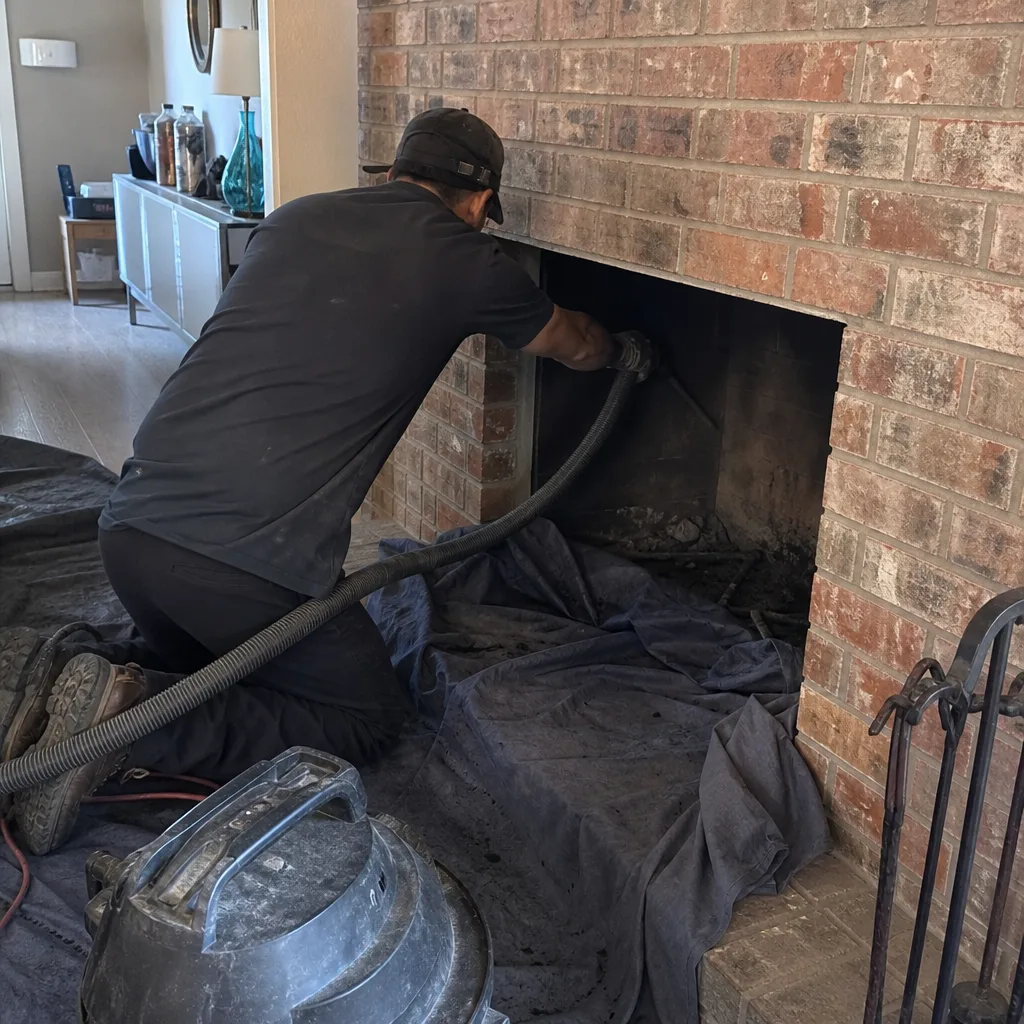 Before
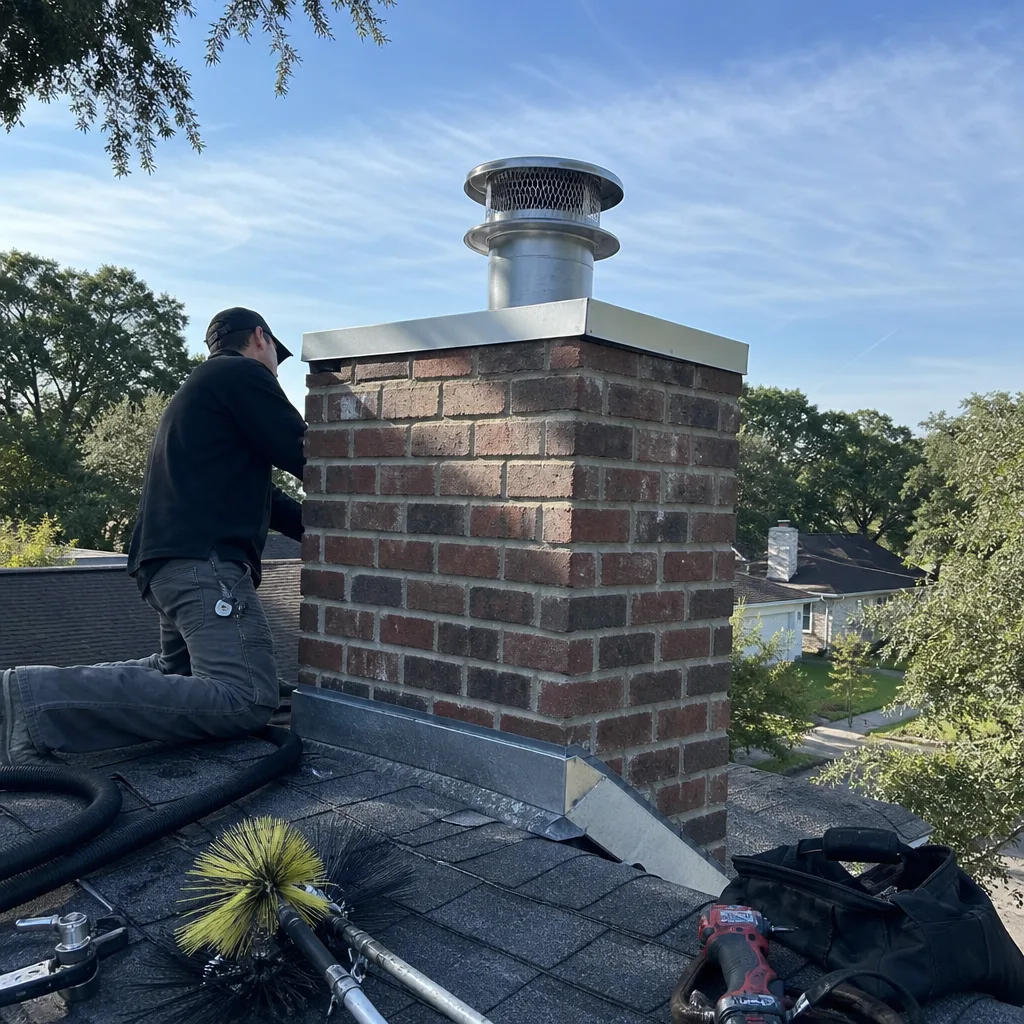 After
After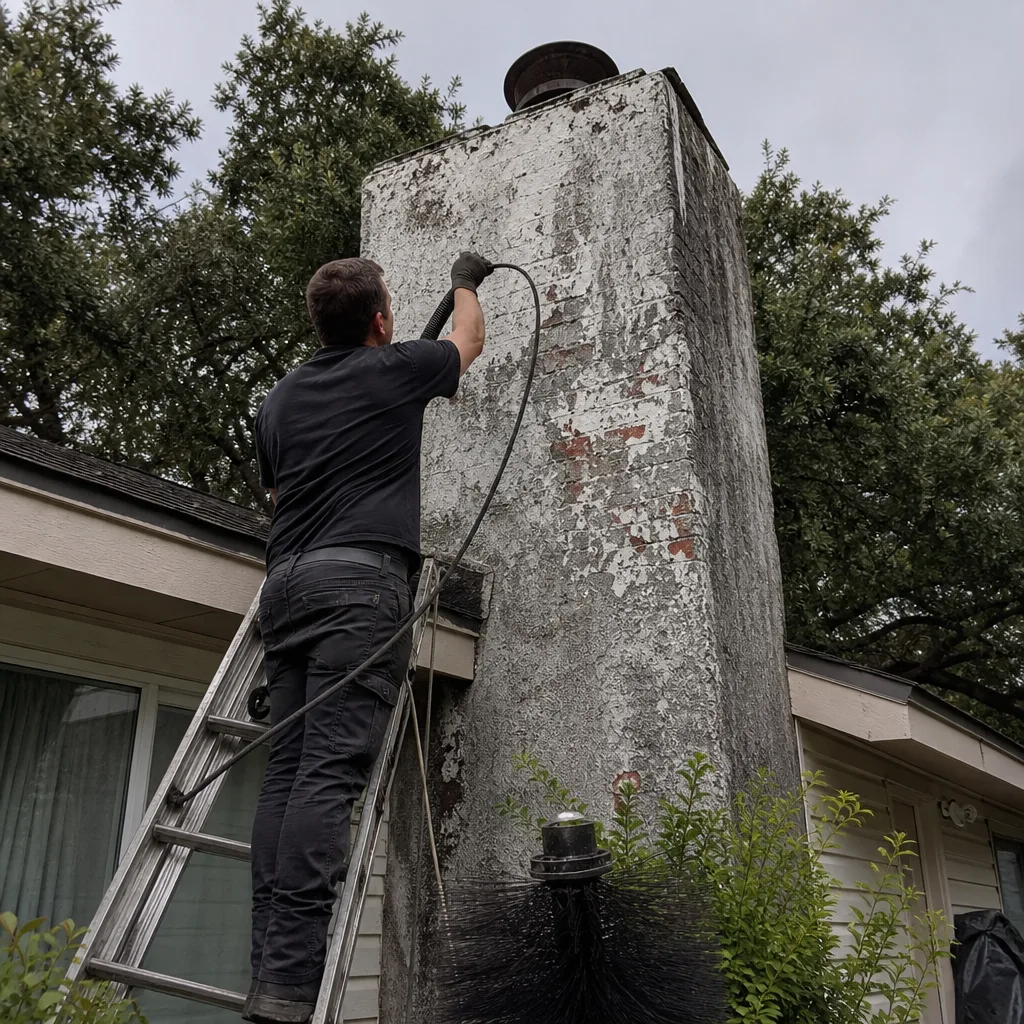 Before
 After
After Before
 After
After