
Last updated October 15, 2026
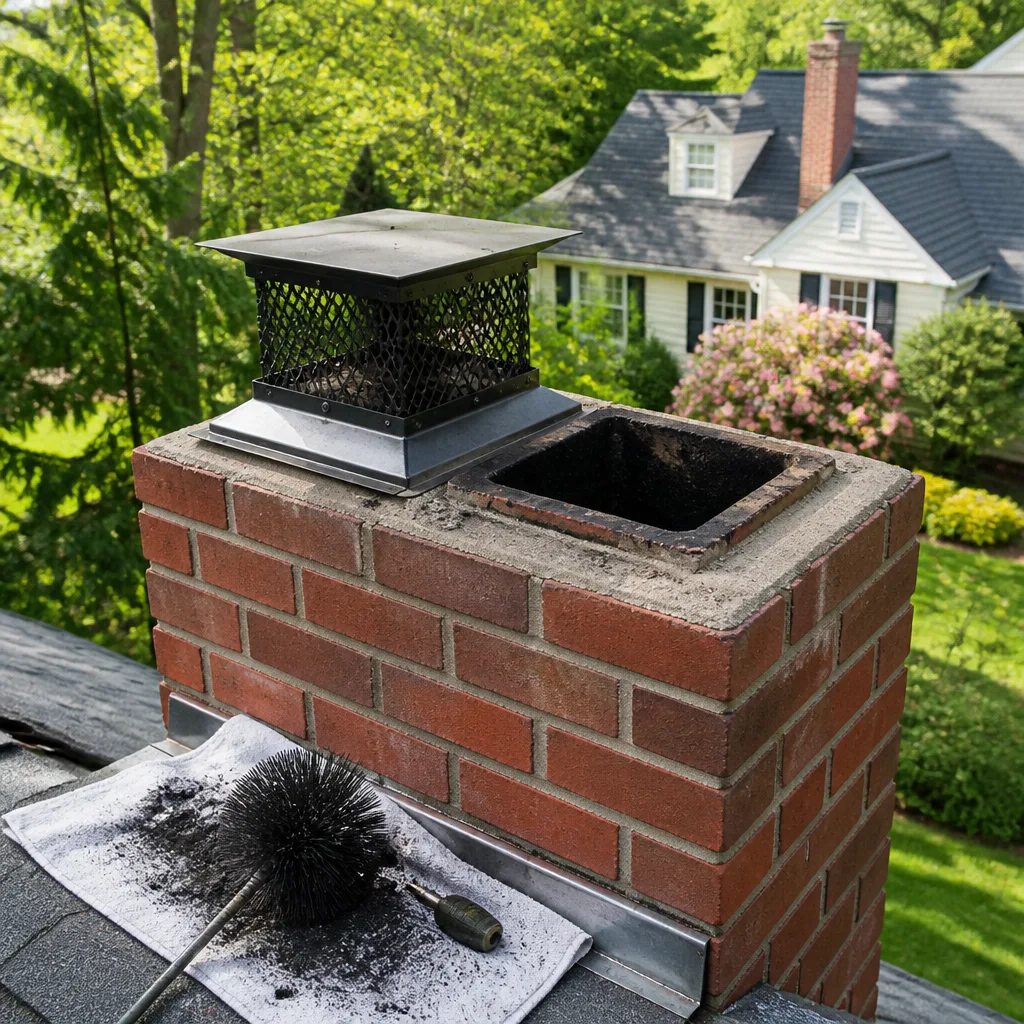 Sweep & inspection
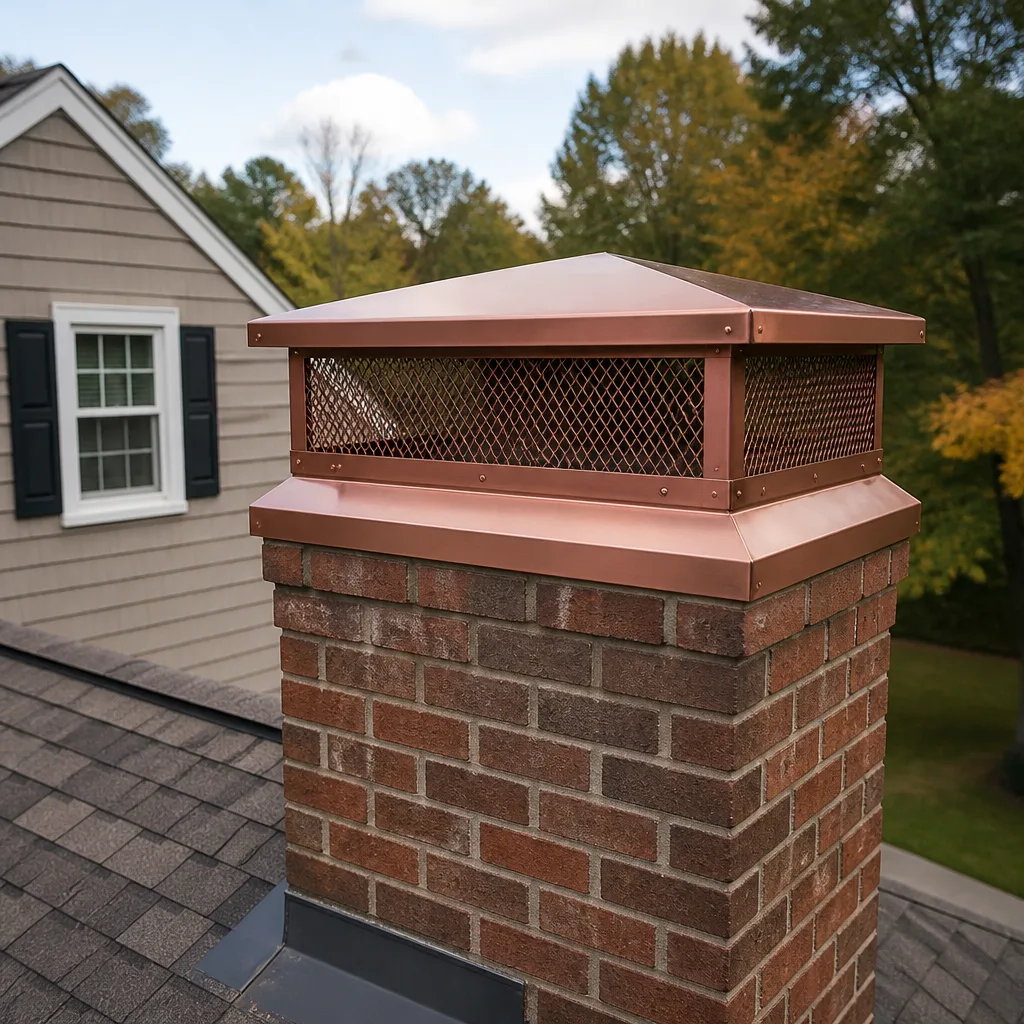 Caps & crowns
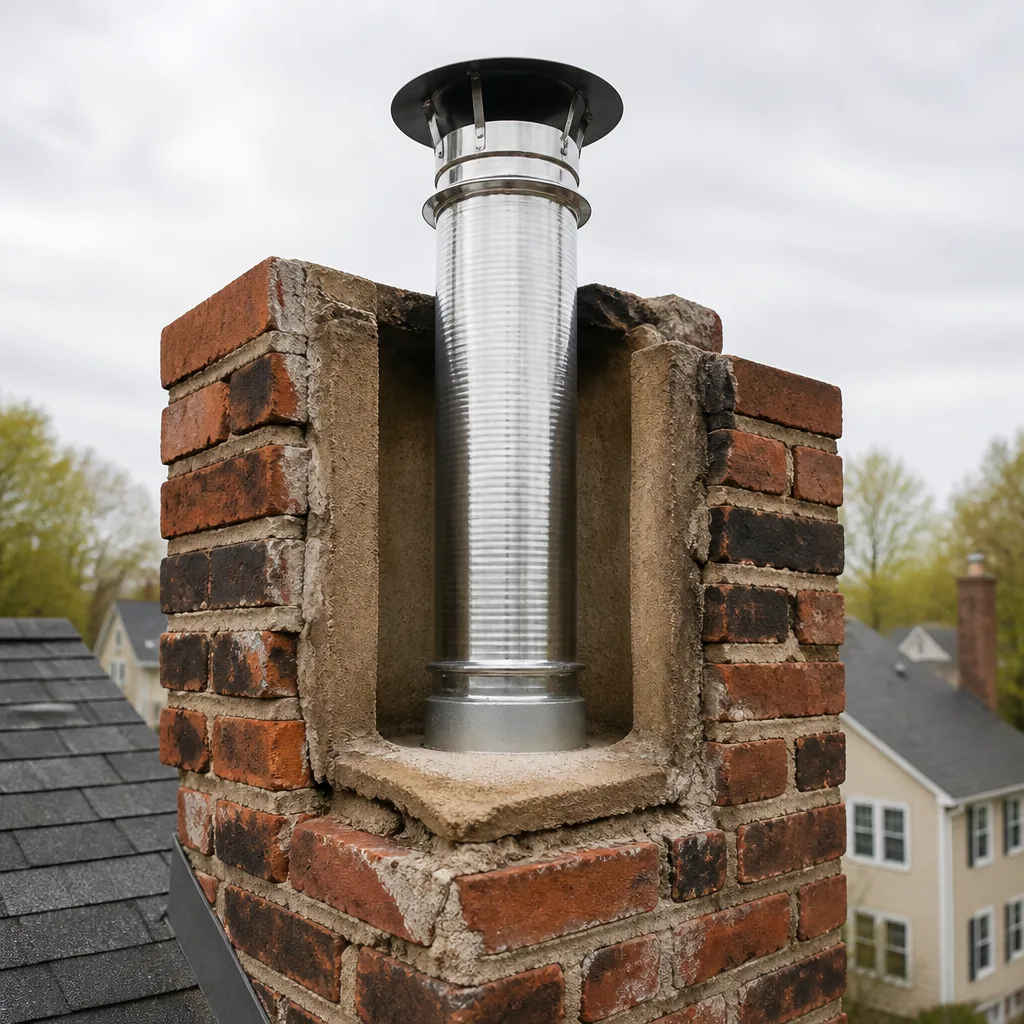 Flue relining
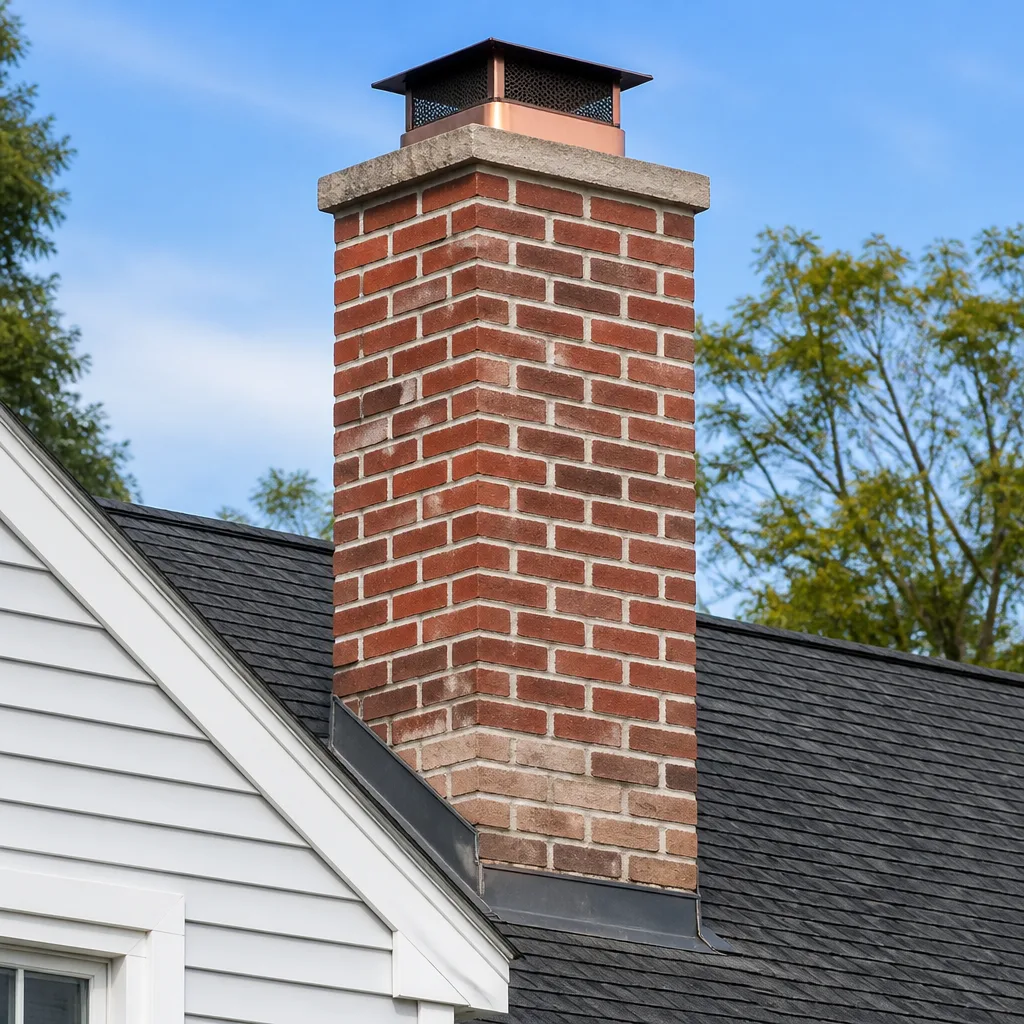 Masonry repair
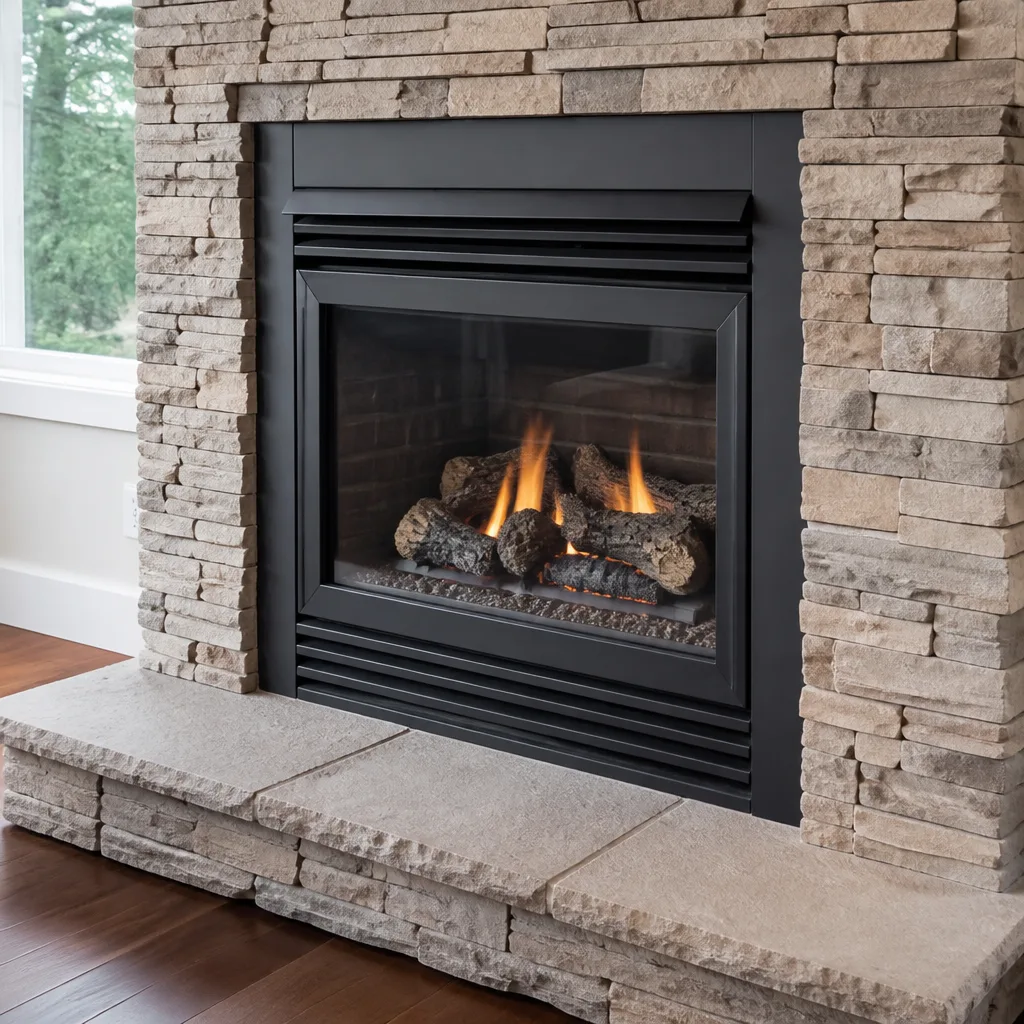 Gas fireplace service
Level 1 sweep and inspection to the NFPA 211 annual standard - flue, crown, cap, and flashing checked and photographed
Chimney sweep logs do not sweep chimneys. They loosen some creosote - which then falls where a brush and vacuum still have to collect it.
Chimney Cleaning Warning Signs: A Houston Homeowner’s Reference Guide
The most common chimney warning sign Houston homeowners ignore isn’t visible smoke or a loud crack. It’s a faint campfire smell drifting through the living room on a warm August afternoon, months after the last fire went out. That smell has a specific cause, and it is not normal. In this guide, we’ll walk through the warning signs that actually show up first in Houston homes, give you clear thresholds for when to stop using the fireplace, and explain what each sign means for the condition of your flue, firebox, and chimney structure.
Quick Answer
In Houston, the most common early chimney warning signs are odor-based: a campfire or musty smell coming from the fireplace when it hasn’t been used, which signals creosote buildup or moisture intrusion amplified by Gulf Coast humidity. Visual signs you can check without tools include white staining on firebox brick, rust streaks below the damper, and flaking mortar inside the firebox. Any of these means the chimney needs an inspection before the next fire, and some mean stop using the fireplace immediately.
Styles & brands we work with
Table of Contents
- Why Houston’s Humidity Makes Chimney Odors Worse Than Other Cities
- The Three-Tier Warning System: What to Note, What to Stop For, What to Call About Today
- Visual Warning Signs You Can Check From Inside Without Any Tools
- Reverse Draft in Houston: Why Smoke Entering the Room Is Usually a Cap or Crown Problem
- The One Sign That Overrides Everything: Evidence of a Previous Chimney Fire
- Animal Activity Warning Signs Common in Houston Neighborhoods
- Creosote Stages: What Houston Homeowners Should Know About What’s Coating the Flue
Why Houston’s Humidity Makes Chimney Odors Worse Than Other Cities
Chimney odor works differently in Houston than it does in drier climates, and understanding why matters for reading the warning signs correctly. Creosote, the tar-like byproduct of wood combustion, is naturally hygroscopic. That means it absorbs moisture from the air. In a city where summer humidity regularly sits above 80 percent, creosote inside a chimney flue pulls water vapor in constantly, even when the fireplace hasn’t been used in months. The result is an amplified, persistent campfire smell that seeps through a closed damper into the living space. That same humidity also accelerates the breakdown of creosote into a sharper, more acrid odor that Houston homeowners often describe as smelling like asphalt or old barbecue.
The smell itself is the warning sign, but what it signals underneath is more important. A strong creosote odor in the off-season usually means one of three things: the creosote layer is thick enough to be actively off-gassing, the flue has absorbed enough moisture that creosote is breaking down and dripping onto the smoke shelf, or there is animal debris mixed into the creosote that the humidity is rotting. All three conditions reduce the safe clearance between combustible material and the flue wall, and all three get worse the longer they sit in Houston’s climate. A chimney that only smells during the summer hasn’t “aired out.” It has been absorbing moisture and concentrating odor compounds against the closed damper.
For Houston families with kids and pets, the air quality concern is not abstract. The same moisture cycle that makes creosote off-gas also encourages mold growth on organic debris inside the flue, which circulates into the home through the fireplace opening. Pet-safe products and a sealed-off work area matter when the sweep happens, but before that, the first step is recognizing that an off-season campfire smell is a legitimate warning sign, not a quirk of an old house. Chimney sweep service in Houston starts with identifying what is actually inside the flue before anything gets removed.
The Three-Tier Warning System: What to Note, What to Stop For, What to Call About Today
Most warning-sign lists online treat every symptom as an emergency or every symptom as routine maintenance. Neither approach is useful. Instead, we use a three-tier system that assigns each sign to a clear action threshold. This is the same framework our technicians use when explaining findings to Houston homeowners during an inspection, and it gives you a way to categorize what you are seeing or smelling without guessing.
Tier 1: Note It and Schedule Service
Signs in this tier mean the chimney needs attention in the near future, but you don’t have to stop using the fireplace immediately if a fire is already planned. These are early-stage indicators that something is beginning to change inside the flue or firebox.
- A faint campfire or musty smell from the fireplace when it hasn’t been used in over two weeks.
- Small amounts of fine, dark dust collecting on the hearth or mantel after a windy day.
- Mild white streaking on firebox brick that you can wipe partially away with a dry cloth.
- Occasional cold downdraft you feel when standing near the fireplace on a cool evening without a fire lit.
- Seasonal odors that appear during Houston’s humid summer months and fade when the AC dries the air.
Tier 2: Don’t Light Another Fire Until Inspected
This tier includes signs that indicate compromised structural or safety conditions. The fireplace should stay cold until a certified inspection identifies the cause and the repair path. Lighting a fire with these conditions present risks smoke intrusion, accelerated liner damage, or carbon monoxide entering the living space.
- White, chalky staining that has formed a visible crust on the firebox brick (efflorescence, not just surface dust).
- Rust streaks running down from the damper or throat area onto the firebox walls.
- Flaking or spalling mortar within the firebox, especially if pieces end up on the hearth.
- Smoke that enters the room when you open the fireplace doors, even briefly, during startup.
- A strong acrid or chemical odor during or immediately after a fire, distinct from normal wood smoke.
- Visible dampness anywhere on the firebox wall or hearth, even a small dark patch.
Tier 3: Call Today
These are the signs that mean stop using the fireplace entirely and get a professional assessment as soon as possible. They point to active failure, uncontrolled moisture, or a hazard that worsens with every hour of exposure.
- Smoke entering the room continuously during a fire, not just at startup.
- A sweet, musty odor that suggests animal decomposition inside the flue or smoke chamber.
- Loud popping, cracking, or fluttering sounds coming from inside the chimney during a fire.
- Visible flames or sparks near the top of the chimney that you can see from outside at night.
- Any sign of honeycomb-textured creosote or discolored, blistered flue tiles visible from inside the firebox.
- Water dripping into the firebox during or after a Houston rainstorm.
Visual Warning Signs You Can Check From Inside Without Any Tools
Not every warning sign requires climbing onto the roof. Some of the most telling indicators are visible from inside the firebox, and Houston homeowners can check them in under ten minutes with a flashlight and reasonable caution. Here is what to look for, in order of what our technicians in Houston find most often.
- White staining on the firebox brick (efflorescence). This is mineral salts being drawn through the masonry by moisture and deposited on the brick surface as water evaporates. A small amount is environmental. A crusty, bright-white patch that grows over weeks means water is being pulled through the chimney structure, usually from a failing crown, cracked mortar, or missing cap. In Houston’s humid climate, this condition accelerates, because the masonry never fully dries between rain events.
- Rust streaks below the damper. Rust stains running downward from the damper or throat indicate that water is running down the flue and interacting with the metal damper assembly. The water itself often comes from a damaged chimney cap or open flue top. In Houston, this sign appears faster than in drier cities because the water event doesn’t have to be heavy; condensation from humid air alone can wet the metal enough to rust it.
- Spalling mortar on the smoke shelf. Use a flashlight to look up from the firebox into the area just above the throat, where the smoke transitions into the flue. If you see mortar chunks, flaking brick surface, or a gritty residue sitting on that ledge, the masonry is losing cohesion. Moisture is almost always the cause, and in Houston that moisture problem compounds month after month. Spalling is especially important to catch early because the smoke shelf is not visible from the roof, and it is a critical area for proper draft.
- Dark, glossy patches on the flue wall visible above the damper. This is glazed creosote, the most concentrated and most dangerous form. It lights at a lower temperature than other creosote stages and burns very hot. A glossy black patch that reflects your flashlight is a Tier 2 or Tier 3 warning depending on thickness.
When you call Kindling Chimney Houston for a chimney inspection, these are the first areas our technicians check, and we show you photos of what we find. You should never have to take someone’s word for the condition of your firebox or smoke shelf.
Reverse Draft in Houston: Why Smoke Entering the Room Is Usually a Cap or Crown Problem
Here is a scenario we hear often from Houston homeowners: the fireplace worked fine for years, and then one winter evening, smoke starts spilling into the room instead of going up the flue. The natural assumptions are that the flue is dirty or the damper isn’t fully open. Both can be true, but in Houston specifically, we find that the root cause is usually something outside at the top of the chimney, not a pressure problem inside the flue itself.
Houston homes are built with tight envelope standards that have gotten stricter over time. Running bathroom fans, range hoods, and whole-home ventilation systems creates negative indoor pressure, which competes with the chimney draft. That part matches the standard flue-pressure explanation. But we’ve inspected hundreds of Houston chimneys where the indoor pressure conditions are unchanged, and the smoke problem still appears. What changed is the cap or crown.
Here’s the logic. A missing or damaged chimney cap lets wind press directly into the flue opening from the top. In a flat, humid city like Houston, where wind patterns are inconsistent and often gusty during seasonal fronts, that direct pressurization overcomes a weak draft quickly. The crown, the concrete surface at the top of the chimney that sheds water away from the flue, when cracked, allows moisture into the flue. That moisture makes the flue interior cold and heavy, which suppresses draft. A cold, wet flue on a cool Houston morning will not draw properly no matter how long the fire burns. You can tell the difference by checking two things: does the smoke problem happen on humid or rainy days more than dry days? And can you see daylight or sky through the flue from the firebox when the damper is open? If the answer to either is yes, the problem is almost certainly at the top of the chimney.
A dirty flue is still worth ruling out, because creosote buildup narrows the flue opening and reduces draw. But if a standard chimney sweep in Houston doesn’t fix the problem, ask about the cap and crown before spending money on anything more invasive. We replace caps with professional-grade products from Olympia Chimney and seal crowns with durable materials built for repeated Houston rain and heat cycles.
The One Sign That Overrides Everything: Evidence of a Previous Chimney Fire
There is a warning sign that doesn’t show up like the others because it can’t be seen from the living room. It requires looking up the flue with the right equipment. But if it’s present, nothing else matters: all other warnings take a back seat, and the fireplace should not be used again until this has been evaluated.
The sign is evidence that a chimney fire has already happened inside the flue. It looks like one of two things. First, flue tiles that appear bloated, warped, or discolored beyond normal soot, often with vertical cracks or a rough, pocked surface. Second, creosote that has developed a honeycomb or bubbled texture, sometimes described as looking like a burned marshmallow. Both are signs of high heat exposure that compromised the flue’s integrity.
Why this overrides everything else: after a chimney fire, the flue liner may be cracked in ways that are not visible without a camera inspection. A cracked liner allows heat and combustion gases to reach combustible framing around the chimney chase. It means the next fire, even a small one, may be burning against a structure that is no longer containing it. The only responsible action is a Level 2 inspection, which includes a full camera scan of the interior flue from top to bottom.
In Houston, chimney fires are underreported because they often happen without the homeowner knowing. The first sign is frequently just a loud rushing or popping sound from the chimney, and then the fire dies out on its own. Months later, an inspector finds the damage. If you remember hearing something unusual during a fire, even if you didn’t think much of it at the time, bring it up when scheduling the inspection. It changes what we look for. Fireplace repair in Houston in this category starts with the camera inspection, never with a quote for repairs no one has verified.
Animal Activity Warning Signs Common in Houston Neighborhoods
Houston’s tree canopy and mild winters are ideal for the animals that find their way into chimneys. The most common we see are chimney swifts, which are federally protected, and raccoons, which are not. The warning signs are distinct, and knowing the difference matters because the response is different.
- Scratching or fluttering sounds inside the chimney during daytime usually means chimney swifts. These migratory birds roost and nest inside flues during spring and fall migration, and they cannot be removed while active. The nest must stay until the birds leave on their own.
- Heavier thumping or growling sounds at night more often means a raccoon. Raccoons use chimneys as den sites for raising young in spring, and they can be destructive to caps and dampers.
- A strong, sweet, musty odor near the fireplace usually means an animal has died inside the flue or smoke chamber. This is a Tier 3 sign, both for air quality and for the condition of the flue.
- Droppings, nesting material, or feathers visible in the firebox confirm active or recent animal use. Debris like this acts as kindling inside the flue and must be removed before the next fire.
For Houston homeowners, the practical warning here is that animal use changes the risk profile of the chimney even after the animal is gone. Nests, droppings, and feathers turn into fire hazards and moisture traps. Houston’s humidity then rots the organic material, which creates the odor problem described earlier and encourages further masonry deterioration. When we remove animal debris as part of a chimney sweep, the camera inspection that follows confirms whether the liner was damaged by the animal’s entry or by the moisture the nest retained.
Creosote Stages: What Houston Homeowners Should Know About What’s Coating the Flue
Creosote is a byproduct of wood combustion, but it doesn’t collect evenly or look the same from chimney to chimney. Understanding the different stages gives Houston homeowners a reference point for evaluating what a sweep tells them and for connecting what they are smelling to what is actually inside the flue.
Stage 1 creosote is a light, flaky, gray or brown dust that brushes off easily. This is the normal byproduct of a properly burning fire. A standard annual sweep removes it, and it isn’t a safety concern by itself. If you’re seeing fine dark dust on the hearth, it may be Stage 1 creosote disturbed by airflow.
Stage 2 creosote is a dense, tar-like layer that is dark brown to black and requires mechanical scraping to remove. It forms when fires burn cooler, which happens often in Houston because mild winters mean homeowners burn small, low fires rather than hot, full fires. Stage 2 creosote is the stage most likely to produce the off-season odor problem, because its tar structure absorbs and holds moisture aggressively. A chimney with Stage 2 creosote is still safe to use after a sweep, but it should not be used again until that sweep happens.
Stage 3 creosote is glazed, hard, shiny, and sometimes looks like glass. It forms when creosote that has gone through repeated heat and moisture cycles concentrates into a dense, high-energy fuel. Stage 3 creosote is the most difficult to remove and the most dangerous to burn against. It is the type most involved in chimney fires, and it typically requires chemical treatment or professional removal with specialized equipment, sometimes including products from Gelco that are designed to break down glazed creosote safely.
We point this out not to make creosote sound dramatic, but because the stage matters for what the fix costs and how it should be done. A Houston homeowner who knows the difference between Stage 1 and Stage 3 can evaluate the explanation they’re given. Our technicians use camera footage to show you exactly which stage is present before recommending anything, because you should never have to take a sales pitch on faith. The brands we use, including DuraFlex for liners and HeatShield for flue repair, are chosen based on what the camera shows, not on a one-size-fits-all repair package.
Common Mistakes to Avoid
- Assuming the campfire smell is just “the house settling.” A closed damper means no meaningful air exchange between the flue and the living space. If you smell fire when there is no fire, something is off-gassing, and that something is creosote or organic decay. Both need a professional look, especially in Houston’s humidity.
- Burning a hotter fire to “clean out” the chimney. High-heat fires do not clean creosote, they bake it, which can turn Stage 2 creosote into Stage 3 glazed creosote. In the worst case, a hot fire against a heavy creosote layer is a chimney fire trigger. If the firebox or flue has creosote buildup, the fireplace should stay cold until a sweep happens.
- Blocking the flue or fireplace opening to stop the odor. Closing off the opening traps humidity and accelerates mold growth inside the firebox and smoke chamber. You’ll lock in the problem and make the eventual cleanup harder, not easier.
- Ignoring a moisture sign because “Houston is humid anyway.” Humidity explains why masonry dries slowly in Houston, but it doesn’t explain visible rust, crusty efflorescence, or water droplets in the firebox. Those point to a specific leak or cap failure that can be found and fixed.
- Waiting until fall to investigate a spring or summer warning sign. Houston’s storm season runs from June through November, and every rain event during that window makes an existing moisture problem worse. A cracked crown found in July is a small repair. The same crack found in December after a hurricane season of rain is a masonry project.
- Letting a handyman inspect the chimney instead of a chimney-specific professional. Chimney flues, caps, and liners have specific code requirements and failure modes. A general contractor won’t have a camera system built for flue inspection, and the stakes are too high to skip that step. Houston’s climate makes the margin for error narrower, not wider.
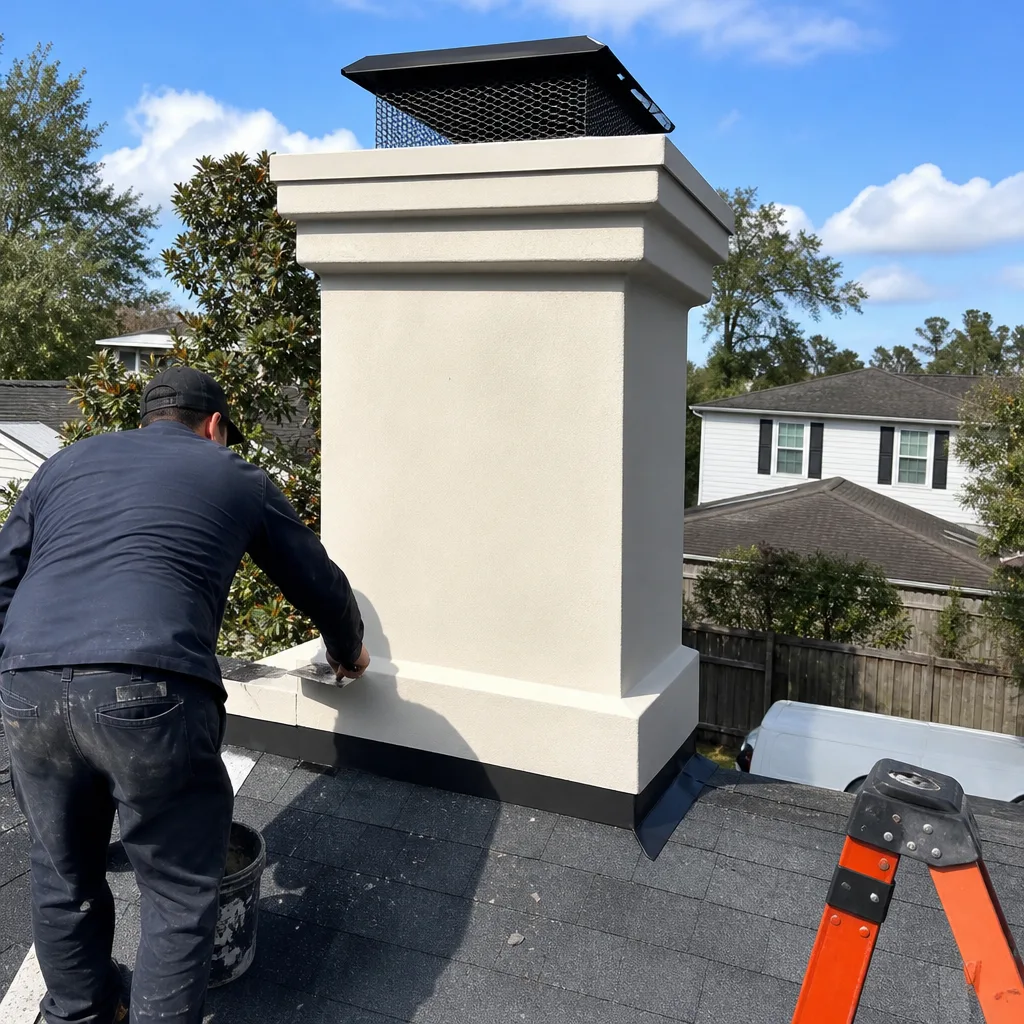
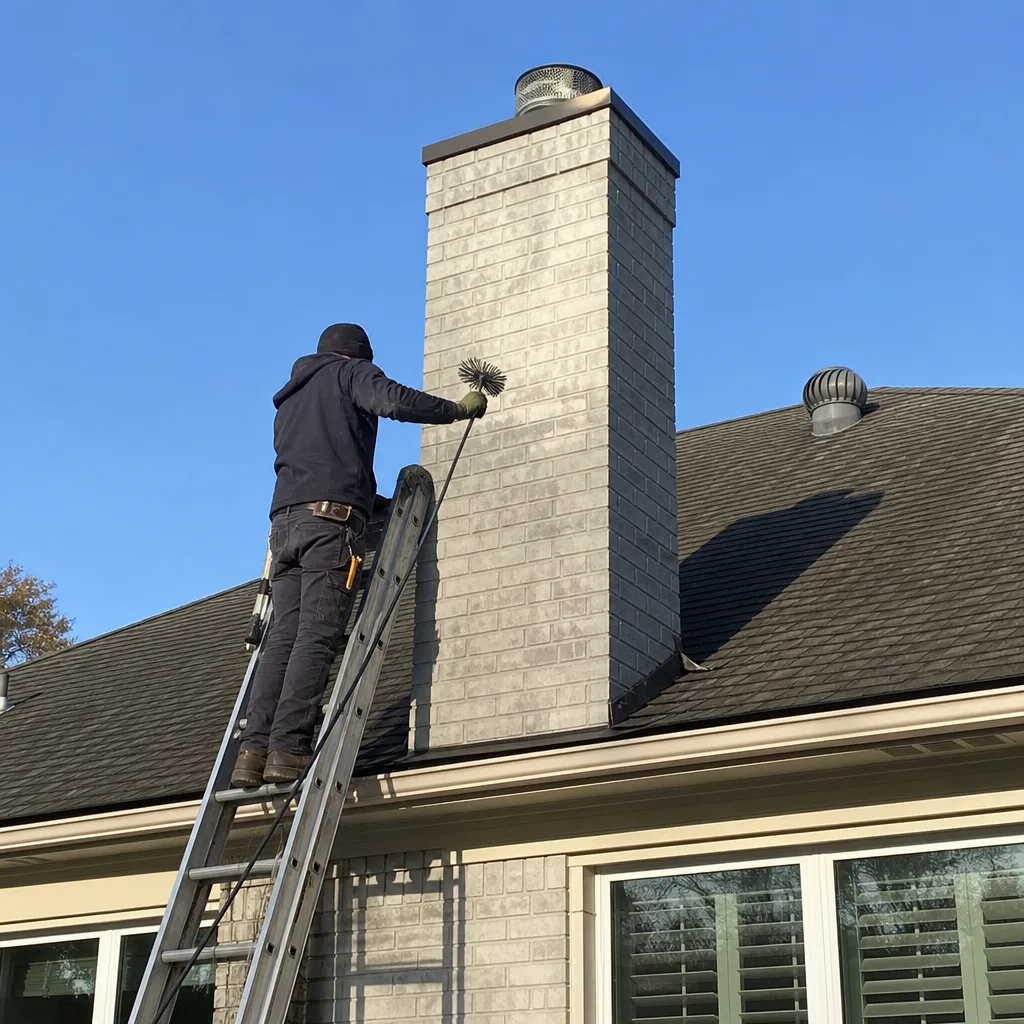
See the difference
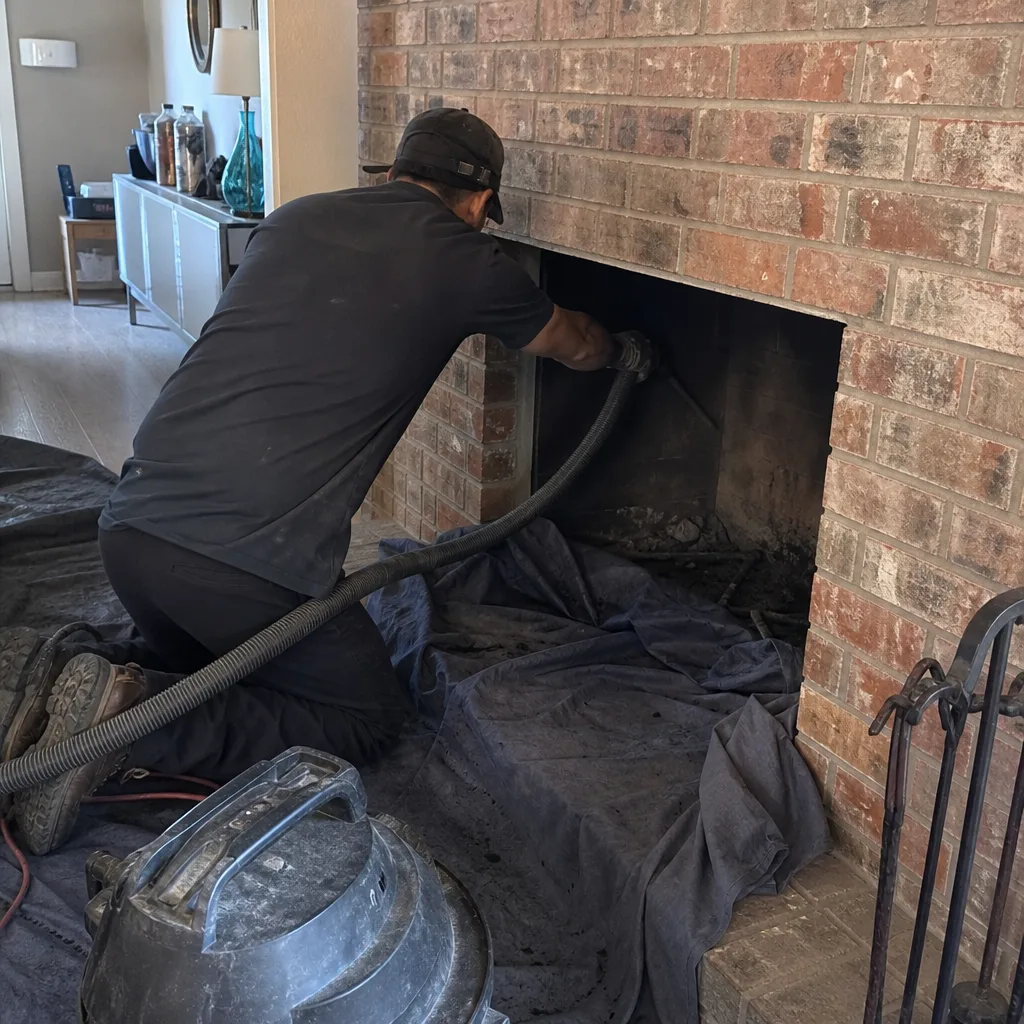 Before
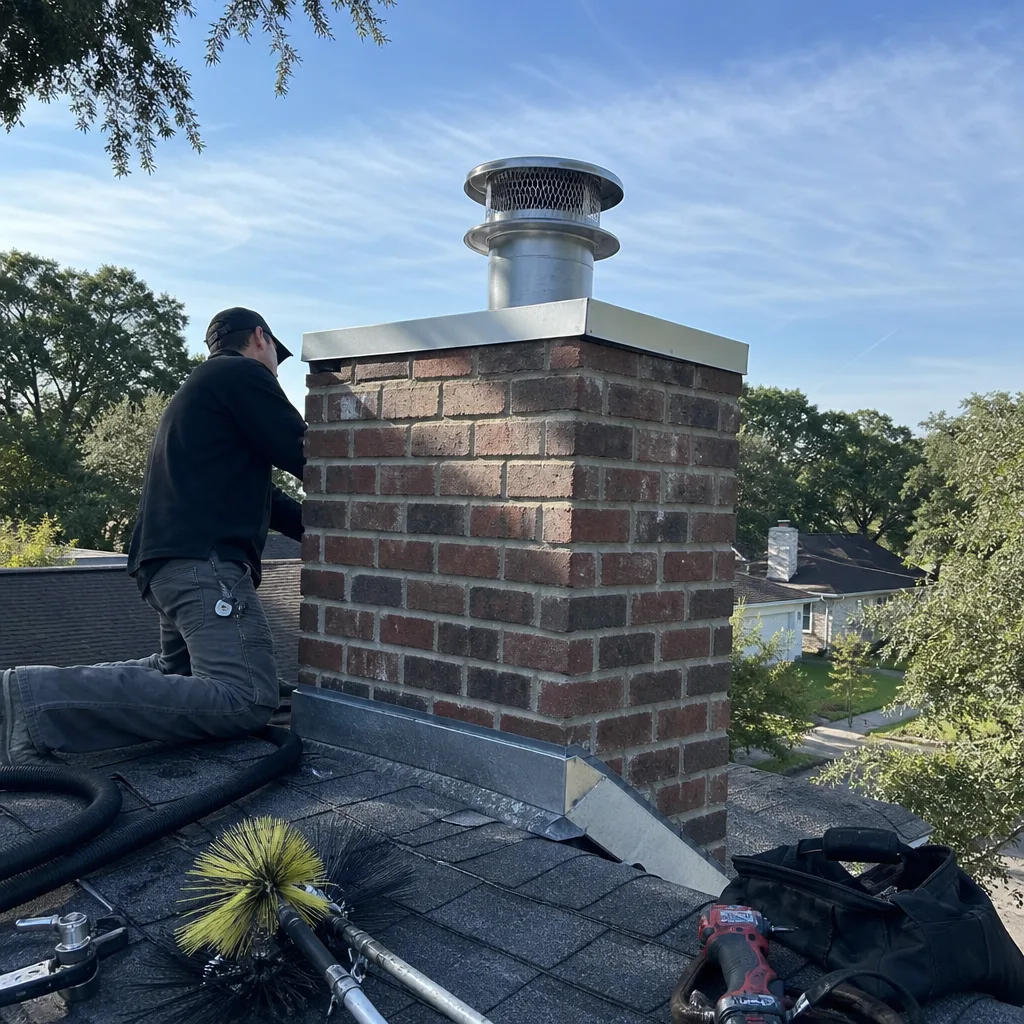 After
After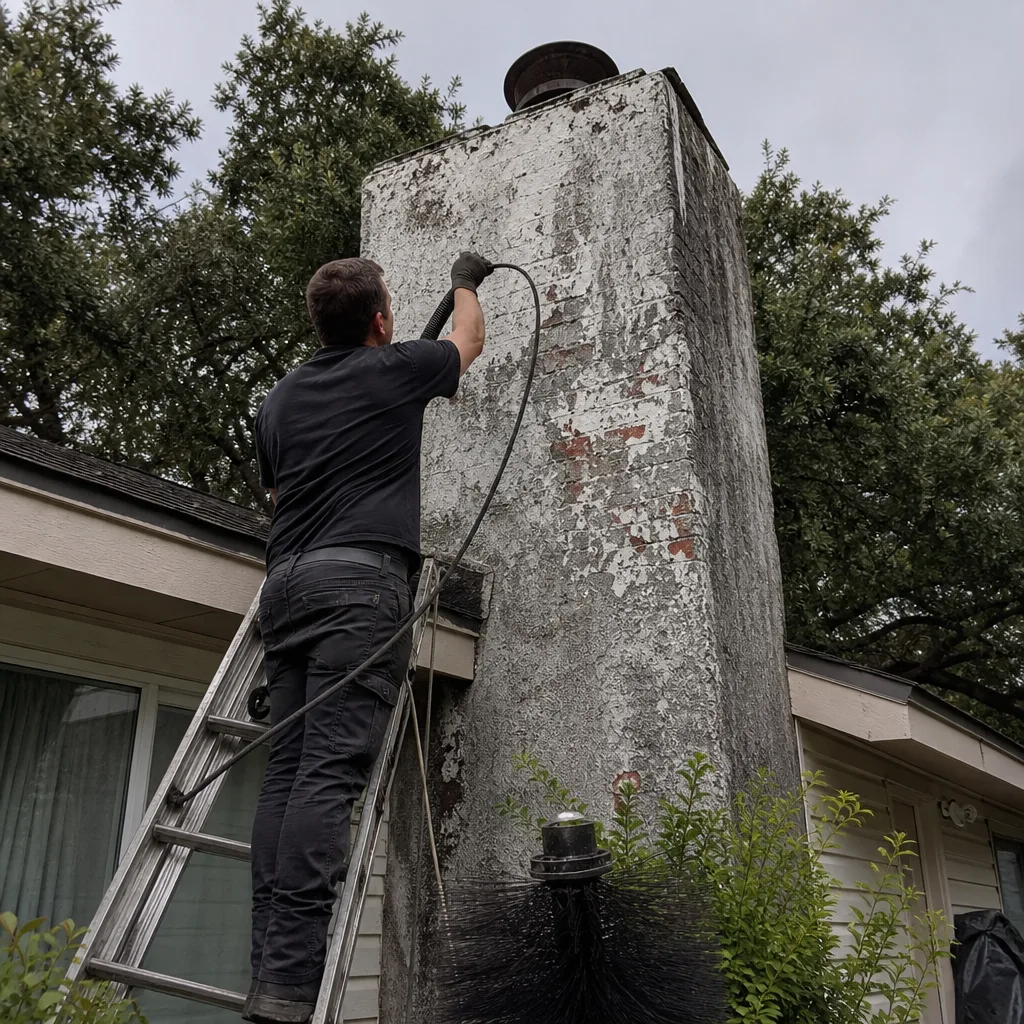 Before
 After
After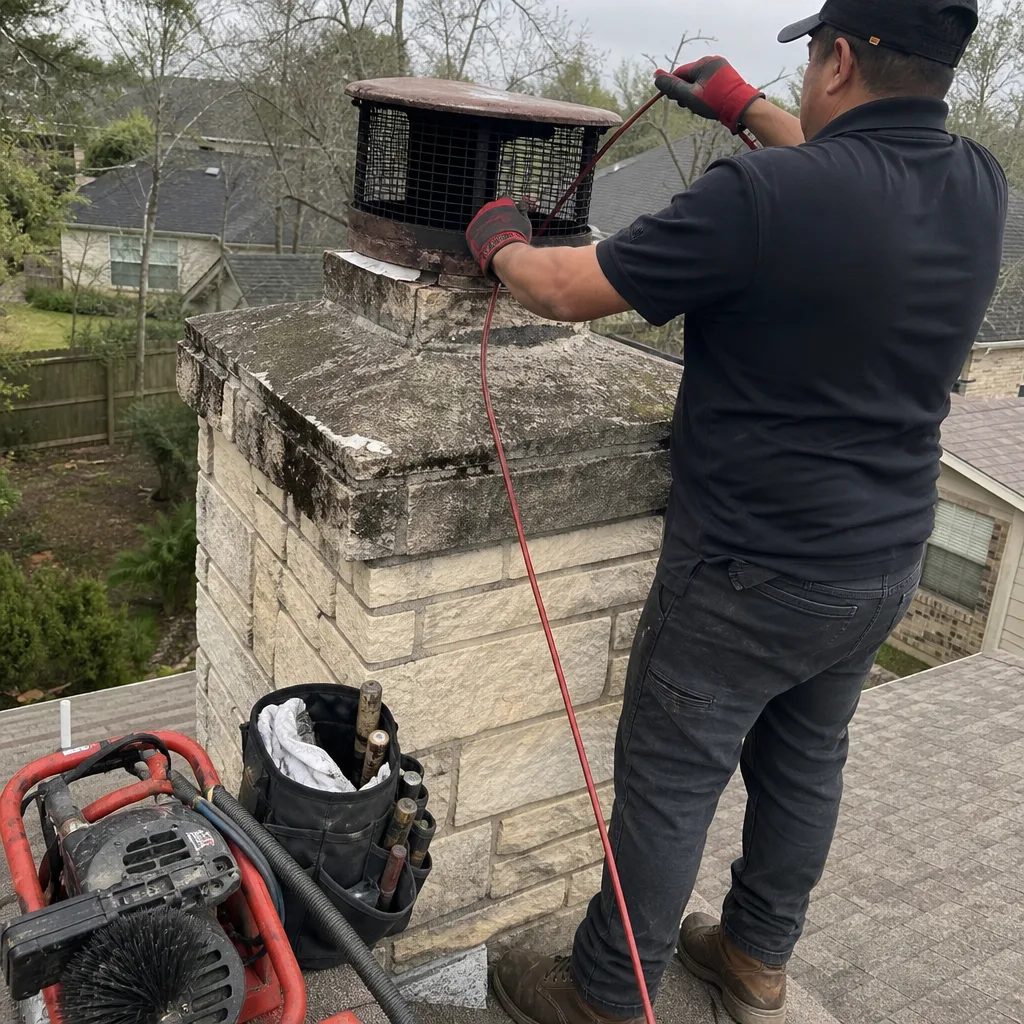 Before
 After
AfterWhen to Call a Professional
Call a chimney professional when you notice any Tier 2 or Tier 3 sign, when an animal has been inside the flue, when you’ve gone more than a year without a sweep despite regular fireplace use, or when you’ve smelled campfire odor in the off-season more than once. Also call if you’ve recently bought a home in Houston and don’t have records showing the chimney was inspected in the last three years. These aren’t soft suggestions. A flue with creosote buildup, animal debris, or hidden liner damage is not something that resolves on its own, and Houston’s humidity guarantees it won’t stay stable. Kindling Chimney Houston offers free estimates in Houston, and a live person answers the phone 24 hours a day, 7 days a week. Call (254) 978-7413 to schedule.
Frequently Asked Questions
The clearest signs of an unsafe chimney are smoke entering the room during a fire, visible rust or white crust on the firebox walls, a strong off-season campfire odor, and any evidence of animal activity inside the flue. Any of these means the fireplace should stay cold until a certified inspection identifies the cause. When in doubt, call (254) 978-7413 for an evaluation. Estimates are free.
That smell is creosote inside the flue absorbing moisture from Houston’s humid air and off-gassing into the living space through the closed damper. The cause of the underlying issue may be creosote buildup, animal debris, or moisture intrusion through a damaged cap or crown. All of those conditions are identified with a camera inspection, and none of them go away on their own.
The standard recommendation is once per year for any fireplace used regularly during the burning season. Homes in Houston that burn mostly during the short winter season and rarely during the rest of the year still need an annual check, because humidity causes creosote to break down and collect moisture even when the chimney sits dormant. Homes with known moisture problems or heavy use should be swept more often.
White staining, called efflorescence, means water is moving through the masonry and leaving mineral deposits on the surface as it evaporates. It tells you there is a moisture source somewhere in the chimney system, usually a cracked crown, damaged cap, or failing mortar. In Houston, where building materials stay damp longer, efflorescence tends to appear earlier and spread faster than in dry climates.
Rust on the damper itself doesn’t prevent safe operation if the damper still opens and closes correctly. But the rust is a warning that water has been entering the flue above the damper, which means there may also be damage to the liner or firebox you can’t see. It is safest to have the chimney inspected before lighting another fire, especially if the rust appeared recently or is spreading.
Most standard chimney sweeps in Houston run between about $180 and $350, depending on the level of creosote buildup, the condition of the chimney, and whether additional services like a camera inspection are included. A sweep combined with a full inspection typically runs higher because of the equipment and time involved. Kindling Chimney Houston provides a written price before any work starts, so you’ll know the exact cost before we begin. Call (254) 978-7413 for an exact quote.
The Bottom Line
Houston homeowners should treat chimney warning signs differently than homeowners in drier climates, because the humidity here changes how creosote behaves, how odors travel, and how masonry decays. The early signs are smell-based and easy to rationalize away: a campfire smell in August, a musty note near the fireplace, a faint dust on the hearth. The later signs are visual and confirm the problem: white crust, rust streaks, spalling mortar, and glossy creosote on the flue wall. The one sign that always overrides everything else is evidence of a previous chimney fire, which requires a Level 2 camera inspection before the next burn. The principle is simple: a clean, dry, damage-free flue is safe to use. Everything else is a warning. If you’re seeing or smelling something that doesn’t seem right, Kindling Chimney Houston offers free estimates across the Houston area. Call (254) 978-7413 and talk to a live person who can tell you exactly what to expect.
Written by Danny Cortes, Owner at Kindling Chimney Houston, serving Houston since 2003.