
Last updated October 15, 2026
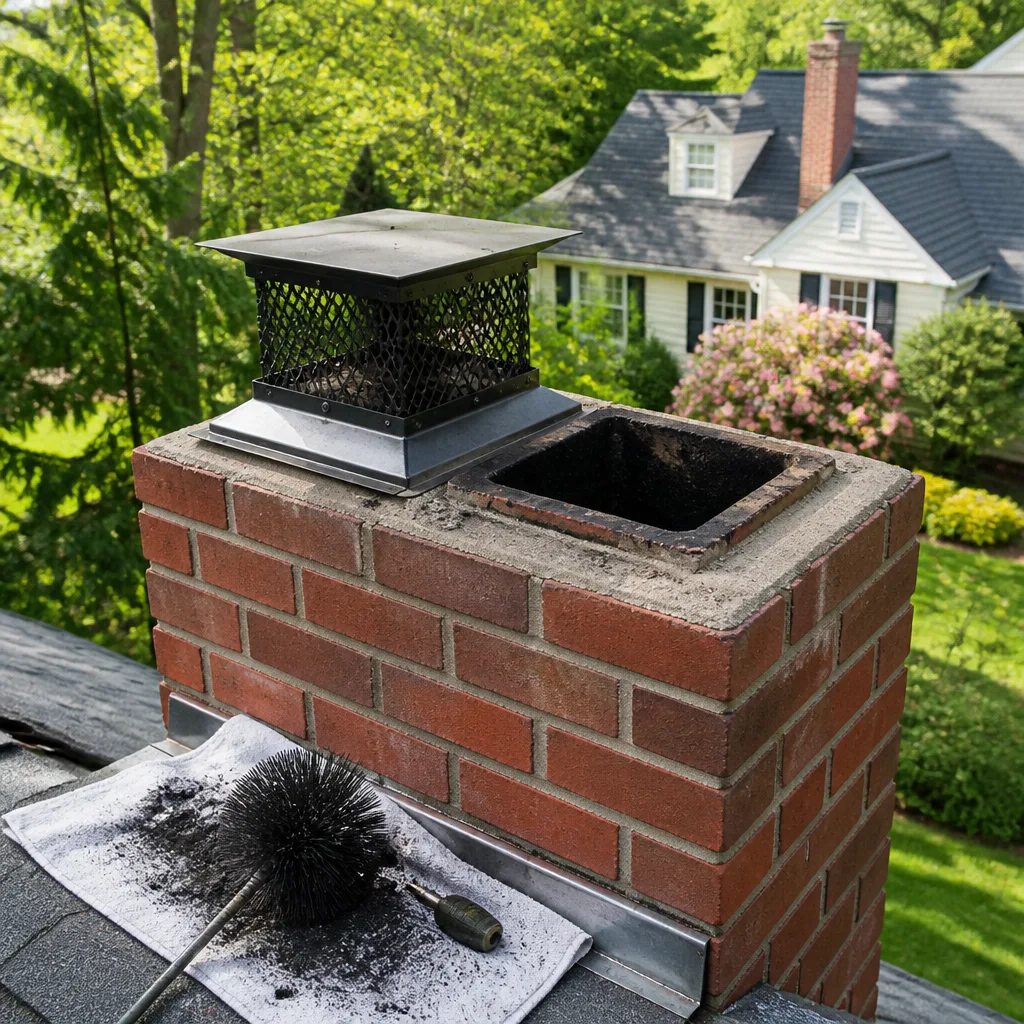 Sweep & inspection
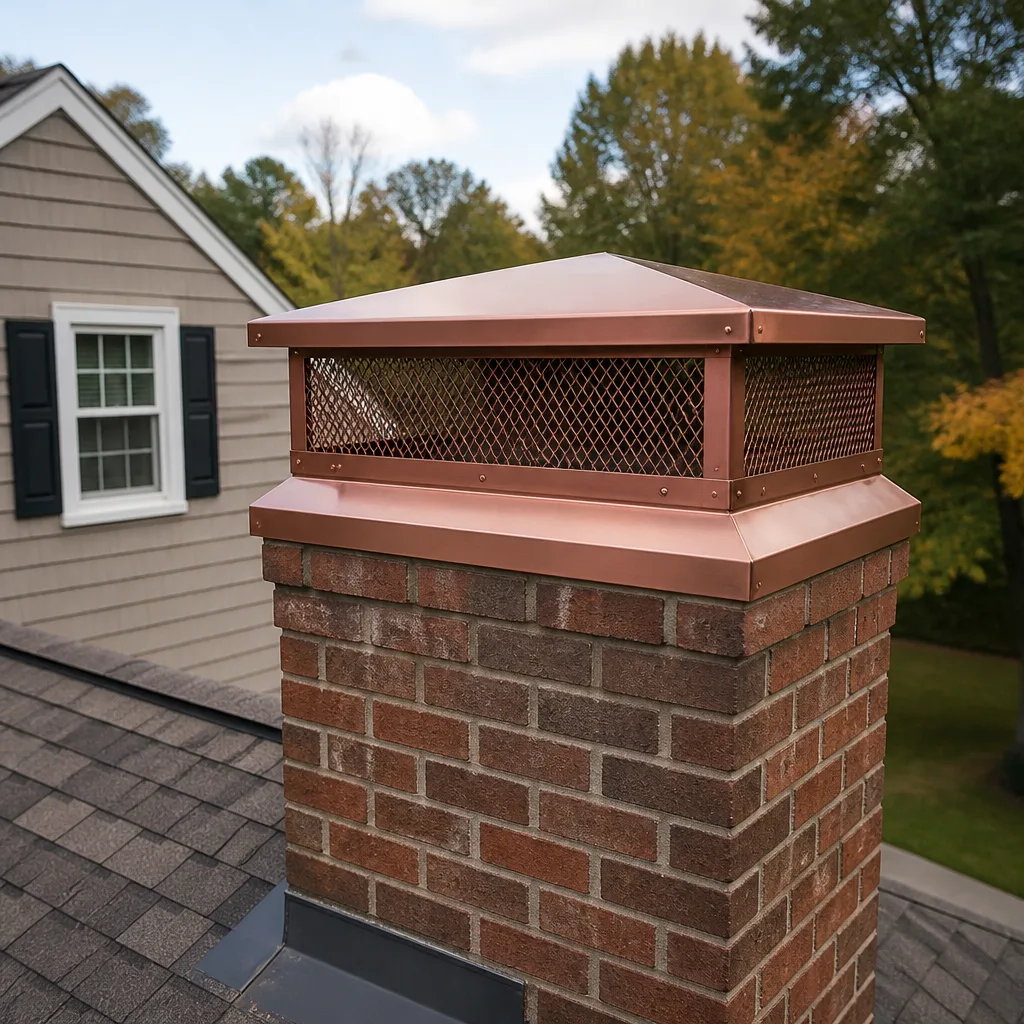 Caps & crowns
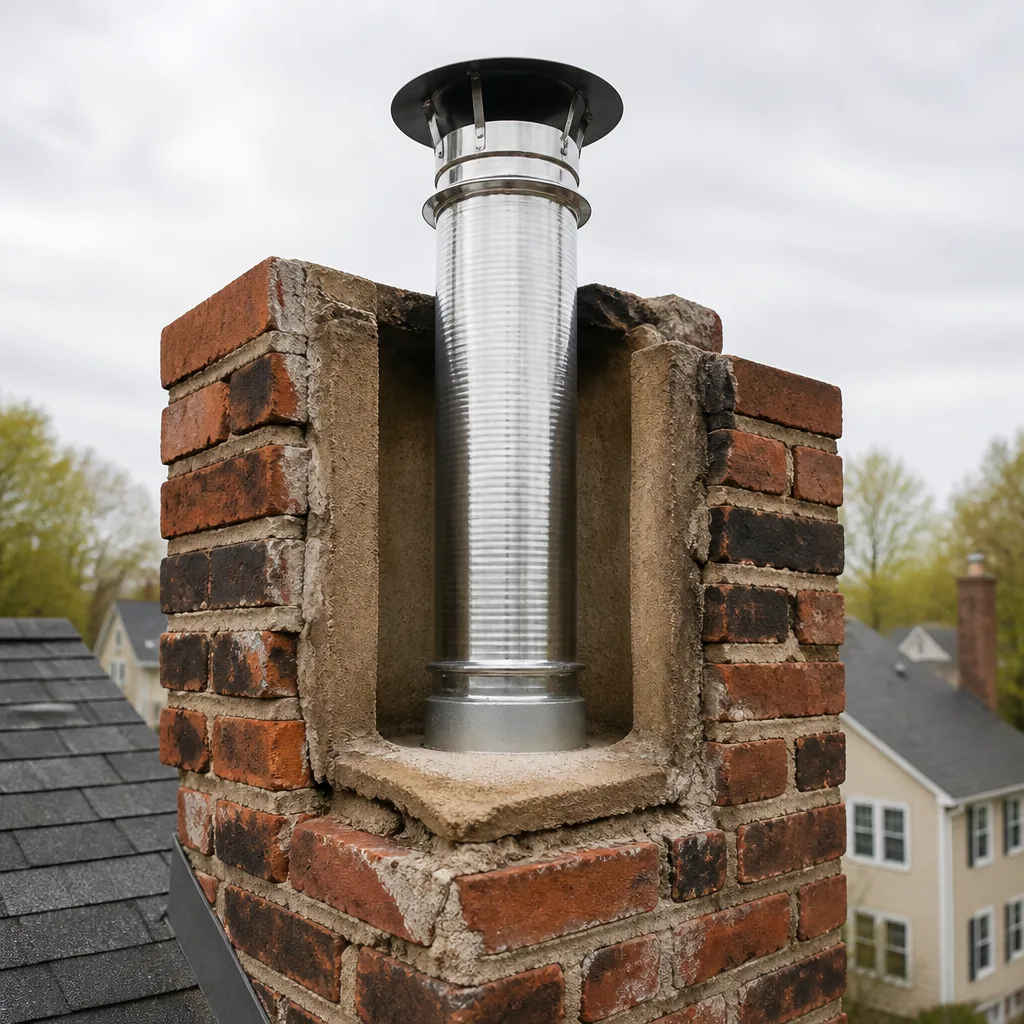 Flue relining
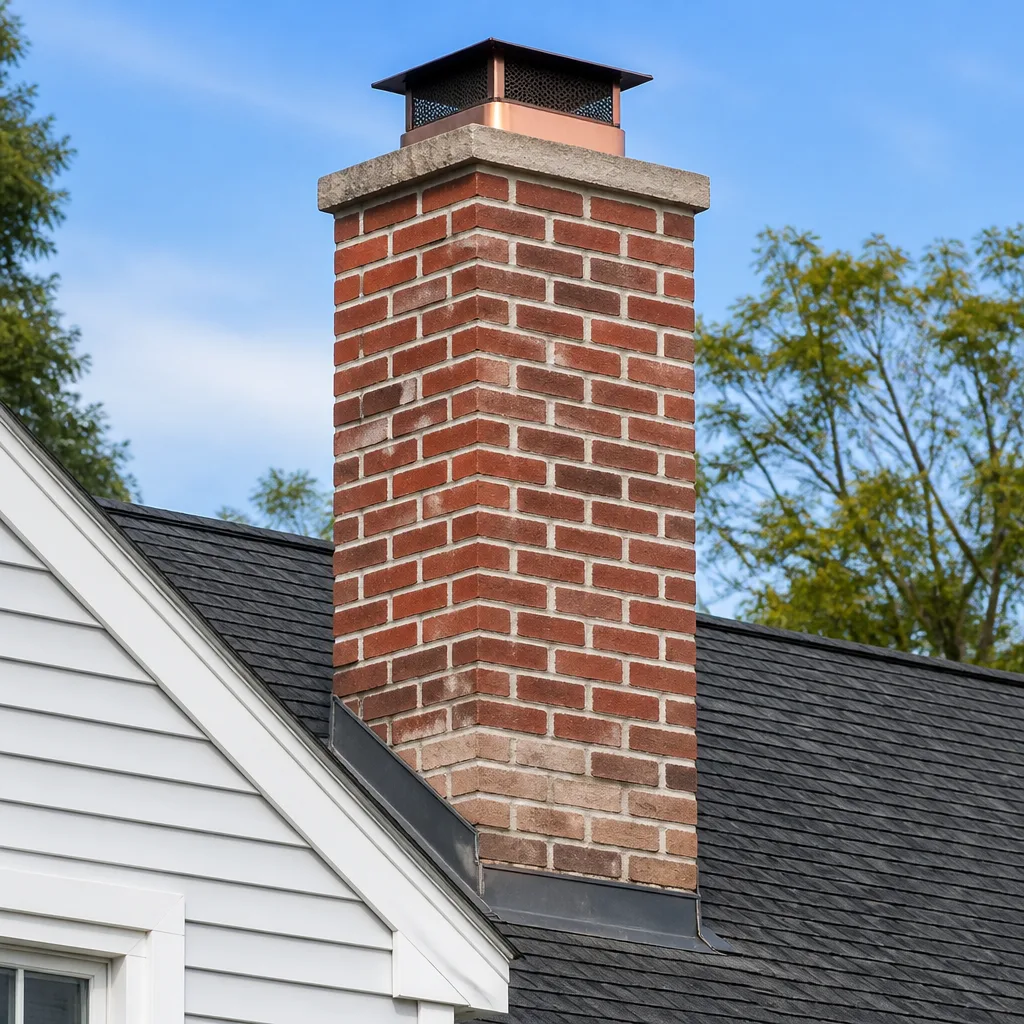 Masonry repair
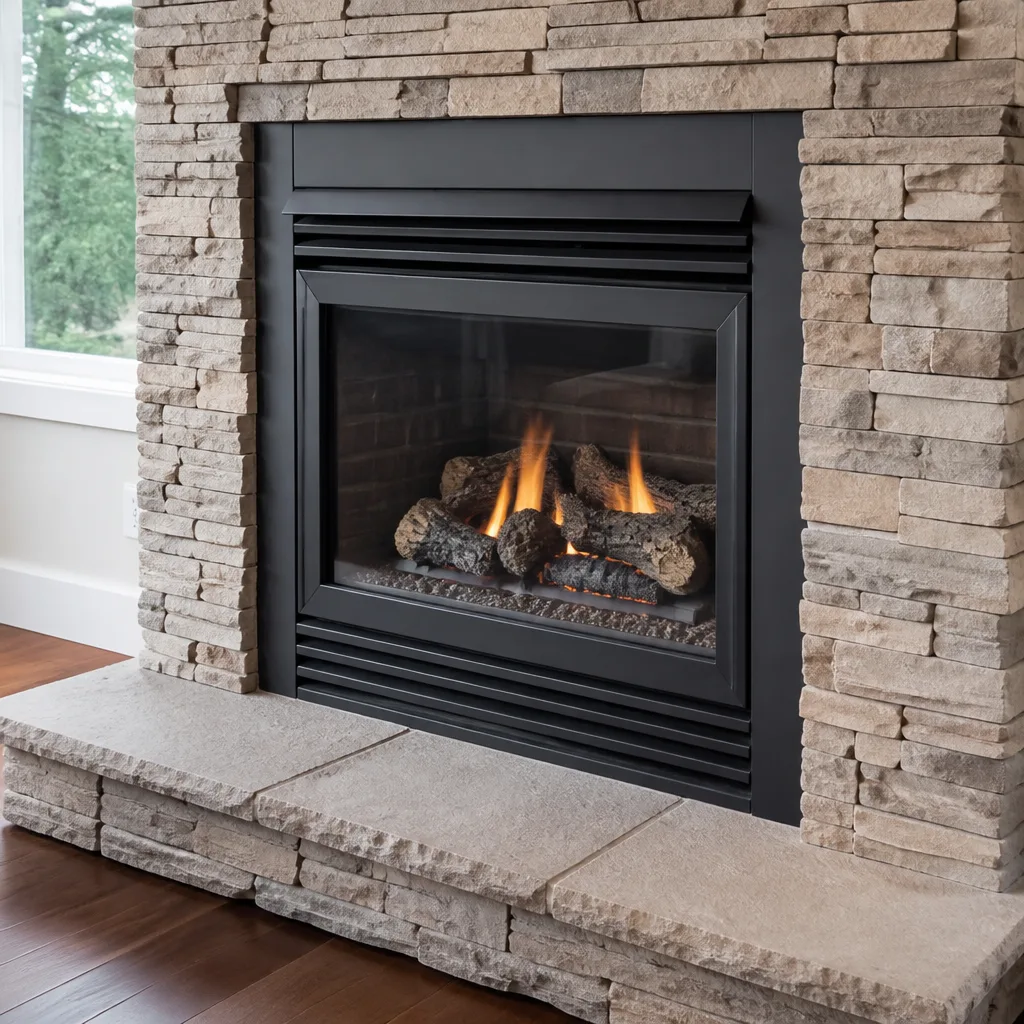 Gas fireplace service
Level 1 sweep and inspection to the NFPA 211 annual standard - flue, crown, cap, and flashing checked and photographed
Chimney sweep logs do not sweep chimneys. They loosen some creosote - which then falls where a brush and vacuum still have to collect it.
Seasonal Chimney Cleaning Care for Houston: Year-Round Homeowner’s Guide
In Houston, a fireplace gets lit for roughly 60 days a year. The other 305 days, it collects humidity, nesting material, and oxidizing metal, and most homeowners do nothing about it. The damage that shows up in October was built all summer. This guide walks through the four distinct phases of a Houston chimney year, what to check during each one, what actually needs professional attention, and what you can safely handle yourself. For chimney cleaning warning signs every Houston homeowner should watch for, see our dedicated reference guide. You’ll learn why Houston’s off-season is harder on a chimney than its burn season ever is, and what a few specific checks each spring and fall can prevent.
Styles & brands we work with
Quick Answer
Seasonal chimney care in Houston means four things each year: a post-season close-up in March (damper closed, cap checked), summer monitoring for wasps and chimney swifts (April through September), an October pre-season inspection before the first fire, and a professional chimney sweep in Houston every 1 to 2 years depending on burn frequency. The single highest-ROI investment is a properly fitted chimney cap with a screened side, which blocks most off-season problems before they start.
Table of Contents
- The Four-Phase Houston Chimney Year
- Why the Off-Season Damages More Than Burn Season
- Phase 1: Burn Season (November through February)
- Phase 2: Post-Season Close-Up (March)
- Phase 3: Summer Dormancy Protection (April through September)
- Phase 4: Pre-Season Restart (October)
- The Chimney Cap: Your Best Off-Season Defender
- Common Mistakes to Avoid
- When to Call a Professional
- Frequently Asked Questions
- The Bottom Line
The Four-Phase Houston Chimney Year
Most chimney advice is written for places with real winters: burn hard from October to March, close things down in spring, inspect in fall. Houston doesn’t work that way. Our burn season is short and intermittent. We light a fire on the handful of cold snaps between November and February, then the fireplace sits dormant through a long, humid stretch that runs from March into October. That’s actually the harder stretch on the chimney. Here’s the year broken into the four phases we use when advising Houston homeowners:
- Burn season (November through February): The fireplace gets used irregularly, maybe 10 to 20 fires total, on evenings and weekends when temperatures drop below 50. The main job here is watching for smoke that doesn’t draw properly and keeping the firebox clear of ash buildup between uses.
- Post-season close-up (March): After the last fire, the damper needs to close fully and stay closed. This one step keeps humidity, roaches, and nesting birds out for the next seven months.
- Summer dormancy protection (April through September): The chimney sits empty and dark. That’s exactly what wasps, chimney swifts, and humidity-driven rust want. A quick monthly visual check catches most problems while they’re still small.
- Pre-season restart (October): Before the first fire, verify the flue is clear, the damper opens and closes smoothly, and the cap is intact. Eight months of dormancy is enough time for a nest to appear, a screen to rust through, or creosote from last season to absorb enough moisture to become more corrosive.
Each phase has one main action, and none of them take more than a few minutes per month. Together they prevent most of the expensive repairs we see in Houston homes.
Why the Off-Season Damages More Than Burn Season
Houston’s average relative humidity runs between 70 and 90 percent for most of the year. That’s the core problem. Creosote, the residue left behind after burning wood, is hygroscopic, meaning it absorbs moisture from the air. A chimney that sat all summer in Houston humidity has creosote that’s damp, acidic, and actively attacking the flue liner. The same creosote in a dry climate would sit inert. Here, it’s slowly corroding whatever it touches.
That’s why we frame chimney care around the 10 months you’re not burning, not the two months you are. The damage that shows up in November as a cracked flue tile or a rusted damper was built during a hundred humid summer days. A chimney that was swept in February and then ignored until October has given that damp creosote eight months to work.
There’s also the nesting issue. Houston has an active chimney swift population, and these birds are federally protected under the Migratory Bird Treaty Act. They arrive in April, look for open chimneys, and build nests inside the flue between April and September. A chimney without a proper cap screen becomes a bird nursery for the entire summer. By October, the nest has dried, and when you light that first fire, it becomes a chimney fire waiting to happen. This is not fear-talk. It’s the physical reality of what an uncapped Houston chimney invites.
In our experience across Houston neighborhoods from Katy to Sugar Land to The Heights, the homes that follow a seasonal rhythm need fewer emergency calls. The homes that ignore the chimney for nine months are the ones we see in November with a nest, a rusted damper, or a flue that needs the kind of repair no one wants to hear about in the first cold week of the year.
Phase 1: Burn Season (November through February)
Houston’s burn season is unpredictable. Some winters we get a dozen cold nights. Some winters, three. Regardless, the fireplace should be treated as a working system during these months, not a decoration. Here’s what to watch for each time you build a fire:
- Smoke behavior: Smoke should draw upward and out. If it spills into the room, drifts lazily instead of pulling, or leaves a lingering smell for hours after the fire is out, the flue isn’t venting properly. This could be a damper issue, a partial blockage, or a flue that’s overdue for cleaning.
- Ash management: Ash should be cleared when it builds past about one inch in the firebox. More than that restricts airflow and makes fires harder to start and keep going. Cold ash only, never hot, and always into a metal container, never a plastic bag or the household trash.
- Glass doors and screens: If you have glass fireplace doors, check the gasket seal each month. A worn gasket lets room air into the firebox, making fires burn faster and hotter than intended, and it lets smoke escape when the fire dies down.
- Unusual odors during rain: If a rainy day brings a strong smoky or musty smell from the fireplace even when it hasn’t been lit in weeks, that’s moisture interacting with creosote. It’s a sign the chimney needs attention and possibly a cap replacement.
None of these checks require tools. They take about 30 seconds before you light a fire. What they catch early saves real money later.
How Often Should You Burn During the Season?
There’s no minimum or maximum. Houston fireplaces are used recreationally, not for survival heat. But a chimney benefits from regular, complete burns rather than occasional smolder sessions. A proper fire, with dry hardwood and enough airflow to burn hot, produces less creosote than a slow, cool fire with damp wood. If you’re only burning a few times a month, that’s fine. Just burn dry wood and let each fire burn down naturally rather than closing the damper early to try to extend the heat.
Phase 2: Post-Season Close-Up (March)
The most important single action of the entire Houston chimney year is what you do after the last fire of the season. It takes 30 seconds and costs nothing. Here’s the sequence:
- Let the final fire burn completely out. No embers, no warmth. This usually means closing the damper the morning after, not the night of.
- Remove the ash. A single fire’s worth of ash can stay until the cold season is fully over, but once you’re done burning for the year, get the firebox clean. Ash left in a humid Houston summer turns into a damp, acidic paste that etches the firebox floor.
- Close the damper fully and verify the seal. Look up at the damper with a flashlight. It should seat flush against its frame with no visible gaps around the edges. If it doesn’t close fully, air moves through the chimney all summer, carrying humidity into the flue and giving roaches a protected highway into the house.
- If you have glass doors, close them too. This is a second barrier against humid air and pests. The damper is the primary seal, but glass doors help.
A damper that won’t close fully is a repair item. It’s not something to put off, because a half-open damper means your air-conditioned Houston air is escaping up the chimney all summer, roughly $10 to $20 a month in extra cooling costs depending on your home. That’s a leak, and fixing it pays for itself quickly.
What About Foam Damper Plugs?
Some Houston homeowners install a foam plug or a chimney balloon in the firebox over the summer for a tighter seal than the damper alone provides. This can work well, but it comes with an important caveat: if you forget the plug is in and light a fire, the foam melts into the flue and requires professional removal. If you use one, hang a visible tag on the fireplace that says PLUG INSTALLED. We’d rather see a properly functioning damper and a good chimney cap do this job, but a plug is a reasonable supplement for older homes with leaky dampers.
Phase 3: Summer Dormancy Protection (April through September)
This is the phase almost no Houston guide covers, and it’s the phase where the most damage occurs. From April to September, your chimney is dark, still, and warm. That’s an invitation to two specific Houston problems: wasps and chimney swifts.
Wasps in Houston Chimneys
Paper wasps and mud daubers love chimney cavities. They establish nests in early spring, and by midsummer those nests can be substantial. A wasp nest doesn’t just sting. It blocks airflow, and the dried paper material is combustible. Most Houston homeowners don’t discover the nest until October, when they try to light the first fire and either smell something burning that shouldn’t be, or get smoke backing into the living room.
The prevention isn’t chemical. It’s the screened chimney cap, which we’ll get to in the next section. If you see wasps entering or leaving the chimney during any summer week, the cap screen has a gap or was never installed. Schedule a repair rather than spraying into the flue. Spraying pesticides into a chimney you plan to burn in later is a chemical risk you don’t want near your family or pets.
Chimney Swifts and the Law
Chimney swifts are small, cigar-shaped migratory birds that arrive in Houston each spring and leave by early fall. They nest almost exclusively inside chimneys, and they are protected under the Migratory Bird Treaty Act of 1918. That means it is a federal offense to remove an active nest, disturb the birds, or block the chimney while they’re nesting. Any chimney sweep who offers to remove a swift nest between April and September is asking you to break federal law.
This is where timing matters. If you need your chimney cleaned or inspected, do it between October and March, when swifts are gone. If you suspect swifts are in your chimney during the summer, there’s nothing legal to do but wait them out. The parents and young will leave by late September, and then the nest can be removed and a proper cap screen installed to prevent their return next spring. This is not a loophole or a gray area. It’s a hard seasonal constraint on Houston chimney work, and any reputable chimney company in Houston works around it.
The Monthly Summer Glance
Once a month from April through September, walk outside and look at the chimney from the ground. You’re looking for four things:
- Wasps moving in and out of the cap or chase top
- Swifts circling the chimney at dusk, which means they’re eyeing it as a nest site
- Visible rust, cracks, or shifting in the cap or crown
- Any debris, leaves, or twigs visible at the cap screen
This takes under a minute. It catches most summer chimney problems while they’re cheap to fix. The fix is usually a chimney cap replacement or a screen patch, a few hundred dollars at most, versus the cost of removing a hardened nest, repairing water damage, or replacing a flue liner that rusted through after months of exposure.
Phase 4: Pre-Season Restart (October)
October is the month to get the chimney ready for its active season. This doesn’t have to be a full professional sweep every year, but it should include a professional inspection if the chimney hasn’t been looked at in two years or more. Here’s the restart checklist, in order:
- Visual check from outside: Look at the cap, crown, and exposed masonry. Any new cracks, rust, or missing screens since you last looked in spring?
- Interior check from below: Open the damper and shine a flashlight up the flue. You’re looking for obstructions, visible creosote buildup (it looks like black, flaky or glazed buildup), or anything that doesn’t belong.
- Smell check: A strong, acrid smell when the damper opens suggests creosote that absorbed summer moisture and needs removal before firing.
- Test the damper movement: It should open and close smoothly with no grinding or sticking. If it’s stiff, it may have rusted at the hinge over the summer.
- Check the firebox floor and walls: Look for cracked firebrick, missing mortar, or a firebox floor that feels soft or flaky. Water that entered over the summer shows up here first.
- If anything looks off, schedule an chimney inspection in Houston before lighting anything. The inspection is always cheaper than what you’ll spend if an undiscovered problem turns into a house fire or carbon monoxide issue.
If you burned regularly the previous winter, more than roughly 20 fires, schedule a professional sweep in October rather than waiting. Creosote that sat all summer in Houston humidity has become more corrosive. Getting it out before the first burn of the season is the single best preventive move a regular fireplace user can make.
And if you’re not sure whether you need a sweep or just an inspection, be honest about it when you call. A good chimney company will tell you what you need and what you don’t. At Kindling Chimney Houston, we’d rather do an inspection and tell you the flue is clean than sell you a sweep you didn’t need. The relationship matters more than the single transaction.
The Chimney Cap: Your Best Off-Season Defender
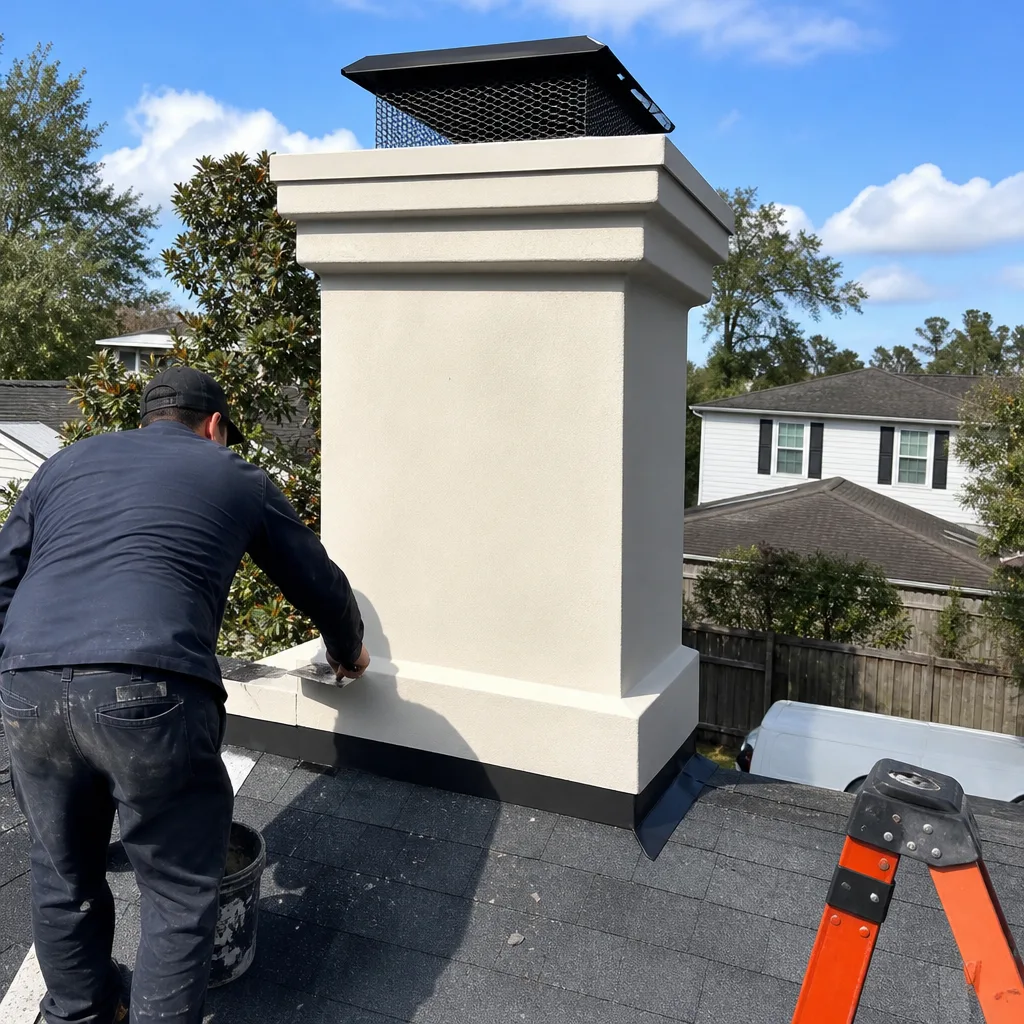
If there’s one investment that does more for a Houston chimney than any other, it’s a properly fitted, screened chimney cap. A good cap blocks rain, wasps, swifts, squirrels, roaches, and debris, all while still allowing the flue to vent properly when you burn. Most Houston chimney problems we repair trace back to a missing, damaged, or undersized cap.
What to look for in a cap:
- Screen mesh with openings no larger than 3/4 inch. Smaller is fine too, but go tighter than 3/4 inch and the screen clogs with creosote faster. The 3/4 inch standard keeps birds and most wasps out while allowing airflow.
- Stainless steel or copper construction. Galvanized steel rusts through in Houston humidity within a few years. Stainless lasts decades. Copper lasts longer and looks better, but costs more up front.
- Proper fit for the flue size. A cap that’s too small chokes the draft. One that’s too large lets driven rain in around the edges. This is a measurement job, not a guess.
We install caps from Famco and Copperfield, two manufacturers we trust for exactly the conditions Houston throws at them. The material matters less than the fit, but the right material plus the right fit means a cap that outlasts the roof it’s mounted on.
Spring Cap Inspection
Each March, during the post-season close-up, take 30 seconds to check the cap. From the ground or from a ladder if you’re comfortable on one, look for:
- Rust spots or holes in the screen
- Bent or missing screen wire
- Debris sitting on top of the cap that’s blocking airflow
- Any shift in the cap’s position on the flue
A small screen hole becomes a wasp entry point within weeks. Repairing a screen in March costs a fraction of what removing a summer wasp nest costs, and it keeps the swifts out without any legal complications.
Common Mistakes to Avoid
- Closing the damper too soon after a fire. Hot embers with the damper closed continue to off-gas, and those gases contain carbon monoxide. Let the fire fully die before you seal anything up.
- Leaving ash in the firebox all summer. Houston humidity turns ash into an acidic paste that etches masonry and corrodes metal. Clean it out in March.
- Assuming no fires means no maintenance. The off-season is when the damage happens. Humidity, wasps, swifts, and rust all work during the months you’re not burning.
- Using a fireplace with a missing or damaged cap. This is how birds, squirrels, and raccoons end up in chimneys, and it’s how rain water gets into the flue and destroys it from the inside.
- Waiting until the first cold snap to schedule chimney work. Every Houston chimney company is slammed in November and December. October is the best month for inspections and sweeps, both for scheduling and for catching problems before they’re urgent.
- Burning soft, wet, or treated wood. Houston doesn’t have a lot of seasoned hardwood available, but burning pine, or worse, painted or treated lumber, creates a thick, sticky creosote that’s harder to remove and more dangerous when it ignites.
- Attempting to remove swift nests during nesting season. Federal law protects chimney swifts, and the fine is substantial. Wait until October, then remove the nest and cap the chimney.
When to Call a Professional
Some things are homeowner checks. Others need a trained eye and the right equipment. Call a professional if you see any of these: a rusted-through cap screen, a damper that won’t fully close, visible creosote buildup thicker than the depth of a credit card, cracking or spalling brick on the chimney exterior, water stains on the ceiling near the fireplace, or a strong smoky smell coming from the fireplace when it’s not in use. You should also call if you’ve burned more than 20 fires since the last sweep, or if the chimney hasn’t been inspected in more than two years. Kindling Chimney Houston offers free estimates in Houston, and a live person answers the phone 24/7. Call (254) 978-7413 and we’ll tell you honestly what you need and what you don’t.
Frequently Asked Questions
Most Houston homes need a professional chimney sweep every one to two years, depending on how many fires they burn. If you burn fewer than 10 fires a year, an inspection every two years is usually sufficient, with a sweep when creosote buildup reaches 1/8 inch. If you burn more than 20 fires a year, sweep annually. Houston’s humidity makes creosote more corrosive than in dry climates, so we lean toward the more frequent end of the range for active burners. Call (254) 978-7413 and we’ll help you figure out the right schedule for your fireplace.
Yes. Summer is when Houston chimneys collect humidity, rust, wasp nests, and chimney swifts. Creosote left in the flue absorbs moisture from Houston’s 80 percent humidity and becomes acidic, actively corroding the flue liner and damper. A chimney that’s ignored from March to October is the one most likely to need a liner repair or replacement. The prevention is a monthly exterior glance and a properly fitted screened cap.
Creosote accumulates in the flue, and each layer absorbs more humidity from Houston air. Eventually, the buildup restricts airflow, which makes fires smoky and inefficient, and in the worst case, the creosote ignites and causes a chimney fire. A chimney fire can crack flue tiles, warp the damper, and spread to the house structure. Even without a fire, built-up creosote that sits damp can corrode a flue liner from the inside, leading to a replacement that costs several thousand dollars, far more than a sweep ever would. Call (254) 978-7413 for a free estimate if it’s been more than two years.
They’re a real seasonal reality, and they’re federally protected. Chimney swifts nest in open chimneys throughout the Houston area from April through September. If they nest in your chimney, you legally cannot remove them until they leave on their own, which is usually by late September or early October. The nest they leave behind is dry and combustible, which means it has to be removed before you burn. Then the chimney must be capped with a screened cap to keep them out next spring. A fireplace repair in Houston that includes cap replacement is the permanent fix.
Most standard chimney sweeps in the Houston area run between $150 and $300, depending on the height of the chimney, accessibility, and how much creosote has built up. If the chimney hasn’t been cleaned in many years or has a heavy glaze of creosote, the price can go higher because the work takes longer. Reputable companies give a written price before any work starts, which is exactly what we do at Kindling Chimney Houston. Call (254) 978-7413 for an exact quote. Estimates are free.
You can, but most Houston homeowners shouldn’t. DIY chimney cleaning requires getting on the roof, which is a serious fall risk on two-story homes, and it requires specialized brushes and rods sized to your flue. What a professional sweep adds beyond the brushing is a camera inspection that shows you the condition of the flue liner, which is something no brush from a hardware store can do. That camera inspection is how we catch a cracked liner or a deteriorating mortar joint before it becomes a carbon monoxide risk. The inspection is the real value, and it’s not replicable with a broom handle and a drill brush.
The Bottom Line
Houston’s fireplace season is short, but its chimney season is year-round. The months a chimney sits unused are when humidity, insects, birds, and rust do their work. A four-phase approach, close the damper in March, check the cap monthly through summer, do a full restart check in October, and burn clean during the short winter season, prevents nearly all of the expensive repairs we see. The highest-ROI dollar you can spend on your chimney is a properly fitted screened cap. The highest-ROI minute is the 30-second damper close after your last fire. Put those two habits in place, and your Houston chimney will serve you reliably for decades. For a Kindling Chimney Houston home visit, call (254) 978-7413 anytime. A live person answers, 24 hours a day, seven days a week.
Written by Danny Cortes, Owner at Kindling Chimney Houston, serving Houston since 2003.
See the difference
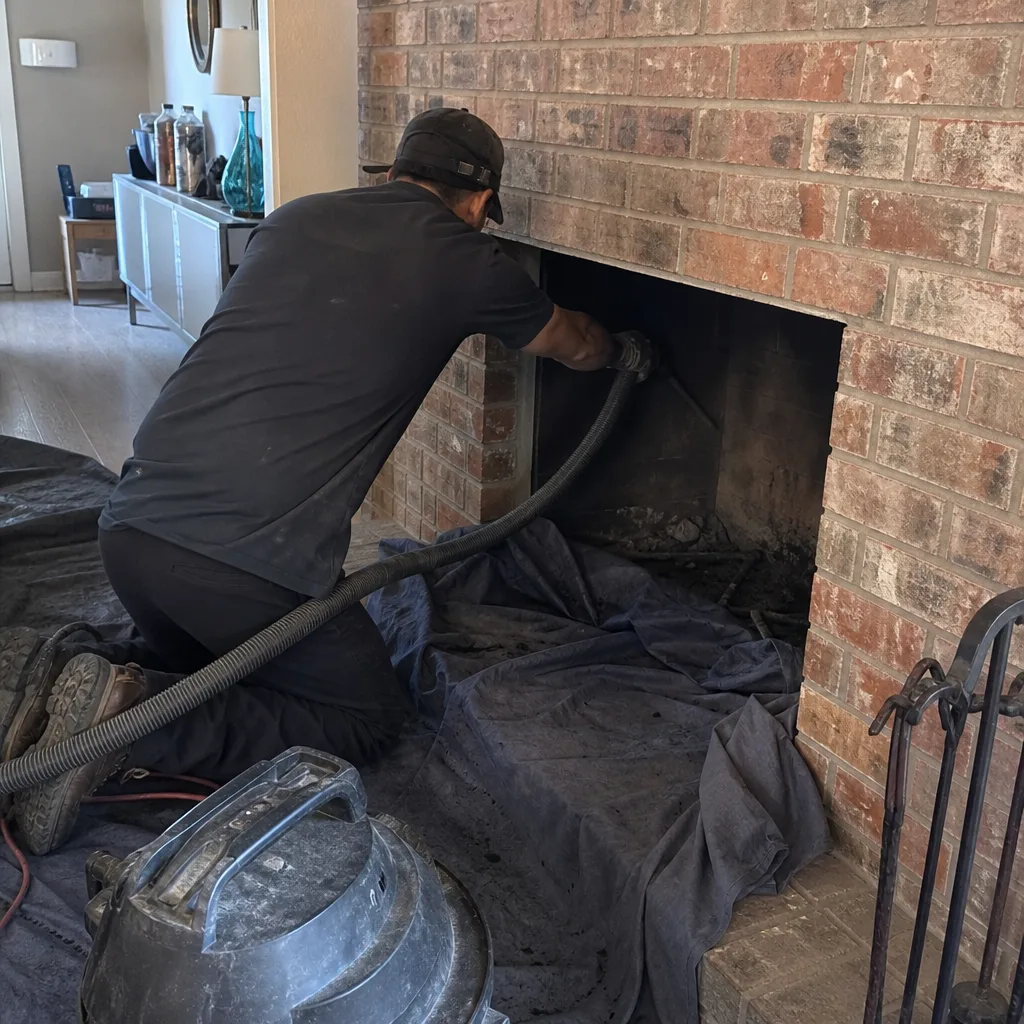 Before
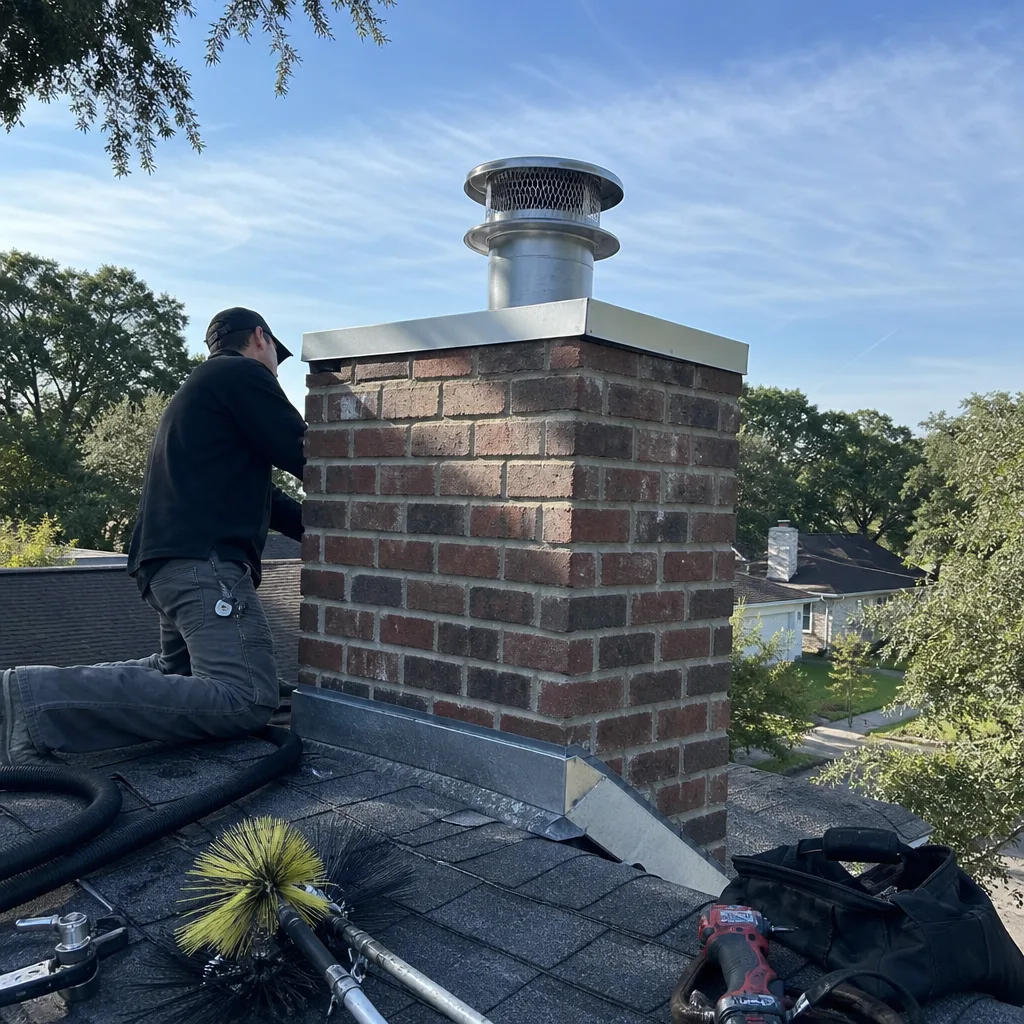 After
After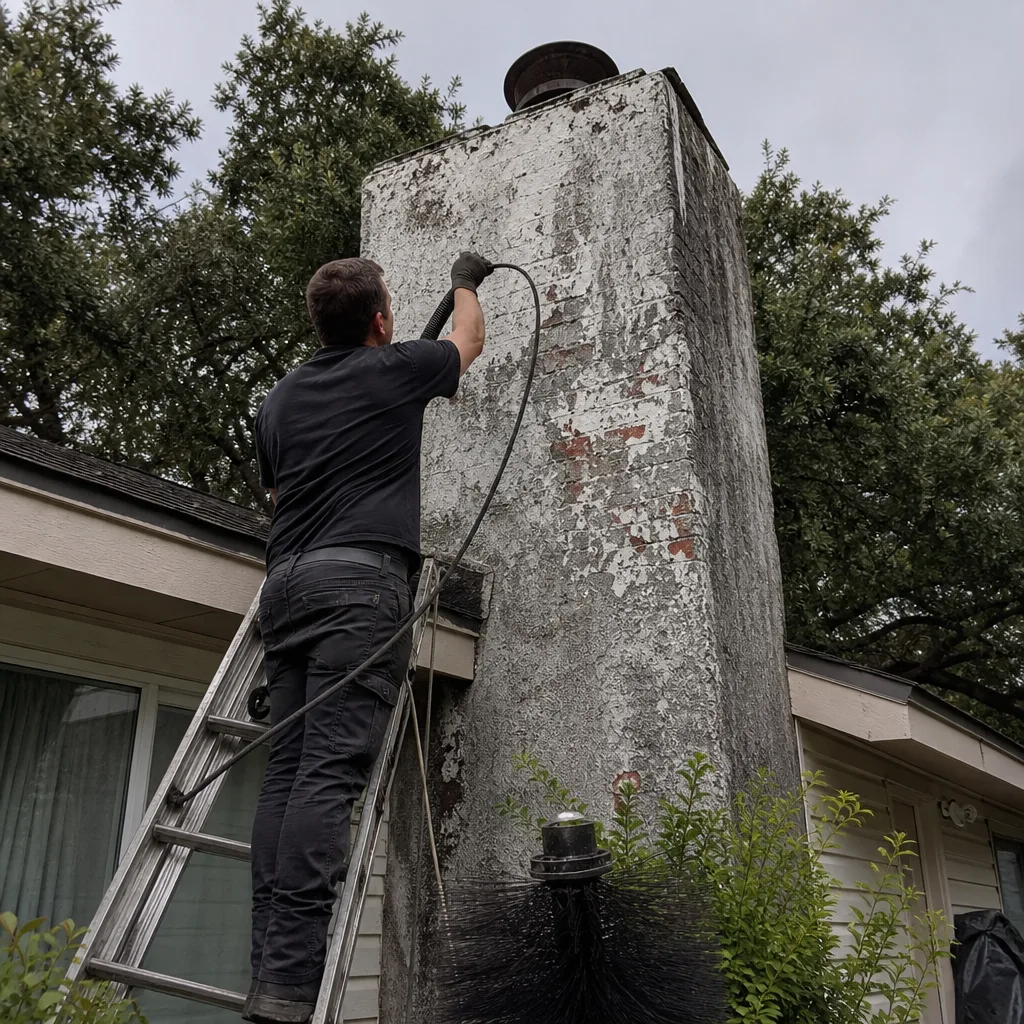 Before
 After
After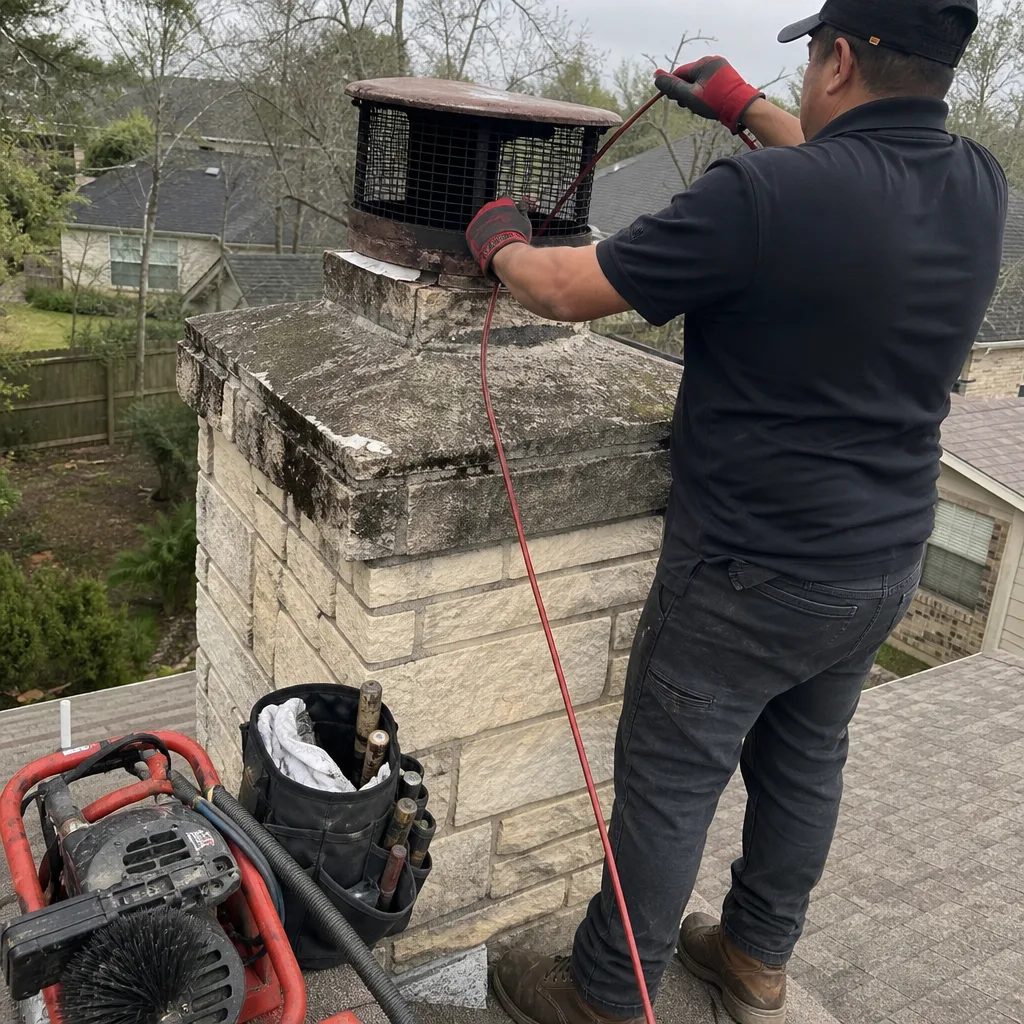 Before
 After
After