
Last updated October 15, 2026
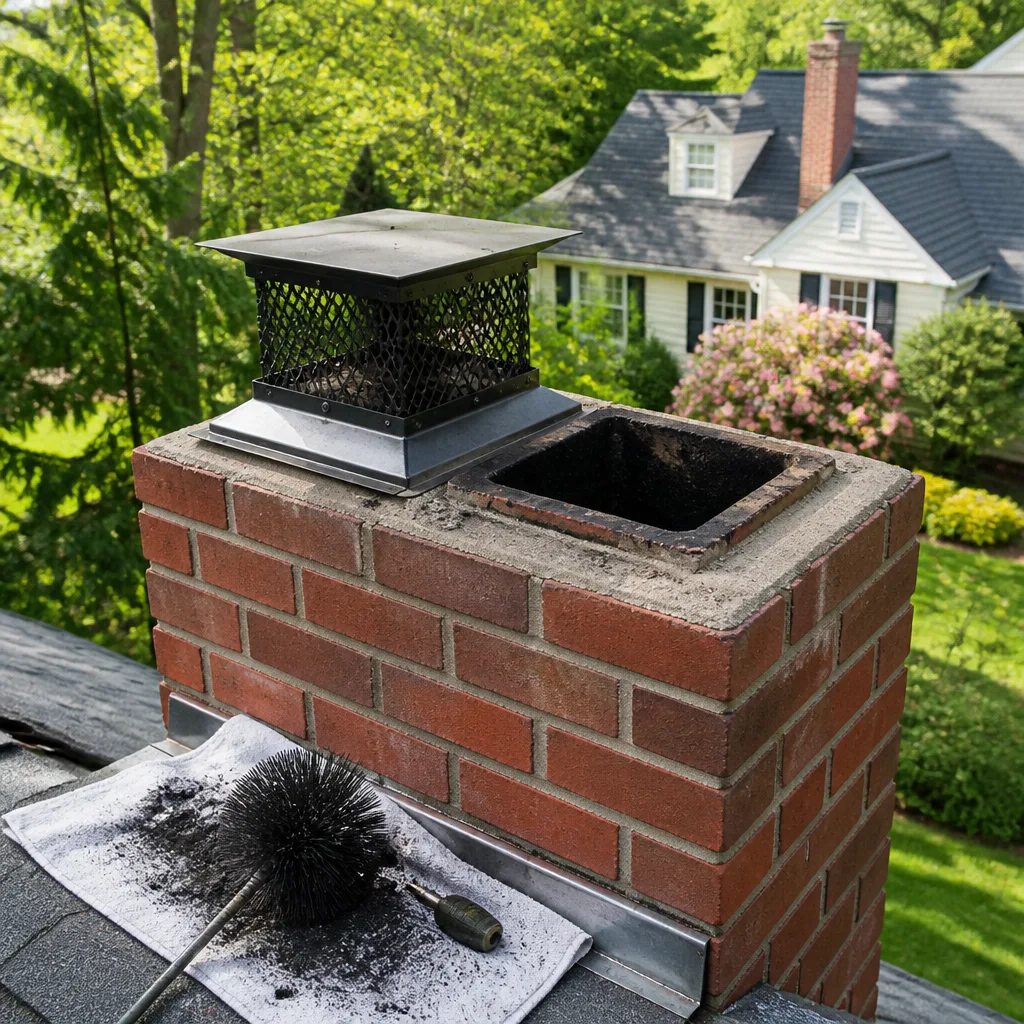 Sweep & inspection
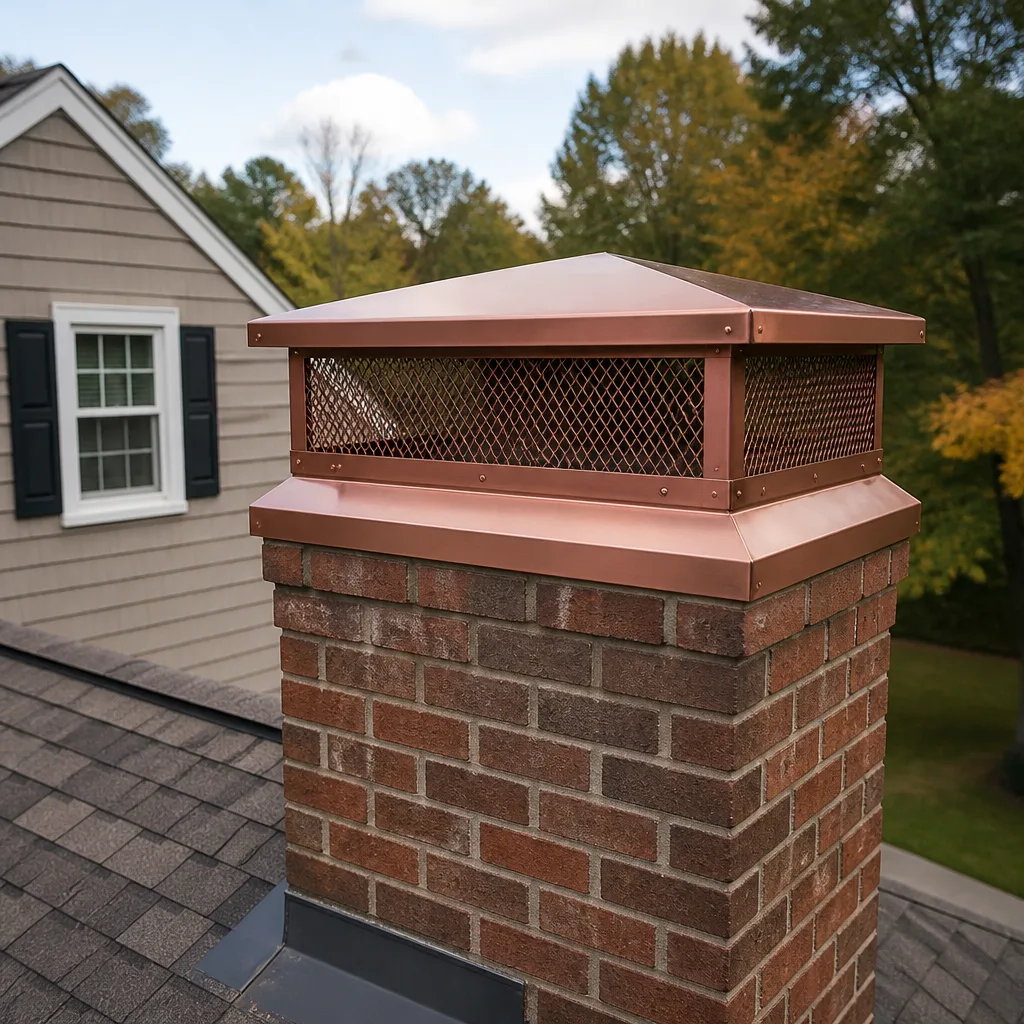 Caps & crowns
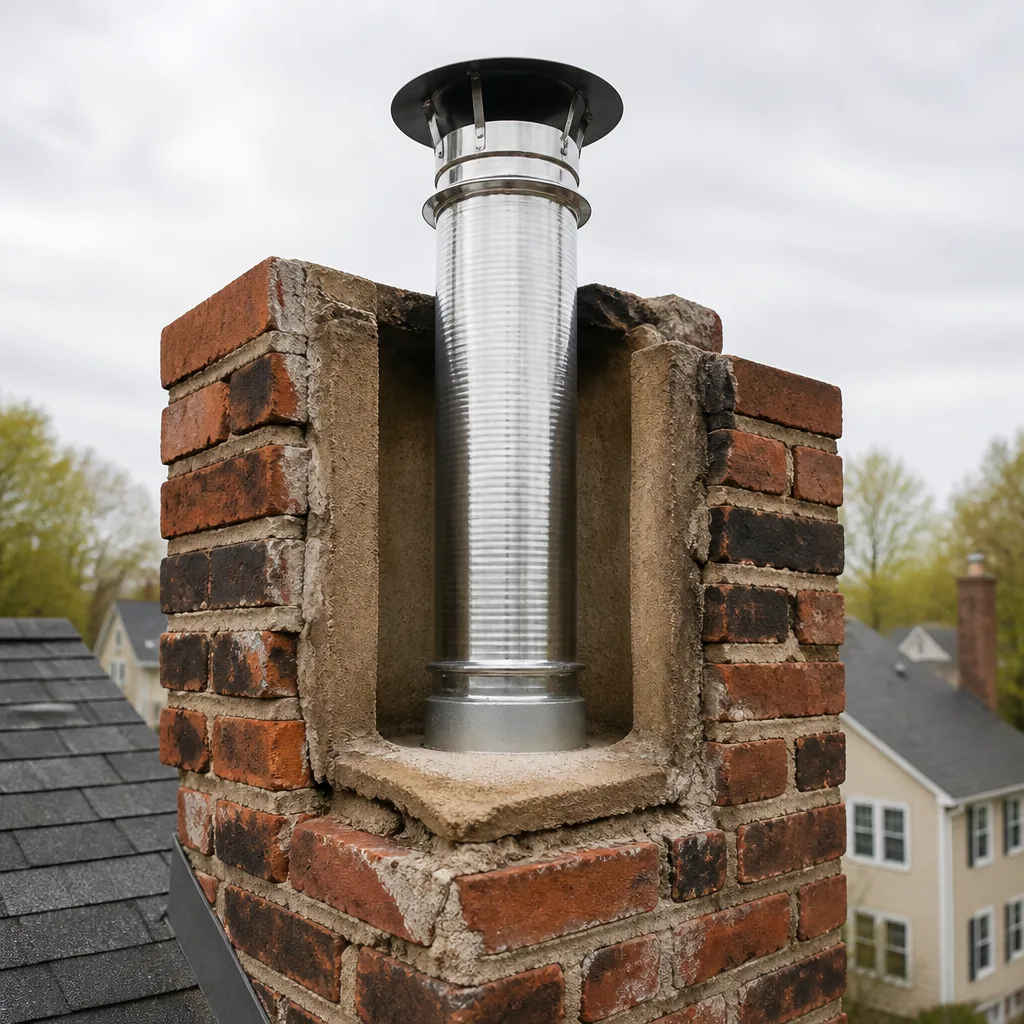 Flue relining
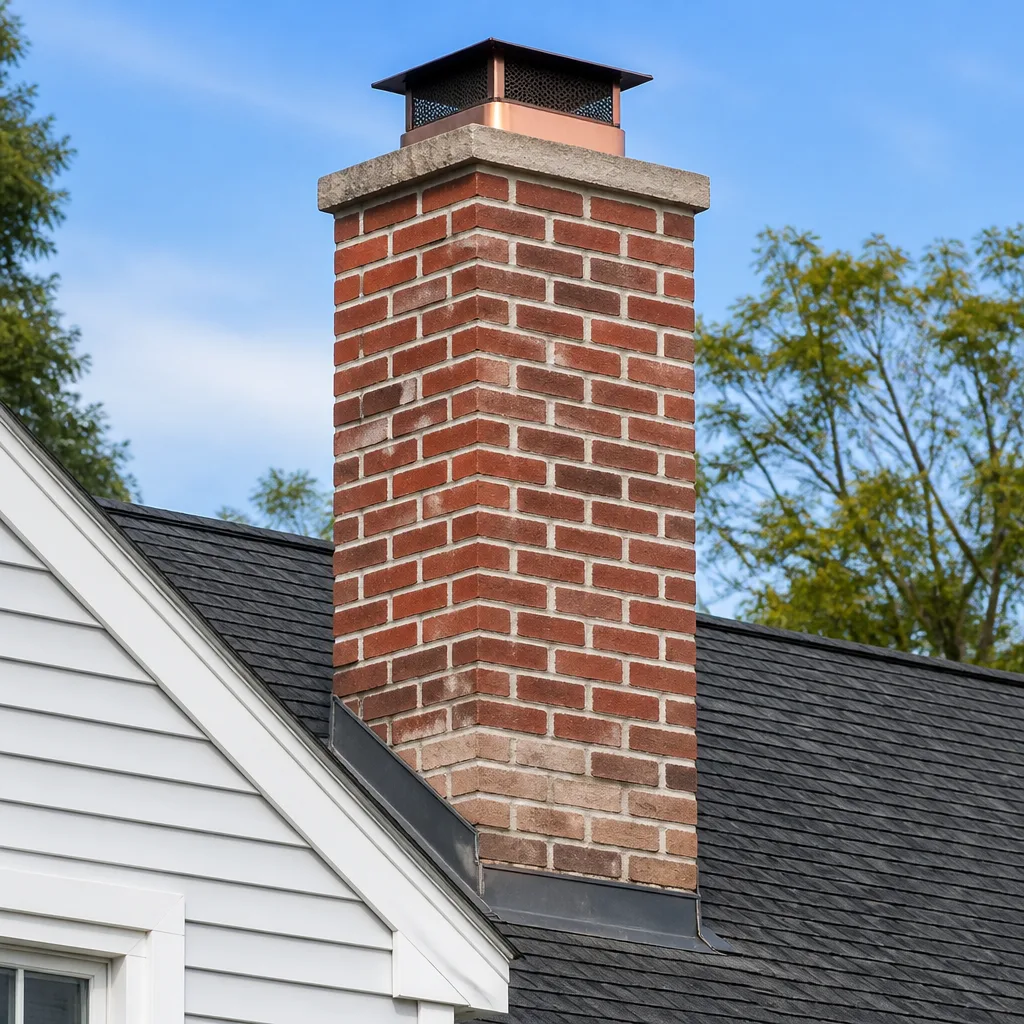 Masonry repair
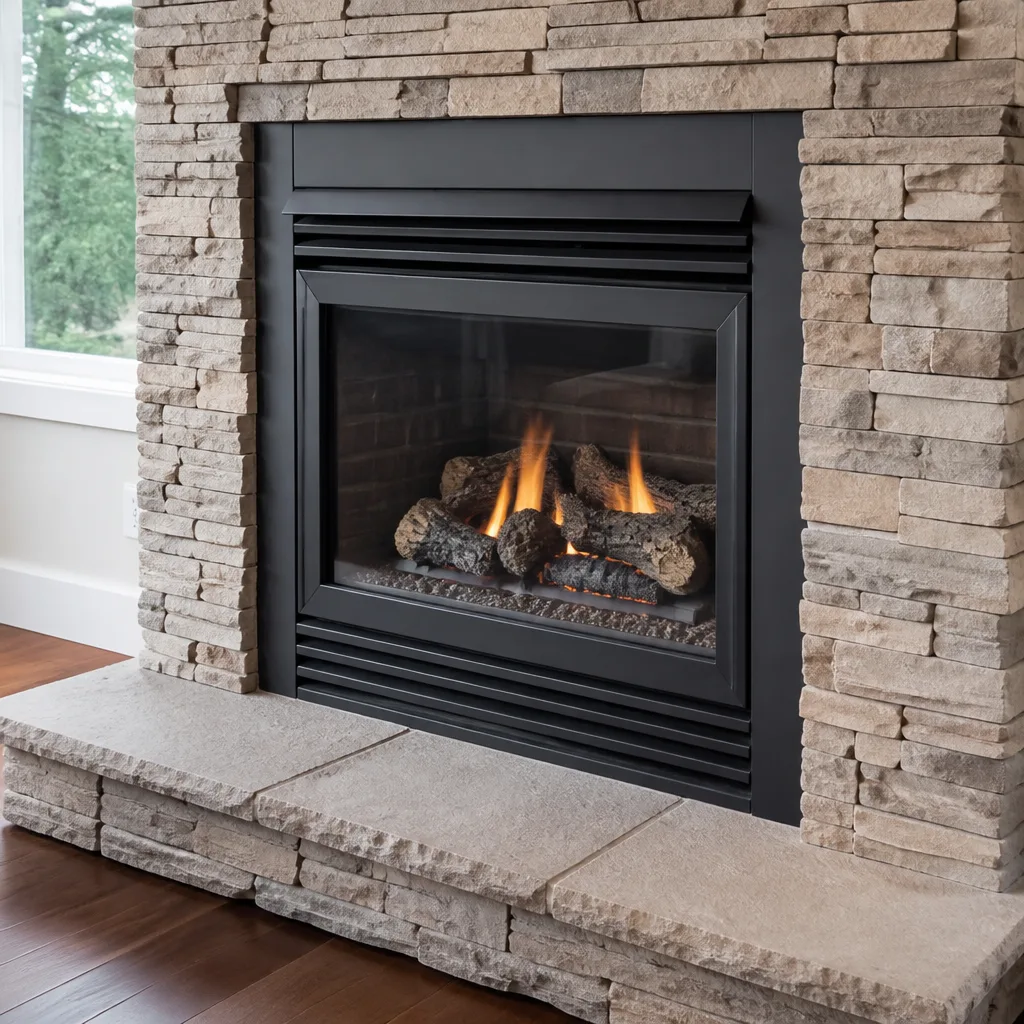 Gas fireplace service
Level 1 sweep and inspection to the NFPA 211 annual standard - flue, crown, cap, and flashing checked and photographed
Chimney sweep logs do not sweep chimneys. They loosen some creosote - which then falls where a brush and vacuum still have to collect it.
The Complete Guide to Chimney Cleaning in Houston
Most Houston homeowners are running their chimneys on advice written for Chicago, Denver, or Boston. Places where fireplaces burn five months a year and creosote builds up like bark on a tree. Houston is different. We run our fireplaces eight to twelve weeks a year, usually between Thanksgiving and Valentine’s Day, and that changes everything about what a chimney actually needs. The number-one hazard in a Houston chimney isn’t heavy creosote. It’s moisture working its way into brick and mortar during the long, humid off-season. This guide translates generic chimney wisdom into what actually applies to your fireplace in Houston, from what a proper cleaning should include to what it should honestly cost. For more guides & resources, see our blog.
Styles & brands we work with
Quick Answer
Chimney cleaning in Houston typically costs between $189 and $349 for a standard sweep on a fireplace that’s been used lightly or moderately. The visit should include a camera inspection, a mechanical brush cleaning, full interior clean-up with drop cloths, and a written report of what the camera saw. In Houston’s climate, the cleaning itself matters less than the inspection that comes with it, because moisture and animal intrusion cause more damage here than creosote ever will.
Table of Contents
- Why Houston Chimneys Fail Differently
- What a Proper Chimney Cleaning Includes
- The Camera-First Sequence: Why It Matters
- How Often Should You Clean a Chimney in Houston?
- Moisture Damage and What to Watch For
- Houston Chimney Cleaning Costs
- What “Clean” Actually Means in Writing
- Common Mistakes to Avoid
- When to Call a Professional
- Frequently Asked Questions
- The Bottom Line
Why Houston Chimneys Fail Differently
Houston sits at the edge of the Gulf, which means our air carries moisture almost year-round. Humidity averages above 70% for most of the year. That moisture doesn’t just hang in the air. It settles into brick, mortar, and the metal parts inside your chimney. When a Houston chimney goes ten or eleven months without being lit, the water has time to do real work. Brick absorbs it. Mortar joints soften. Dampers rust. And here’s the part most guides miss: all of this happens regardless of whether you ever light a fire.
We’ve inspected plenty of Chimney Rock and Meyerland fireplaces that hadn’t been used in years, and found flue tiles with efflorescence, which is the white, chalky mineral deposit that appears when water moves through masonry and evaporates on the surface. It’s a sign of moisture moving where it shouldn’t. The problem compounds because a cold, damp flue attracts animals. Birds, squirrels, and raccoons look for quiet, protected spaces in the Houston spring and summer. A chimney with a missing or rusty cap is an open door.
Creosote, by contrast, builds up when wood burns incompletely at low temperatures. Houston’s short burn season, coupled with the fact that many families use their fireplace only on weekends, means creosote accumulation is usually light. That’s not a free pass. It’s a reframing: in Houston, you’re cleaning your chimney to inspect it. The sweep removes what’s there, but the real value is finding the moisture damage, animal activity, or cracked flue tile before it becomes a $4,000 repair.
Our Kindling Chimney Houston home page walks through how this Houston-specific approach shapes every service we offer. The short version: we treat a Houston chimney as a moisture-management system first and a wood-burning exhaust second.
What a Proper Chimney Cleaning Includes
A real chimney cleaning in Houston should never be just a guy with a brush. It’s a sequence of steps that each serve a purpose, and skipping any one of them means you’re paying for half a service. Here’s what a complete visit looks like, step by step:
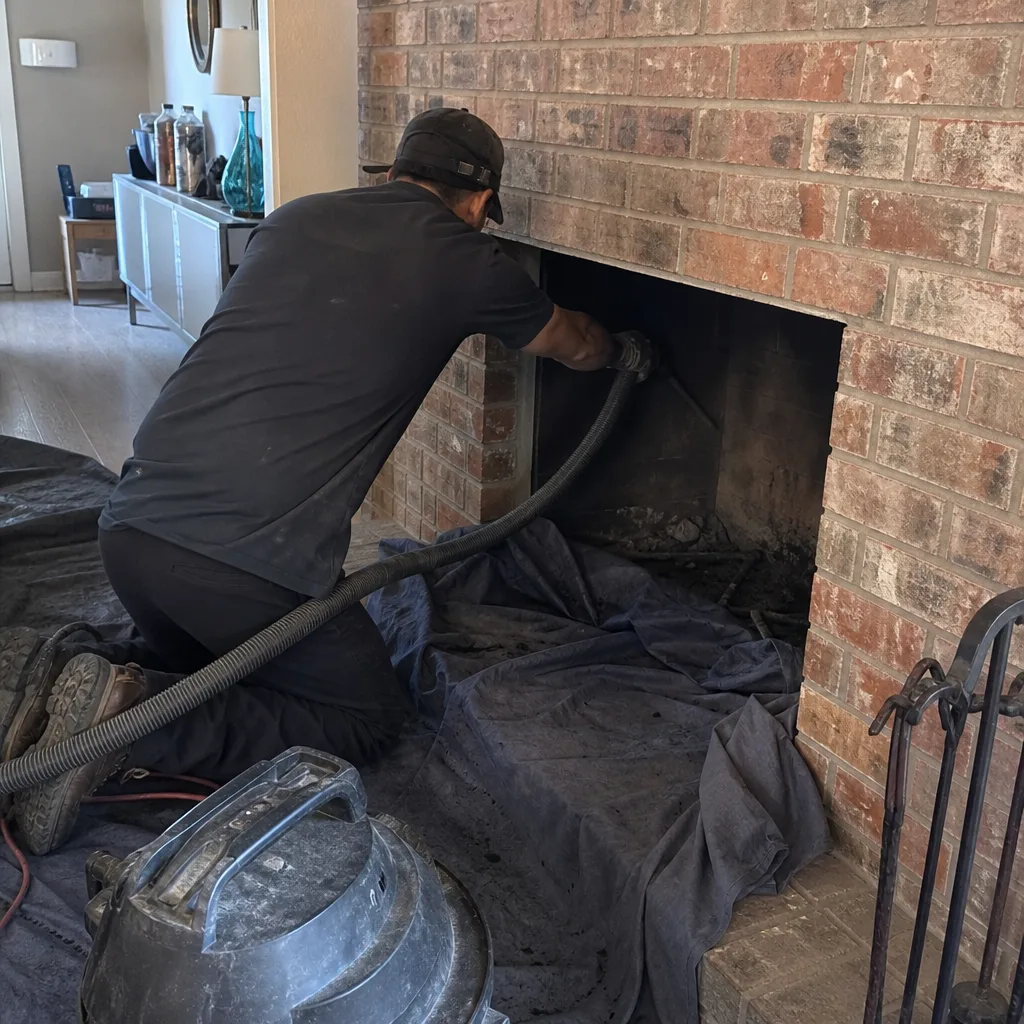
- Floor and furniture protection. Drop cloths go down over the hearth, the floor in front of the fireplace, and any nearby furniture. Shoe covers go on before the technician enters your home. Houston homes with kids and pets need this step stated explicitly, not assumed.
- Camera inspection. A small camera goes up the flue to document what the technician can’t see from the firebox. This is where cracked flue tiles, rusted dampers, and animal nests reveal themselves. In Houston, skipping this step misses about 60% of the real problems, because the visible soot layer is rarely the problem. The camera sees the flue liner itself, and that’s where Houston’s moisture does its work.
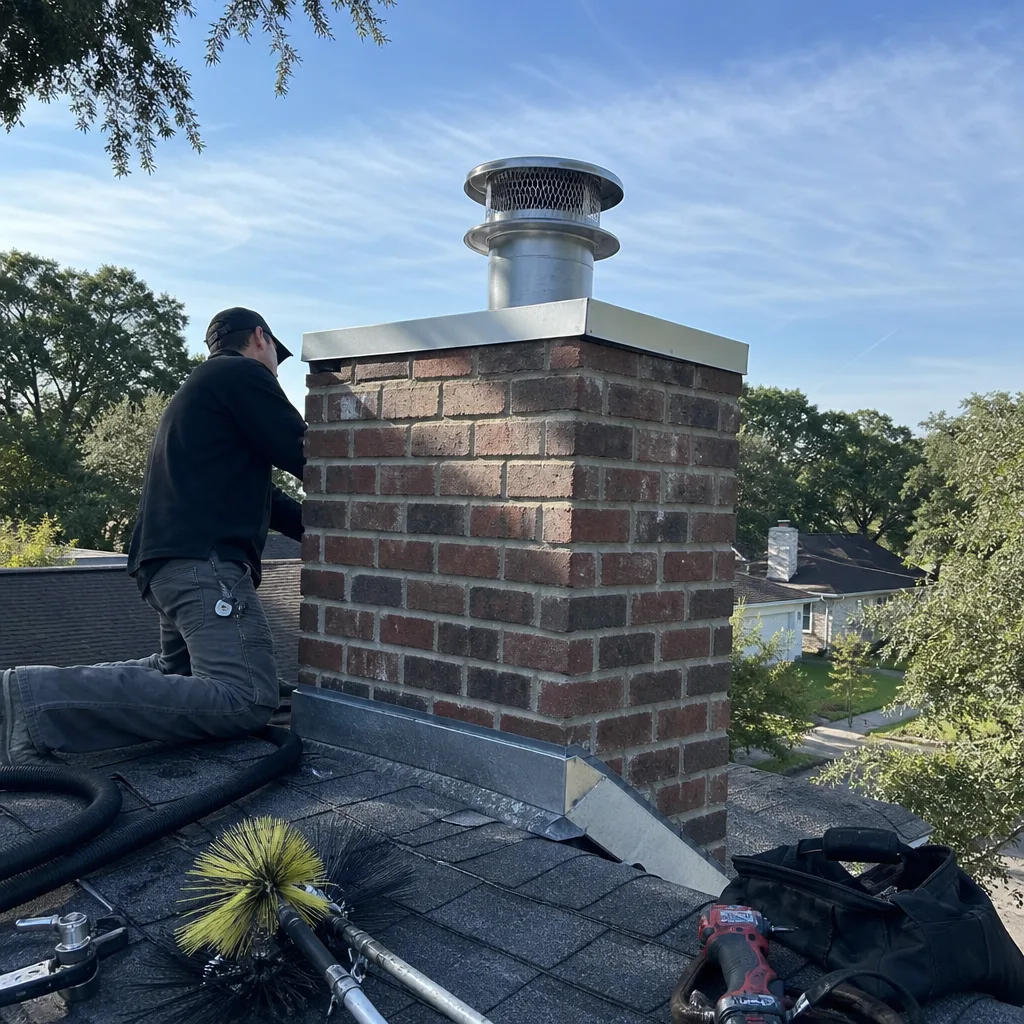
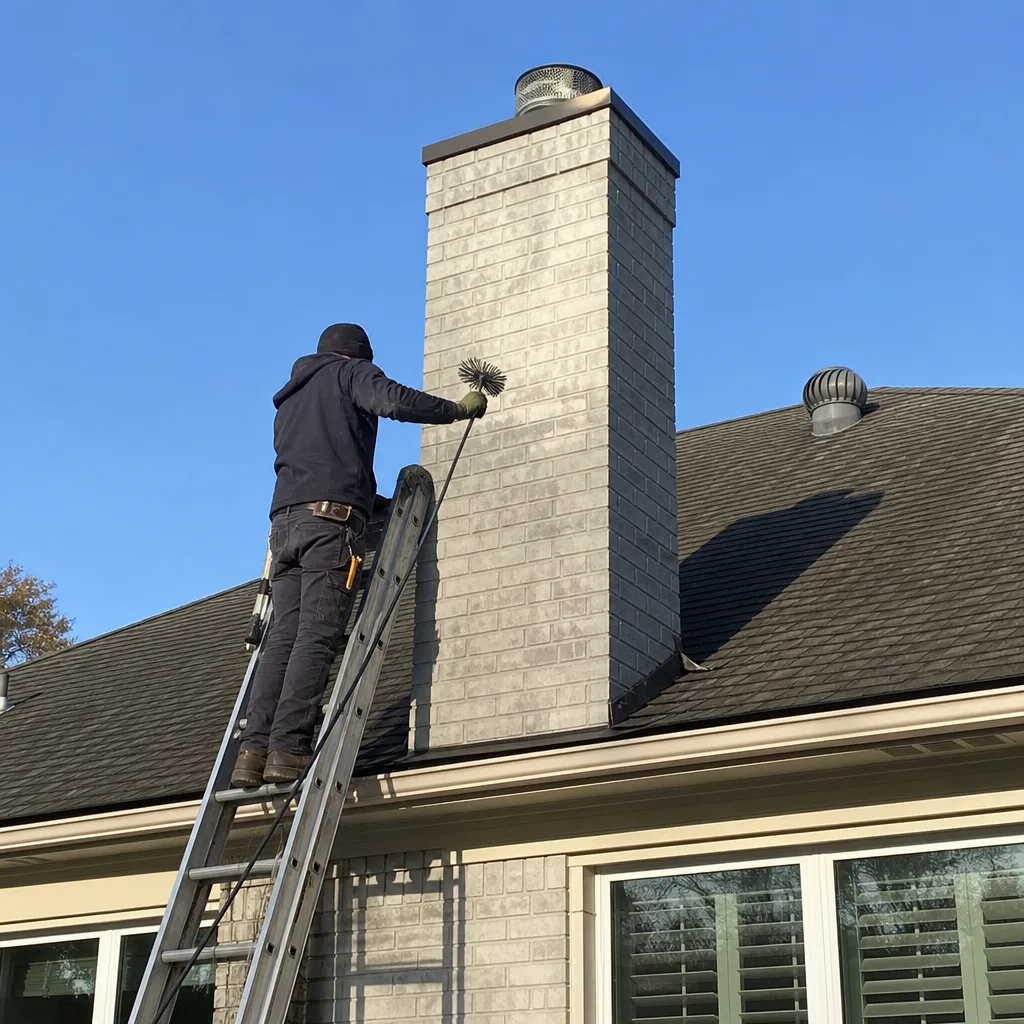
- Mechanical brush cleaning. A wire or poly brush, sized to the flue, runs the full length of the chimney from the firebox to the crown. For light-use Houston fireplaces, poly brushes handle the job and are gentler on older masonry.
- Smoke chamber and damper cleaning. Soot settles in the angled smoke chamber above the damper, and this area is overlooked by rough-and-fast sweeps. A proper visit includes it.
- Post-sweep camera check. A second camera pass confirms the flue is actually clean and documents the condition of the liner after the brush has done its work. This is the evidence you keep.
- Clean-up and photo documentation. The drop cloths come up, the hearth is wiped down, and the technician photographs the work area before leaving. You get a written summary of what was done and what the camera saw.
Danny Cortes, owner at Kindling Chimney Houston, built this sequence around a simple idea: families should never wonder what happened in their home while they were in the other room. That’s why every visit includes the full clean-up, the photos, and a written price delivered before any work starts.
The Camera-First Sequence: Why It Matters
Here’s the uncomfortable truth about chimney sweeping: the brush removes what you can see, but what you can see is rarely what’s wrong. In Houston, a fireplace that’s been used lightly for a season will have a thin layer of soot. The brush takes care of that in minutes. But behind that soot, hidden from the firebox, is where the Houston climate does its damage.
A rusted damper that’s been sitting in humid air since March. A hairline crack in a clay flue tile that’s been soaking up Gulf moisture. A squirrel nest packed into the smoke chamber in April. None of those are visible from the living room. All of them are visible with a flue camera. That’s why the camera goes up first, before the brush ever touches the flue. The camera establishes a baseline. It shows what’s actually there.
Then the brush does its work. And then the camera goes up again. The second look confirms the flue is actually clean, not just brushed. It also documents the liner condition after cleaning, which matters more in Houston than in drier climates. Hygroscopic masonry, which is brick and mortar that absorbs moisture from the air, can look stable in a dark photo and reveal spalling or flaking when the camera gets a clean, clear view.
Our Chimney Sweep in Houston service always includes the camera-first sequence, the second camera pass, and a written summary of both. That’s the only way to know whether a cleaning is just a cleaning or whether it’s the early warning sign of a bigger problem.
For a deeper look at what the camera documents, our Chimney Inspection in Houston page covers each level of chimney inspection and what they’re designed to find.
How Often Should You Clean a Chimney in Houston?
The national rule says you need a chimney cleaning every time you burn a cord of wood. That rule is useless for most Houston homes. A cord of wood is roughly a pickup bed full, stacked. Plenty of Houston families burn less than a quarter cord all season. So the national rule would tell them to go years between cleanings, and that’s exactly how moisture and animal damage get out of hand.
The Houston rule is simpler: once a year, before the burn season starts. Book it in September, October, or early November. That timing accomplishes three things. First, it catches moisture damage from the spring and summer before it worsens in the winter. Second, it finds animal nests before you light a fire and fill your living room with the smell of burning squirrel nest. Third, it confirms the chimney is ready for the season in one visit, so you’re not calling for a sweaty mid-January appointment while your kids are asking for a fire.
In our experience, Houston homes fall into three groups. Light-use fireplaces, meaning less than 15 fires per season, should still get an annual cleaning because the off-season moisture is the risk. Moderate-use fireplaces, meaning 15 to 30 fires, need the annual visit for soot and moisture both. Heavy-use fireplaces, meaning more than 30 fires, may need a second sweep mid-season, but that’s rare in Houston and usually only for wood-burning stoves or open fireplaces running almost every weekend.
Here’s the cadence we recommend as a baseline for Houston:
- Before the first fire of the season: Annual cleaning and inspection. Always.
- After major storms or hurricane season: A visual check of the chimney cap, crown, and flashing. High winds and driving rain damage caps and flashing more than people expect.
- After any animal activity: If you hear scratching, chirping, or fluttering from the chimney in spring or early summer, get it checked before you light anything.
- After any water stain appears on the ceiling near the fireplace: That’s a flashing or crown leak, and it won’t self-resolve.
Moisture Damage and What to Watch For
Houston’s humidity and rain do not take the winter off. The city gets nearly fifty inches of rain per year, and much of it falls in the spring and fall, not in a convenient dry season. That water hits your chimney cap, runs down the crown, seeps into the mortar joints, and sits in the brick. When temperatures drop and the brick freezes, which does happen in Houston a few nights each winter, the trapped water expands. That’s freeze-thaw spalling. It chips away at brick faces and mortar joints one winter at a time.
The most visible sign is efflorescence: a white, chalky stain that appears on the exterior brick or on the inside flue walls. It’s not dangerous by itself, but it’s proof that water is moving through the masonry. Over years, that water movement crumbles mortar joints, loosens bricks, and allows water to reach the wooden framing of your home.
Another frequently overlooked problem is damper corrosion. Houston’s humid air rusts metal dampers even in chimneys that are never lit. A rusted damper either seizes shut, which means you can’t use the fireplace, or seizes open, which means your air-conditioned air pours up the chimney all summer and your heating escapes all winter. A camera inspection catches this early, before the damper has to be cut out and replaced.
Chimney caps are the first line of defense against Houston’s rain and against animals. A good cap keeps rain out of the flue, which reduces rust and moisture. It also keeps birds, squirrels, and raccoons out. We regularly see caps that are rusted through, missing screens, or completely gone. The cap is a small repair compared to water-damaged flue tiles or animal remediation.
Houston also deals with hurricane wind loads. A chimney cap that survived a decade of normal weather can fail in one named storm. If your home has been through a Harvey-scale event since the last cap inspection, it’s worth a look on the next cleaning visit.
Houston Chimney Cleaning Costs
What should a chimney cleaning cost in Houston? The honest range is wider than the national guides admit, because the condition of the chimney changes the work. Here’s a breakdown of what you should expect in the Houston market:
- Standard sweep, light-use fireplace: $189 to $249. This is the most common price range in Houston for a single-story home with a masonry fireplace that’s been used lightly. It includes the full clean-up and a written summary.
- Standard sweep, moderate to heavy use or two-story home: $249 to $349. Roof access, a longer flue, or heavier soot accumulation pushes the price up because the work takes longer.
- Sweep with camera inspection included: Sometimes bundled, sometimes a separate line item of $80 to $150. Kindling bundles the camera into every cleaning visit, because a brush without a camera in Houston leaves the main job undone.
- Animal removal or nest extraction: $150 to $400, depending on what’s in there and how deep it is. Squirrel nests are usually simple. Raccoon litters are more involved and often need a separate visit.
- Chimney cap replacement: $250 to $500 installed, depending on the flue size and the material. Stainless steel caps from manufacturers like Olympia Chimney or Copperfield cost more up front but outlast painted steel by years in Houston’s humidity.
- Damper repair or replacement: $250 to $600. A rusted damper is common in Houston, and catching it early keeps the repair on the lower end of that range.
Any company quoting less than $100 for a Houston chimney cleaning is either not doing the full clean-up, not using a camera, or planning to recoup the difference with a repair estimate, which is why our How to Hire a Chimney Cleaning Contractor in Houston: A Step-by-Step Guide is worth reading before you book. That’s not to say the work is unsafe at that price. It’s to say the work is incomplete.
Nobody in Houston should get a surprise bill at the door. Our Chimney Sweep in Houston pricing is delivered in writing before any work starts, and that’s the only way we’d sign up for a service in our own homes. The price on the written estimate is the price on the invoice, period.
What “Clean” Actually Means in Writing
Here’s where Houston families with kids and pets get let down by vague promises. “We clean up after ourselves” is not a standard. It’s a sentence with no teeth. A real clean-up standard says what goes down, what gets protected, and what happens before the crew leaves. We call ours the Cedarwell Care Promise, and here’s what it means in practice:
- Shoe covers go on before the technician steps inside. Not after the first trip to the truck. Before.
- Drop cloths cover the hearth, the floor in front of the fireplace, and any furniture within ten feet. Chimney soot is fine and it travels. The cloths keep it off your rug, your floors, and your couch.
- Nothing is moved without asking. If furniture needs to shift, you know before it happens. We don’t rearrange a living room and call it access.
- A photo of the clean-up is taken before the crew leaves. So you can see, in a photo, that the area is as we found it. There’s no dispute about whether the job was done neatly.
- Pet-safe products are used where there is a choice. That means no chemical odor lingering in the house after the visit, and no reason to keep the dog or the kids out of the room any longer than necessary.
- Quiet tools when the kids are asleep. Not every sweep is loud, but some are. We plan around naptime when it matters.
This is the difference between hiring a chimney company and hiring a chimney crew who treats the house like a job site. The C.A.R.E. values, which stand for the specific commitments our technicians make on every visit, are written into the service itself. They’re not a slogan. They’re the reason a parent can stay on a work call in the other room and trust that the floors are covered and the dog is safe.
Common Mistakes to Avoid
- Skipping the camera. A brush-only cleaning in Houston misses moisture damage, cracked tiles, and animal intrusion. You’ll pay for a sweep and still not know whether the chimney is safe to use.
- Thinking no fires means no problems. Moisture and animal intrusion happen regardless of use. In Houston, a fireplace that sat unused for two years can be in worse shape than one that ran every weekend.
- Booked a cleaning in December or January. Houston’s cold snaps are short but real, and everyone wants their chimney cleaned during the first one. Book in September or October and you’ll have your pick of times.
- Replacing a cap with a cheap painted steel one. Houston’s humidity will rust it out in a few seasons. A stainless cap from a manufacturer like Copperfield or Olympia Chimney costs more up front and lasts far longer.
- Ignoring efflorescence. Those white mineral deposits are evidence of water movement. They don’t wash off and stay away. They’ll be back, and the underlying masonry will be a little weaker each year.
- Assuming the chimney is safe because the home inspector looked at it. Most home inspections in Houston are visual only. A Level 1 visual from the roof or the firebox cannot see what’s inside the flue. A camera can.
When to Call a Professional
Call a professional when you see efflorescence on the chimney brick, when you hear animals in the flue, when water stains appear on the ceiling near the fireplace, or when you can’t remember the last time the chimney was inspected. Houston’s humidity shortens the safe gap between inspections, and a chimney that looks fine from the outside is often hiding damage from the inside. Kindling Chimney Houston offers free estimates in Houston; call (254) 978-7413 to get one. A live person answers, day or night, and you’ll know exactly what the visit includes before you commit to anything.
Frequently Asked Questions
A standard chimney cleaning in Houston runs between $189 and $349 for most single-family homes, with the price determined by flue length, roof access, and how heavily the fireplace has been used. Kindling includes camera inspection and full clean-up in every sweep, and the price is delivered in writing before any work starts. Call (254) 978-7413 for an exact quote, and your estimate is free.
Yes, because in Houston the cleaning visit is also your inspection visit, and moisture damage plus animal intrusion happen regardless of how often you light a fire. An annual cleaning before the burn season catches these problems while they’re small. It’s the cheapest way to avoid a four-thousand-dollar flue liner replacement down the road.
Once a year, before the burn season starts, in September, October, or early November. Houston’s climate makes this annual cadence more important than the national cord-of-wood rule, because the off-season moisture and animal activity are the bigger risks here than creosote buildup, as detailed in our Seasonal Chimney Cleaning Care for Houston: Year-Round Homeowner’s Guide.
Skipping a few years in Houston means moisture has time to work through the brick and mortar, animals have time to nest, and the damper has time to rust. The result can be a flue liner that needs replacing instead of a chimney that needs sweeping. The annual visit is the cheap insurance against that.
Yes, when the crew uses shoe covers, drop cloths over the hearth and nearby furniture, and a vacuum designed for fine soot. Kindling’s Cedarwell Care Promise includes all of these, plus a photo of the clean-up before the crew leaves, so you can see the standard yourself. Call (254) 978-7413 to ask about what’s included.
A cleaning removes soot and creosote with a brush. An inspection documents the condition of the flue, liner, damper, cap, and masonry, usually with a camera. In Houston, the two should happen together, because the cleaning gives the camera a clear view of the flue walls. For a deeper look, see our Chimney Inspection in Houston page.
The Bottom Line
Houston’s chimneys don’t have a creosote problem. They have a moisture problem, and the best way to stay ahead of it is an annual cleaning and camera inspection before the burn season starts. The visit should include floor protection, a camera pass before and after the sweep, a mechanical brush cleaning, and a written summary of what the camera found. Kindling Chimney Houston delivers all of that, with a written price before any work starts and a 365-Day Done Right Promise behind every job. Call (254) 978-7413 for a free estimate. A live person answers.
Written by Danny Cortes, Owner at Kindling Chimney Houston, serving Houston since 2003.
See the difference
 Before
 After
After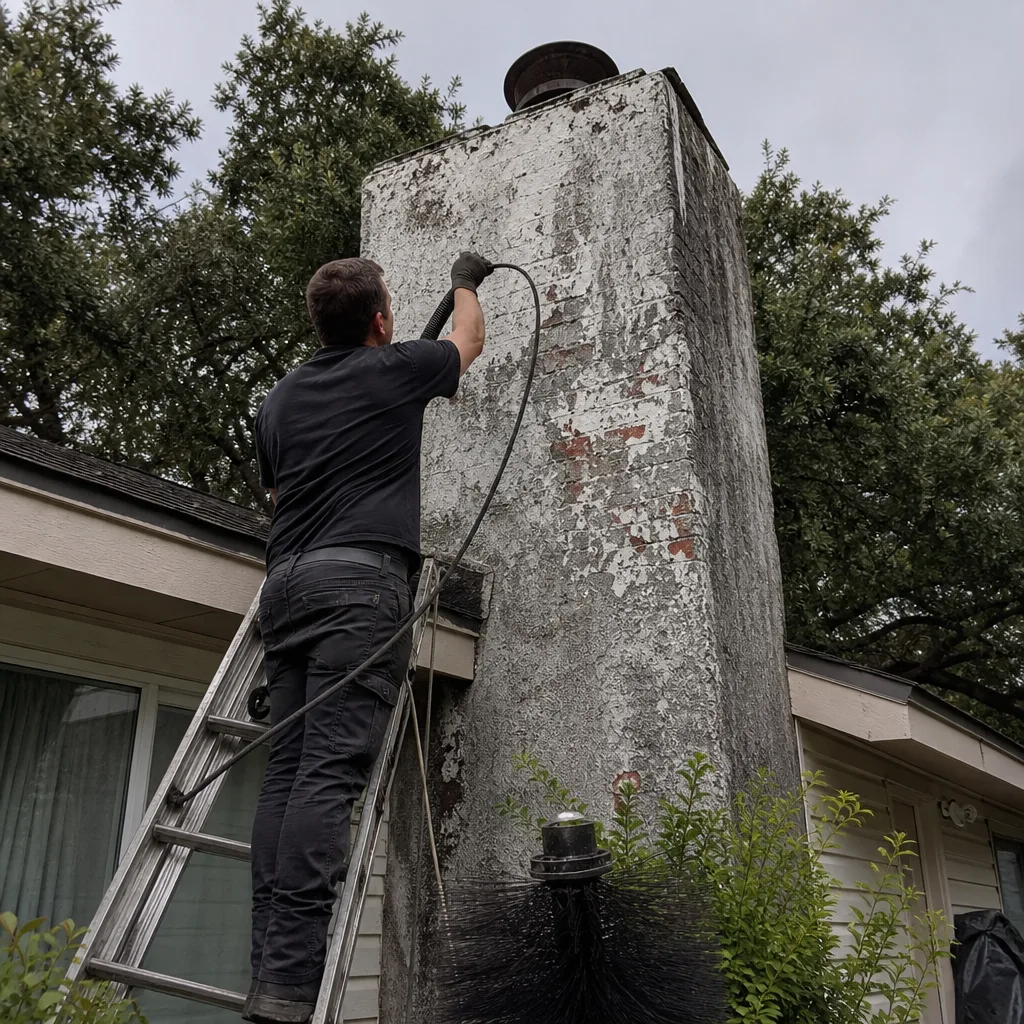 Before
 After
After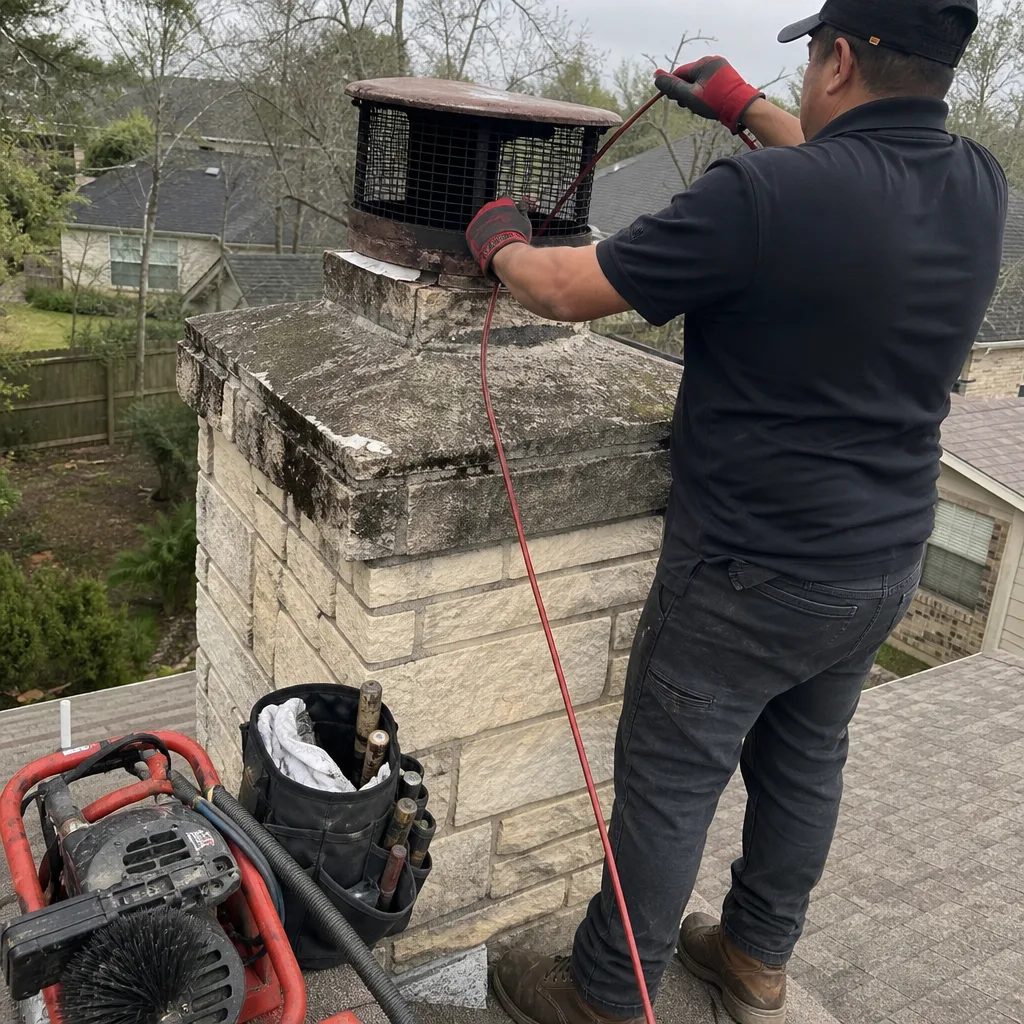 Before
 After
After